Ukrainian industry has come under multifactorial pressure that, according to ICC Ukraine's leadership, threatens the very survival of the country's key manufacturing sectors. The organization's Vice President for Industrial Strategy, Bohdan Ivanjuk, told RBC-Ukraine that the current situation is the simultaneous impact of Russian strikes on infrastructure, systemic failures in maritime and rail logistics, an excessive state tariff burden, and new restrictions in the European Union market. In his words, to preserve production and exports, the state must comprehensively reduce business costs, step up negotiations with the EU, and expand access to financing for large enterprises. Industry accounts for around 20% of Ukraine's GDP, and its degradation ripples through the entire economy via the value chains of adjacent sectors.
The mining and metallurgical complex: from 10% of GDP to 5.5% and the loss of two-thirds of foreign-currency earnings
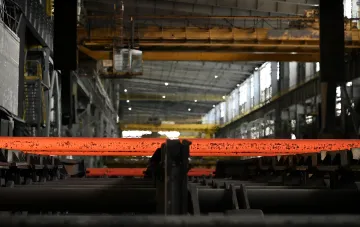
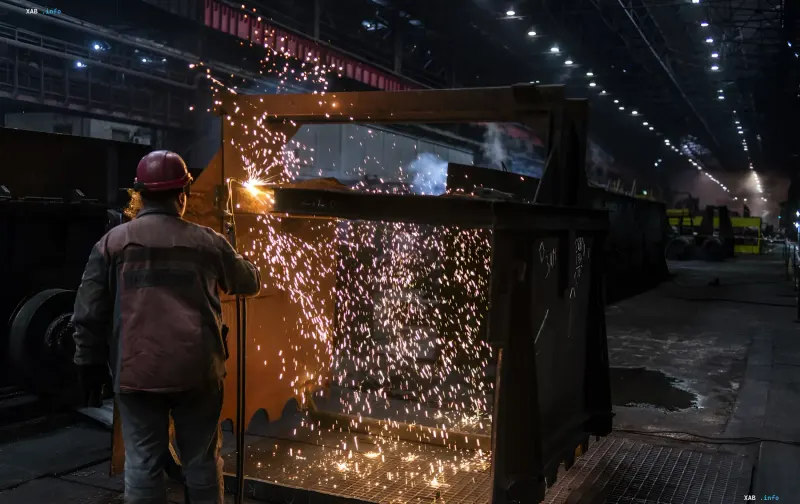
The scale of the losses is most clearly illustrated by the mining and metallurgical complex (MMC). Before the full-scale war, the sector's share of GDP exceeded 10%; today it stands at around 5.5%. The MMC's foreign-currency earnings have fallen from roughly $22 billion in 2021 to about $6 billion per year. Employment has dropped from more than 130,000 to just over 60,000 workers. Ivanjuk stresses the multiplier effect: one metallurgy worker supports the employment of more than seven people in adjacent sectors — from logistics and construction to machinery and services. Consequently, shutting down a major metallurgical plant triggers a cascading effect that far exceeds the direct losses of the sector itself.
A logistics dead end: 80 million tonnes, the Danube at 28, and overland routes three times more expensive
ICC Ukraine names logistics as the key structural challenge. Due to problems with the operation of the Black Sea ports, industry has effectively lost its main channel for mass exports, and no full-fledged alternative to deep-sea ports exists to date. According to figures cited by Ivanjuk, around 80 million tonnes of cargo passed through Ukraine's deep-sea ports in 2025. The potential for reorienting exports via the Danube is estimated at a maximum of roughly 28 million tonnes — that is, less than a third of the previous volumes. Overland routes through EU countries cost two to three times more, making them economically unviable for low-margin products, which include a significant share of metallurgical and chemical output.
Rail tariffs: a 30% increase and the Canadian precedent
ICC Ukraine singles out as a separate problem the 30% rise in freight tariffs at Ukrzaliznytsia. Ivanjuk calls reducing tariffs a top priority for the state and cites Canada as a precedent: “There is no war in Canada. But Canada allocated a certain amount to cut the rail tariff, and the port tariff, by 50%. Ukraine must do the same to support its industry.” In his words, Ukrzaliznytsia's freight operations were profitable in 2025, while the main losses came from the passenger segment. Shifting these costs onto industrial shippers, ICC Ukraine argues, only worsens the competitiveness of enterprises in external markets. Ivanjuk calls for reducing not only the logistical but also the energy and overall state tariff burden on business.
EU negotiations: CBAM, quotas, and the “war conditions” argument
Another priority direction, in ICC Ukraine's view, is revising the terms of trade with the European Union. The organization urges the government to step up negotiations on the CBAM mechanism (Carbon Border Adjustment Mechanism) and on metallurgical quotas. Ivanjuk emphasizes that Ukrainian enterprises operate under conditions fundamentally different from those of European producers: war, destroyed infrastructure, and the absence of stable energy supply. On this basis, he believes, Ukraine should seek special conditions under CBAM, and quotas on metal-product exports should be preserved at least at the level of actual 2025 exports. Additional context: it was previously reported that European, Chinese, and Turkish metallurgical companies receive substantial state support to lower their costs, creating tough competitive conditions for a Ukrainian sector that lacks similar tools.
Financing large enterprises: the blind spot of state programs
Ivanjuk identifies access to financing as a separate systemic issue. Existing state programs, in his assessment, are aimed primarily at small and medium-sized businesses, whereas large industrial enterprises in frontline regions are also suffering damage, cutting production volumes, and in need of resources to retain their workforces. For Ukraine, a coordinated industrial policy is now critically important, one that includes cheaper logistics and energy, the restoration of access to external markets, targeted financing of production, and the preservation of human capital. “One wish — to stay alive, to work and to export,” Ivanjuk summed up, encapsulating the position of the industrial lobby before the state.