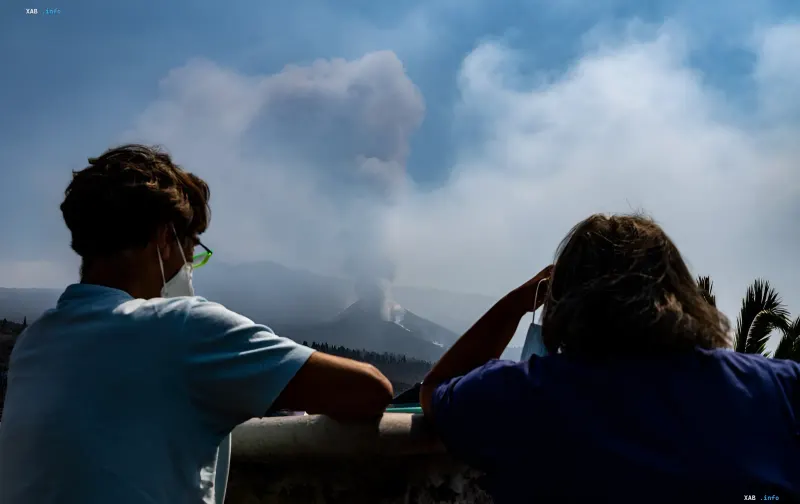
Near the Icelandic town of Grindavík, volcanoes have erupted repeatedly over the past few years, leaving behind vast lava fields that are transforming the familiar landscape. Two Icelandic architects — Arnýrður Palmadottir, founder and owner of the architectural firm s.ap arkitektar in Reykjavík, and her son Arnar Skarfeoinsson — decided to look at this destructive natural force from a fundamentally different angle. Rather than viewing lava solely as a threat, they proposed using it as a raw material for future construction, turning the aftermath of volcanic activity into a resource for creating durable building structures.
The Birth of the Idea: From Lava Flow to Building Material
According to Palmadottir, the concept first took shape in 2018, following the large-scale eruption of the Holuhraun volcano in 2014–2015. At that time, a huge volume of lava spread across the landscape near Vatnajökull — Iceland's largest glacier — creating impressive lava fields. "Wow, this is like molten concrete without cement, so why not just do something with it?" — the architect recalls her first reaction to what she saw. It was precisely this comparison to concrete that became the starting point for the entire concept: if lava rock, once solidified, possesses properties similar to building materials, then it is logical to use it directly, bypassing the traditional stages of extraction and processing.
The Technological Vision: Robots Instead of People
The concept involves using lava flows to create building structures. The architects believe that volcanic basalt rock, in terms of its physical and mechanical properties, may be suitable for manufacturing durable building elements. Skarfeoinsson noted that the properties of lava can vary significantly depending on the conditions of solidification. As an example, he cited natural columnar basalt, which has high strength and could, in theory, be used as a structural material. However, people will not be able to work directly with molten rock due to its extremely high temperature. Therefore, the authors of the concept are counting on robots and automated technologies. Among the possible methods they mention 3D printing, controlled lava flows, special cooling chambers, and robotic systems. In the architects' vision, robotic units could move across lava fields, collect molten rock, and shape it into the required structures. Another option involves transporting lava to special factories, where, using pressure and heat, finished building elements would be produced from it.
Prospects and Timeline for Implementation
Despite the futuristic nature of the plan, its authors do not expect practical implementation in the coming decades. By their estimate, the technology could become a reality by around 2150. At the same time, the architects emphasize that the enormous volumes of material left behind after eruptions could potentially supply construction for entire urban districts. They view this approach as a way to significantly reduce the carbon impact of the construction industry, which today remains one of the largest sources of CO₂ emissions in the global economy.
The Venice Biennale and Interest from the Construction Industry
The project has already become Iceland's contribution to the 19th International Architecture Exhibition of the Venice Biennale in 2025. Palmadottir notes that the concept is intended not only to propose a new building material but also to make people rethink their relationship with the landscape — from the position of an observer for whom a volcano is purely a threat, to that of a participant who uses natural processes for constructive purposes. The Icelandic construction industry, she says, has already shown interest in the project, as it actively seeks ways to cut CO₂ emissions amid growing environmental requirements. Thus, the Icelandic concept of "lava construction" is not merely an artistic gesture, but a strategic vision that links the country's geological specificity with the global goals of sustainable development.