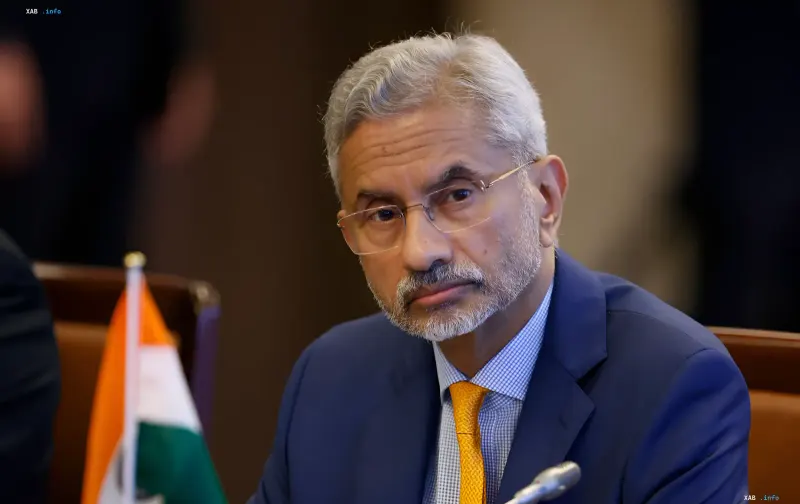
Indian Foreign Minister Subrahmanyam Jaishankar, speaking at a briefing in Kyiv, stated that New Delhi's purchases of Russian oil and other resources do not affect the possibility of ending hostilities in Ukraine. According to him, India continues to acquire energy resources primarily to provide energy for its 1.4 billion citizens amid an extremely difficult global energy environment. "It is important that you all realize what challenges are involved in providing energy for 1.4 billion people at a time when the situation in global energy is very, very complex," the head of India's Foreign Ministry emphasized.
Economic Restrictions Will Not Stop Hostilities
Respect for Ukraine's Position and New Delhi's Own Course
In response to a question about how India perceives the criticism directed at it by Kyiv and a number of Western capitals, Jaishankar stated that Ukraine has its own point of view, which India respects, but New Delhi adheres to its own position and expects it to be respected in turn. At the same time, the head of India's Foreign Ministry emphasized that New Delhi intends to join the efforts to end the war if India's assistance is truly needed. He added that the conflict will be resolved exclusively through dialogue, diplomacy, and negotiations, and it is precisely for this reason that India consistently encourages such an approach.
Actual Reduction in Imports: Strikes on Russian Infrastructure
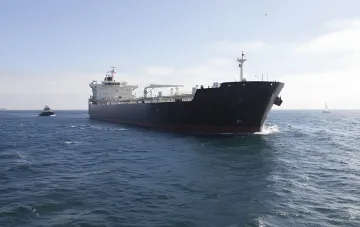
In parallel with the rhetoric about the unchanging course on purchasing Russian oil, Indian refineries are forced to reduce import volumes from previously elevated levels. The main reason for this decline was the successful strikes by the Armed Forces of Ukraine on Russian export infrastructure, which disrupted supply chain logistics. Thus, the actual volumes of Indian imports of Russian oil are being adjusted not by a political decision of New Delhi, but under the influence of objective destructions on the supplier's side.
Contradictory Data
The collected sources record a number of inconsistencies that require attention. On the one hand, Jaishankar at the briefing in Kyiv emphasizes that India is not abandoning Russian oil and that pressure on this issue is ineffective. On the other hand, according to RBC data, Indian refineries are actually reducing imports, and in some publications it is mentioned that part of the purchases is made "at the request of the United States," as well as that New Delhi is appealing to Washington to extend permits for the import of Russian oil. This information creates a contradictory picture: formally, India declares a sovereign and independent energy course, but the practical dynamics of purchases and interaction with American regulators point to a more complex reality dependent on external factors. Both versions — of New Delhi's independent choice and of the actual reduction of supplies under the pressure of infrastructure destruction and regulatory restrictions — coexist in the public discourse without an unambiguous resolution.
Context: The Fifth Year of the Conflict and India's Diplomatic Position
Jaishankar's statement in Kyiv comes against the backdrop of the fifth year of the full-scale conflict, which began in February 2022. India has maintained a line of non-interference throughout this period and has refused to join the sanctions regimes against Russia, while simultaneously declaring its readiness to contribute to a peaceful settlement. The statement in Kyiv, where the minister directly called the war a problem to be solved through "dialogue, diplomacy, and negotiations," can be seen as an attempt by New Delhi to take the position of an "honest broker," without taking on obligations to apply economic pressure on one of the parties to the conflict.