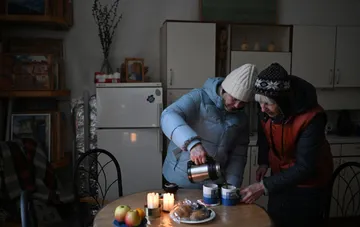
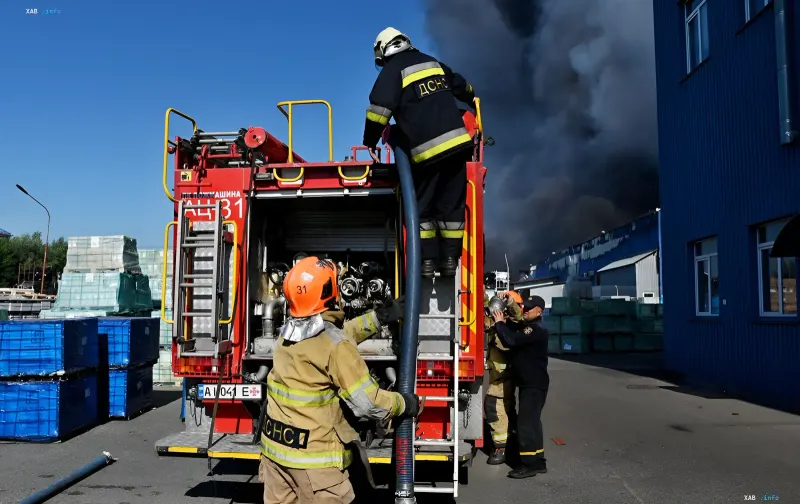
Kyiv has begun building up citywide reserves of food and drinking water in case of prolonged power outages and other emergencies. According to representatives of the Kyiv City State Administration (KCSA), the city is laying down reserves in advance for autumn and winter so that it can support residents in the event of sudden power supply disruptions. The decision was made against a backdrop of heightened risks to the energy system and volatility in global food markets.
What exactly the city is stockpiling
This is not just about basic food items, but also about reserves of drinking water that will be held in reserve in case of prolonged power supply disruptions. The formed reserves, as clarified by the KCSA, can be deployed in several directions — primarily for targeted support of residents in emergency conditions. The initiative is preventive in nature: city authorities aim not to wait for a crisis, but to create a buffer that will help mitigate the consequences of possible blackouts.
Who will receive help first
Kuyavskyi emphasized that priority will be given to low-income Kyiv residents and people in difficult life circumstances. It is precisely these groups that are most vulnerable during prolonged power outages, when the operation of refrigerators, heating, and household appliances is disrupted. Thus, the city reserves are viewed not as a universal tool, but as a mechanism of social protection in emergency conditions.
Risk assessment: from blackouts to generators
Serhiy Beskrestnov, the President of Ukraine's advisor on technological defense issues, told DOU in an interview that no mass shortage of food or fuel is expected in winter, since the Ukrainian market is closely linked to the European one. At the same time, he pointed out that the real threat this winter is strikes on the energy infrastructure. Against this backdrop, Beskrestnov recommended that citizens, while prices have not yet risen, buy generators and power banks for autonomous power supply.
The agricultural sector and global prices
A separate signal is coming from the agricultural sector: sugar beet has been sown on a record-low area for the entire history of independent Ukraine — just 162 thousand hectares. The industry explains this by low global sugar prices, rather than the consequences of the war, so no shortage of the sweet product is forecast for the nearest marketing year. Meanwhile, the next day data emerged that global food prices had risen to their highest level since the end of 2022 due to bad weather in Europe and Asia, as well as the war in the Black Sea. The escalation of Russian attacks on Black Sea ports has reduced grain shipments from Ukraine, which additionally pressures global prices.
Contradictory data
There is a clear discrepancy in assessments here. On the one hand, the President's advisor Beskrestnov claims that there will be no mass shortage of food and fuel thanks to the link with the European market, while city authorities nevertheless form reserves precisely in case of prolonged emergencies — which indirectly indicates an expectation of local difficulties. On the other hand, the rise in global food prices to a maximum since the end of 2022, the reduction in grain exports due to attacks on ports, and the record-low sugar beet sown area paint a picture of a tense market. In other words, official assurances of no mass shortage coexist with objective factors of pressure on prices and supply, which city authorities are taking into account by laying down their own reserves.