The Kyiv City State Administration (Kyiv City Council) has finalized several formats for organizing the educational process in the capital's schools ahead of September 1, 2026. According to the KCCA press service, as reported by RBC-Ukraine, schools plan to begin the first week of the new school year in a hybrid in-person and remote format. Deputy Head of the KCCA Valentin Mondryievskyi emphasized that educational institutions must be ready to swiftly switch the format of instruction depending on the security situation. "This year, the school year is starting under very difficult conditions. The past few days have shown that air raid alerts can last for hours and effectively interrupt a significant part of the school day," the official noted.
158 minutes of alerts: the figures shaping the schedule
As a clear example, Mondryievskyi cited data from August 28, 2026, when air raid alerts in Kyiv lasted a total of 158 minutes. "That is almost 4 out of 6 lessons on a standard schedule," the Deputy Head of the KCCA clarified. According to him, city authorities, together with school leaders, are developing several scenarios of action so that each school can respond in line with the specific situation and its own resources. The priority, as the message stresses, remains the safety of children and education workers. The KCCA also reminded that every educational institution has, for more than one year, had a clear individual algorithm of action in the event of an emergency, supported and approved by the pedagogical council. "Last September, such alerts were reaching Kyiv's educational institutions virtually every day," the administration added.
Parents choose the format — within the school's model
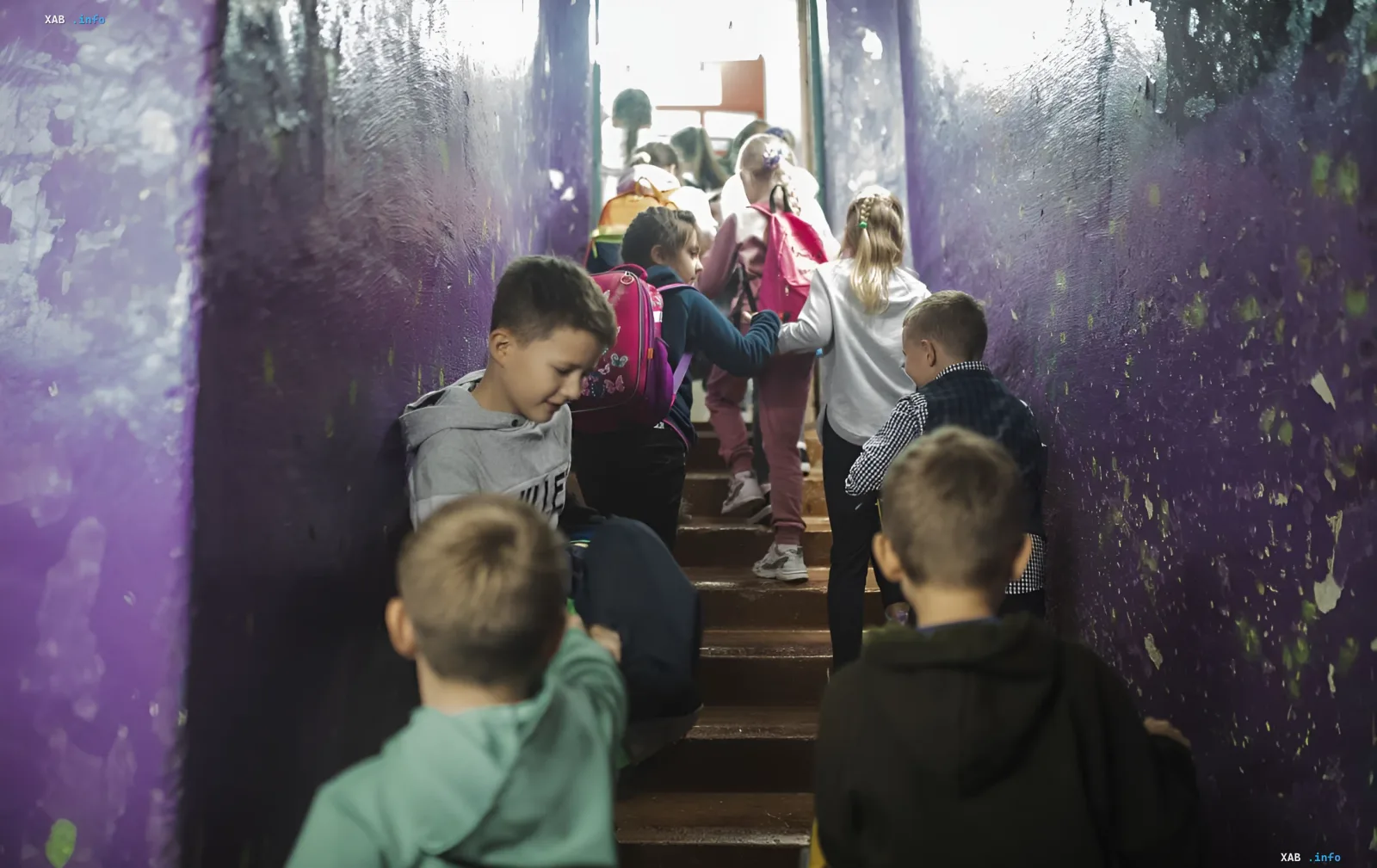
Elena Fidanian, Director of the KCCA Department of Education and Science, explained the mechanism for choosing the format of instruction for students. Parents will be able to determine the option that suits their situation, but within the models proposed by the specific school and its teaching staff. As one of the options under consideration, Fidanian cited a scheme in which in-person instruction for primary school students is organized in the shelter, while a separate space is allocated for some middle and high school students who, if necessary, will be able to continue studying online during the alert. At the same time, she stressed that this is only one of the possible formats: "Each school will determine the optimal model based on its capabilities, the specifics of its shelter, and the security situation."
"Simple but important things": what to discuss with children before September 1
Ahead of the first day of school, the KCCA Department of Education and Science appealed to parents, asking them to go over with their children "simple but important things" — the rules of conduct during an alert, the procedure for going down to the shelter, and what to do if a lesson is interrupted. "Under current conditions, this is as much a part of preparing for the school year as packing a schoolbag or preparing school uniform," Fidanian acknowledged. In conclusion, she noted that if questions or unusual situations arise, parents should first turn to the teachers and the administration of the educational institution.
Contradictory data
No significant discrepancies in figures or wording were found in the provided sources. All four sources (RBC-Ukraine, Ukrnews, Delo, TSN) refer to the same KCCA press service message and convey identical quotes from Mondryievskyi and Fidanian. The only difference lies in the emphasis: TSN focuses on the context of Russian attacks, Delo on the duration of the alerts, while RBC-Ukraine and Ukrnews focus on the hybrid in-person and remote format itself. The fact of 158 minutes of alerts on August 28 is consistently confirmed across all publications.