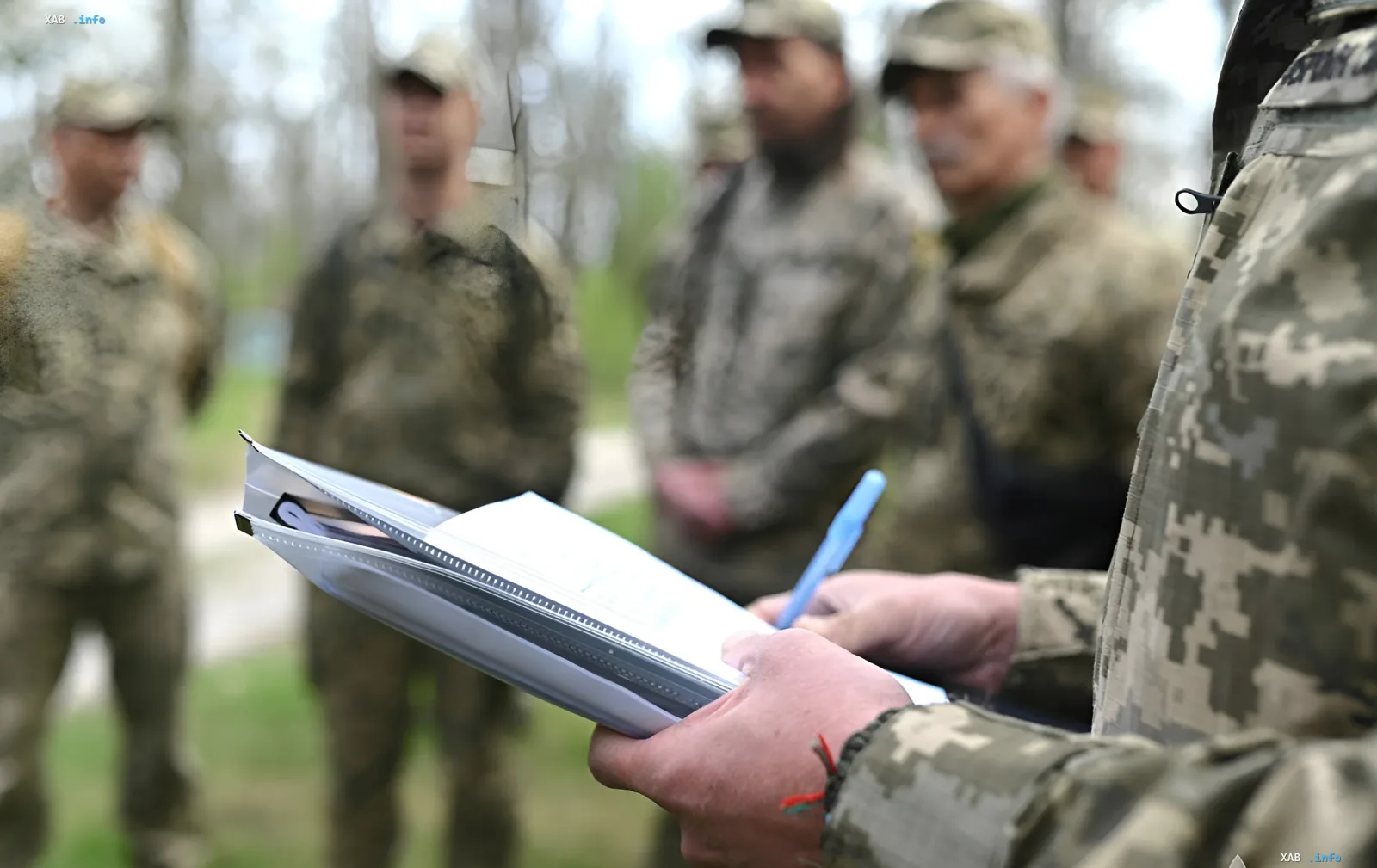
In Kyiv, staff of a Territorial Recruitment Center (TRC) illegally detained and held in the premises of a military registration office a man who had a lawful exemption from mobilization. The victim — a doctor raising five minor children — was forcibly brought to the center, his mobile phone was confiscated, and, according to the Ombudsman of the Verkhovna Rada for Human Rights, Dmytro Lubinets, the record of his exemption in the TRC's database 'vanished' right in front of the inspectors. Following the incident, identified in June 2026, the prosecution opened a criminal case in August.
How the detention took place
According to a statement by the Ombudsman's Office, the incident occurred in the morning: the man was detained right at the entrance to his building. He immediately presented his military registration documents and showed the birth certificates of all five of his children in the state 'Diia' app. Nevertheless, no detention protocol was drawn up, the citizen's mobile phone was confiscated, and he was forcibly taken to the mobilization center to undergo a military medical commission. After the medical commission, the man was not released but continued to be held in the TRC's premises. The situation was only stopped after the intervention of representatives of the Ombudsman's Office, who secured the return of the phone and the immediate release of the detained man.
Exemption 'vanished' from the database
The key episode that drew the Ombudsman's attention is related to the verification of the exemption status. In the presence of Ombudsman Lubinets's Office staff, the detained man showed the children's birth certificates in 'Diia' and a saved screenshot from the 'Reserve+' app confirming the existence of a lawful exemption. However, upon re-checking the information directly in the TRC's information database, the record of the exemption was missing. 'How did it disappear? Who and under what circumstances altered this information? The investigation must answer these questions,' Dmytro Lubinets emphasized. The Ombudsman also stated that citizens who have lawful grounds for an exemption are not required to prove their rights after having been illegally detained and brought to the TRC.
Contradictory data
The editorial team does not have an official comment from the specific TRC where the incident occurred, nor any clarification from the Ministry of Defense or the General Staff of the Armed Forces of Ukraine on how exactly the exemption record could have been deleted or 'lost' in the database. On the one hand, the Ombudsman's Office records the fact: at the time of the check in June 2026, the record was absent, although it was present in 'Diia' and 'Reserve+'. On the other hand, until the pre-trial investigation is completed, it is impossible to establish whether this was a technical failure, an unauthorized alteration of the data by a specific employee, or some other cause. Moreover, about two months passed between the date of the incident (June 2026) and the opening of the criminal case (August 2026) — this time gap has also not been publicly explained by either side. Thus, both versions — 'intentional deletion of the record' and 'system failure' — remain within the scope of the investigation until its completion.
Criminal case and the course of the investigation
In August 2026, law enforcement agencies began a pre-trial investigation into this case. Investigators are establishing all the circumstances of the incident, identifying the circle of persons involved, and providing a legal assessment of the actions of the TRC staff. The specific articles of the Criminal Code under which the act was qualified were not disclosed at the time of publication. The Ombudsman's Office, which initiated the check, continues to monitor the situation.
Systemic context: not an isolated case
The incident in Kyiv is not isolated. Recently, Dmytro Lubinets reported that in another case a TRC mobilized a man whose wife had died and who was left alone with two minor children. RBC-Ukraine also documented a series of violations in Cherkasy Oblast, where a citizen with a lawful exemption was detained and taken about 140 km from his home. These episodes point to a recurring pattern: TRC staff at the local level apply measures that do not comply with the current legislation on exemptions, while the mechanisms for rapid response and protection of citizens' rights remain insufficiently effective.