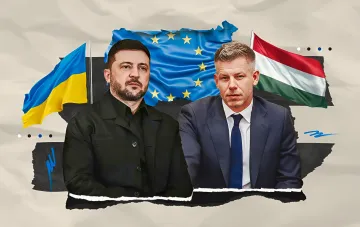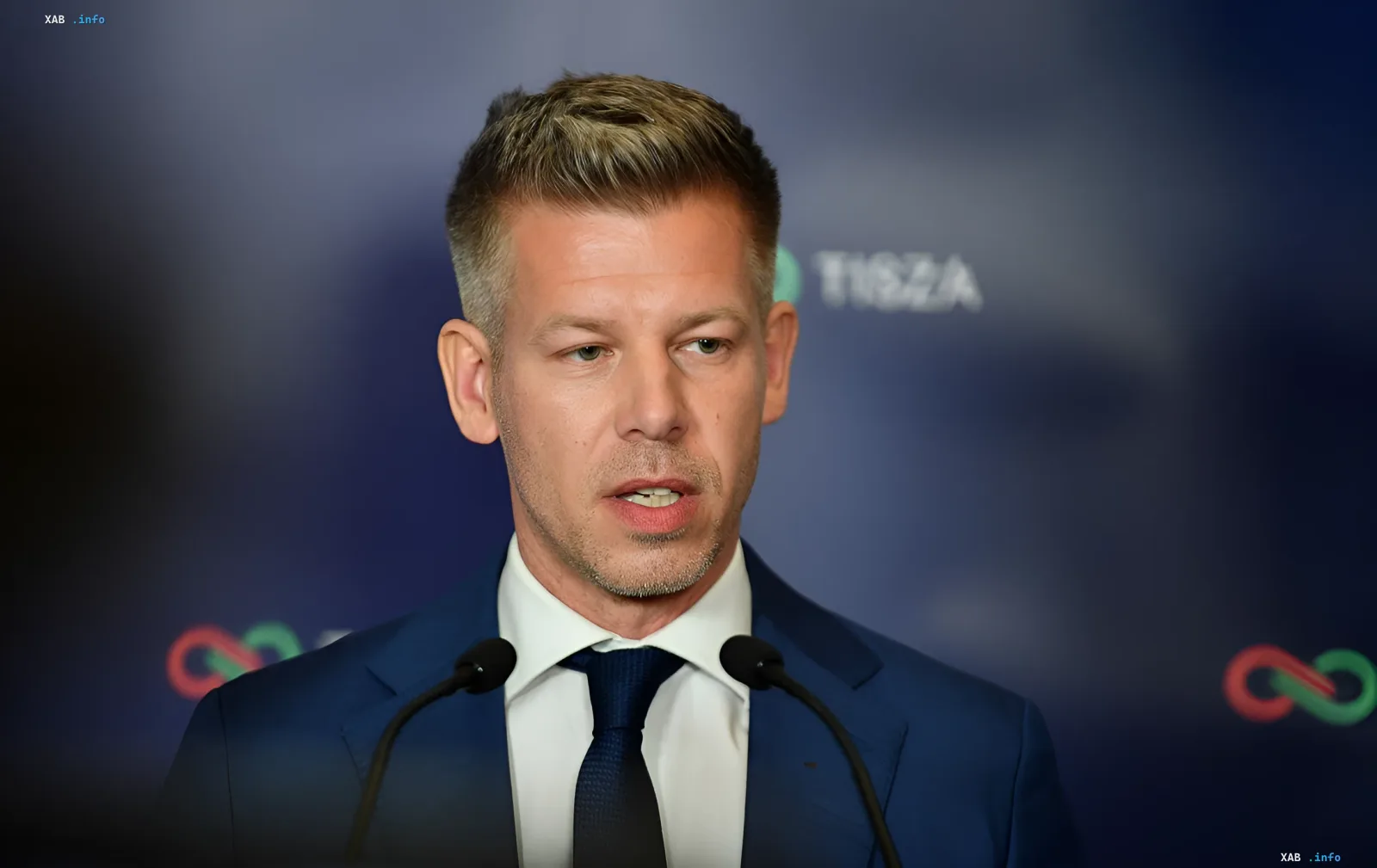
The Prime Minister of Hungary, Péter Magyar, stated that Ukraine is not yet ready to join the European Union, and that the membership process should be conducted exclusively on standard terms, without any accelerated or exceptional procedures. According to RBC-Ukraine, citing the Index publication, the head of the Hungarian government made these remarks in response to a question about supporting negotiations on Kyiv's accession to the EU. The statement came against the backdrop of Budapest effectively lifting some of the blocks on negotiation clusters in early July, which makes Magyar's new rhetoric particularly notable.
Budapest's position: standard terms only
According to Magyar, Hungary's position remains unchanged: a country's readiness for EU membership should be assessed solely on the basis of its actual merits. "There can be no exceptional or accelerated procedures," the prime minister emphasized. He also criticized the promises of rapid membership that, in his view, are made by EU leaders and a number of member states. "Ukraine is a country at war and is clearly not ready to join the EU, no matter what EU or member-state leaders try to promise Ukraine," the politician declared.
Rights of the Hungarian minority as a condition
In justifying his position, Magyar referred to the political agreement on restoring linguistic, educational, and cultural rights to the Hungarian minority. In his words, Budapest had only demanded basic rights of citizens in their native language, and Ukraine agreed and adopted the agreement with clearly defined deadlines. However, as the prime minister noted, no practical results are visible yet: "We asked only for what belongs to every person — the ability to use their own language. Ukraine agreed to this, adopted this agreement, in which specific deadlines are set. We do not yet see anything happening."
The example of Serbia and criticism of "double-dealing"
As an illustration of the length and complexity of the process, Magyar cited the example of Serbia, which, in his words, began its accession path 15 years ago but has opened only two of six clusters in that time. Against this backdrop, according to the prime minister, offering "illusory promises" and singling out certain states for political reasons amount to "double-dealing."
Contradictory data
An internal contradiction is traceable in the statements and facts surrounding the topic. On the one hand, Magyar claims that he "does not yet see" practical results and declares Ukraine's unpreparedness, maintaining a hardline rhetoric. On the other hand, in early July Hungary unblocked the sixth negotiation cluster — "external relations," which was seen as the first significant breakthrough after a prolonged block by Budapest. Thus, the actual lifting of the block on one of the key clusters and the public position on "unpreparedness" and "lack of results" coexist simultaneously, indicating a gap between the practical steps and the rhetoric of the Hungarian leadership.
Context of the negotiation process
Recall that on 15 June Ukraine opened the first of six negotiation clusters on the path to the European Union. The subsequent dynamics — including Hungary's decision in early July to unblock the sixth cluster — shows that the process, despite ongoing political disagreements and statements of unpreparedness, formally continues. Magyar's position thus sets the framework within which Budapest intends to assess Kyiv's further steps, tying them to the implementation of the agreement on the rights of the Hungarian minority and the rejection of accelerated procedures.