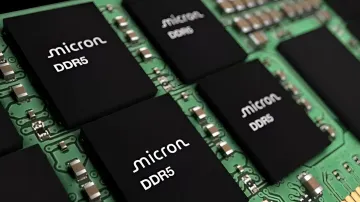
Micron Chief Technology Officer Scott DeBoer has presented a forecast stating that multi-layer RAM placed directly on top of AI accelerator dies could hit the market in 2028–2029. The statement was made at the TomorrowX Summit in Austin, where DeBoer spoke alongside Micron CEO Sanjay Mehrotra. According to the CTO, the new architecture will significantly increase memory bandwidth and reduce energy consumption for data transmission, while major computing hardware developers are already expressing interest in co-developing multi-layer DRAM.
Memory-over-Processor Architecture
Unlike modern HBM memory, which is typically located next to the compute die on a shared interposer, the new architecture involves vertically stacking multiple DRAM layers directly above the processor. This approach reduces data transmission distance and increases interface bandwidth. Additionally, developers will be able to integrate additional logic functions directly into the memory system, opening up new optimization options for AI computing stacks.
The Main Technical Barrier: Heat Dissipation
The key obstacle to implementing the technology remains heat dissipation. Modern AI accelerators generate a significant amount of energy, and DRAM chips are sensitive to elevated temperatures. Developers will need to account for the location of the processor's hottest spots, the properties of bonding materials, and the overall cooling efficiency of the multi-layer block. These engineering challenges ultimately determine the market launch timeline.
Timeline: First Solutions in 2028–2029, Mass Adoption by 2030–2031
According to DeBoer's estimates, the first such solutions will begin entering the market in 2028–2029, with widespread deployment expected closer to 2030–2031. Micron previously announced its intention to develop 3D DRAM instead of shifting to alternative transistor layout options favored by some competitors. Thus, the company is betting on vertical memory integration as the primary path for performance scaling.
Memory Shortage and $32 Billion in Customer Commitments
The development of new technologies is taking place against the backdrop of an intensifying RAM shortage. Micron CEO Sanjay Mehrotra confirmed that supply conditions in 2027 and 2028 will be even tighter than in 2026. He noted that the company has already allocated 75% of next year's planned production volume to customers, with negotiations for new supplies gradually shifting to 2028. Micron also confirmed 26 strategic customer agreements, many of which span five years; the total volume of customer prepayments and financial commitments under these contracts stands at $32 billion.
Demand Drivers: Generative and Agentic AI
Mehrotra attributed sustained demand to the growth of generative and agentic artificial intelligence. Larger model sizes, longer context windows, and an increasing number of concurrent tasks require ever-larger volumes of high-speed memory. As a result, modern processors frequently sit idle waiting for data, which limits the efficiency of computing systems. Despite building new facilities, Micron management cannot yet determine when memory supply will match demand: the company previously warned that even introducing additional production capacity by 2028 will not immediately eliminate the shortage.