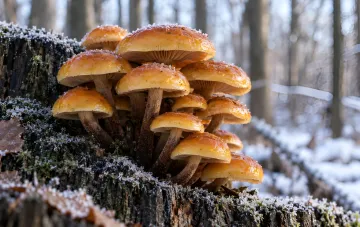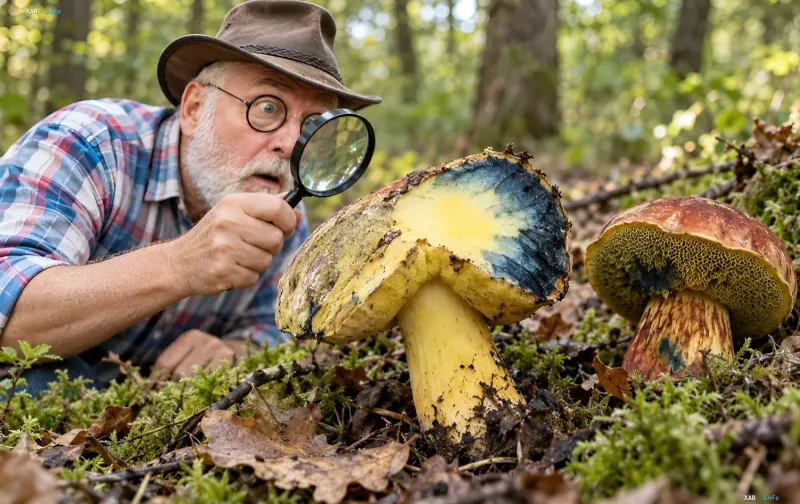
A freshly cut mushroom seemed completely ordinary, yet within seconds its flesh acquired an unexpected blue, black, or reddish hue. Such metamorphoses traditionally cause serious concern among beginner and even experienced mushroom hunters, raising doubts about the edibility of their find. However, as specialized experts note, the mere fact of color change when cut or pressed is not direct proof of toxicity or safety, but rather represents just one of many characteristics of a specific species.
Chemical Causes of Color Change
The basis for such changes lies in complex biochemical processes inside the fruiting body. When the integrity of the flesh is disturbed by a knife or pressure, the internal chemical components of the mushroom come into active contact with atmospheric oxygen. In some families and species, an instantaneous enzymatic reaction triggers the appearance of a characteristic blue or black pigment. Well-known mycologist Michael Kuo, author of the specialized reference resource MushroomExpert.com, emphasizes that among bolete mushrooms there are many representatives capable of changing color right before your eyes, requiring a comprehensive analysis of all external features.
Examples and Reaction Features in Different Species
The intensity and speed of a new shade's appearance can vary drastically. For instance, in the powdery bolete (Cyanoboletus pulverulentus), initially yellow flesh rapidly turns dark blue or almost black upon the slightest damage. A similar reaction is demonstrated by the lurid bolete (Suillellus luridus), where the flesh and pores under the cap darken to deep blue-black tones, as detailed in authoritative British catalogs like First Nature. At the same time, other species may show gradual darkening or transition from red shades to grayish tones.
Contradictory Data
In determining mushroom edibility based on color changes, contradictions and persistent myths frequently arise among the public. On one hand, there is a popular folk belief that instant blueing of the flesh unequivocally indicates deadly poison orinedibility. On the other hand, professional mycologists from the North American Mycological Association (NAMA) categorically refute this claim, pointing out that many valuable edible bolete species actively turn blue when cut, meaning reliance solely on this visual trait is misleading.
Conclusion and Expert Recommendations
Summarizing, experts agree that color change in the flesh is a useful and interesting clue for identification, but by no means a home express-test for toxicity. If a mushroom hunter lacks sufficient experience and cannot identify the species with absolute certainty based on all combined parameters — cap structure, hymenophore features, and growing location — the wisest decision is to leave the doubtful specimen in the forest.