Unprecedented Pressure on the Gas Sector: 13 Strikes in a Week
Amidst the ongoing war, Russian aggression against Ukraine's critical infrastructure has reached new scales. According to data from the Naftogaz Group, published in August 2026, Russian occupiers launched 13 strikes against the company's facilities in various regions over the past week. The attacks utilized both unmanned aerial vehicles and missile weaponry, indicating a targeted strategy to destabilize the country's energy sector.
Particularly concerning is the fact that some assets were subjected to repeated attacks within a short period. This suggests that the adversary is not merely delivering pinpoint strikes but is attempting to systematically disable key nodes of gas extraction and transportation. The intensity of attacks has more than doubled compared to previous periods, creating unprecedented working conditions for industry specialists.
Destruction and Production Halt: Economic Consequences
«Naftogaz» confirms serious damage to production capacities and equipment. As a result of constant shelling, operations at some facilities were forced to stop. This directly impacts gas production volumes, which, with winter approaching, could become a critical factor for the country's energy security.
Company specialists begin restoration work as soon as possible. However, the pace of restoration often lags behind the pace of destruction, creating additional stress for personnel and requiring the mobilization of all available resources. It is important to note that despite extensive damage, the company continues to fulfill its obligations to supply the country with gas.
Personnel Safety: Priority Number One
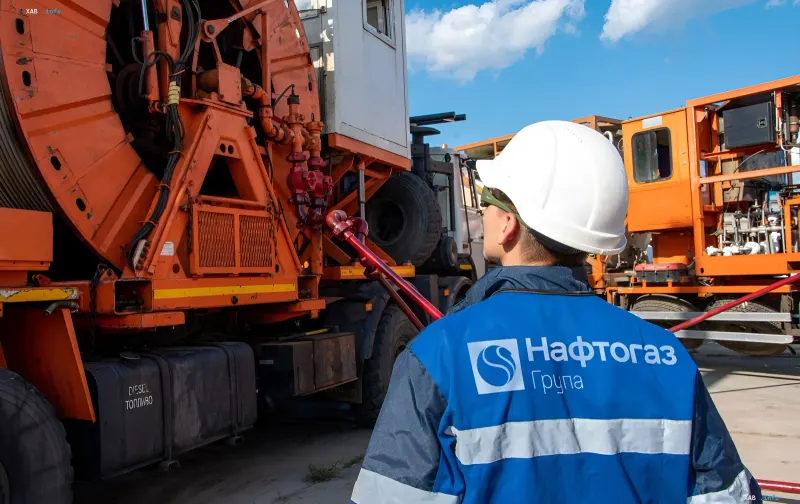
Despite the intensity of the attacks, «Naftogaz» emphasizes that thanks to strict adherence to safety protocols, no employees were injured during enemy attacks. This is the main achievement in conditions where every day carries a threat to life. The company expresses gratitude to every worker who continues to work at production sites under such extreme conditions.
Sergey Fedorenko, Acting Head of the Naftogaz Board, personally thanked the personnel for their professionalism and resilience. His words underscore the importance of the human factor in wartime, when people become the main resource for maintaining the country's life support systems.
Winter Preparation in Wartime Conditions
Preparation for the winter period continues, but it takes place against the backdrop of an unprecedented number of attacks on the company's facilities. This requires a review of work strategies and tactics, as well as enhanced security measures. The company must be prepared for the possibility that attacks may intensify ahead of the heating season, requiring additional efforts to ensure energy supply stability.
This year, Russian occupiers have already attacked Naftogaz Group facilities 293 times. This figure testifies to the systematic nature of the aggression and the need to develop long-term strategies for infrastructure protection and restoration. It is important to understand that each attack not only causes material damage but also undermines confidence in the country's ability to ensure its own energy resources.
Contradictory Data
While «Naftogaz» provides detailed information on the number of attacks and their consequences, there are some discrepancies in assessments from other sources. For example, some experts point out that the actual volume of losses may be higher than officially stated due to the complexity of assessing damage during ongoing hostilities. Other sources, conversely, claim that the company exaggerates the scale of destruction to attract international support.
These contradictions require further analysis and data verification. It is important that the information used for strategic decision-making is as accurate and objective as possible. In wartime, where every fact can be decisive, it is necessary to ensure transparency and data reliability.