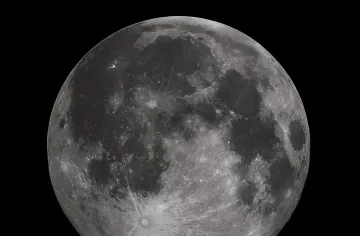
NASA and IBM have unveiled an open foundation model of artificial intelligence — the NASA-IBM Lunar Foundation Model — designed for analyzing the surface of the Moon. The system has been added to the "AI for Science" ecosystem, which the two agencies are jointly developing, and has been integrated into the open-source TerraTorch toolkit. The same lineup includes the Prithvi family of models for monitoring natural disasters and crop yields on Earth, as well as the Surya model, which forecasts solar flares and space weather. The versatility of the foundation model allows planetary scientists to adapt it to a wide range of tasks using only a small amount of labeled data.
Scale of the Training Data
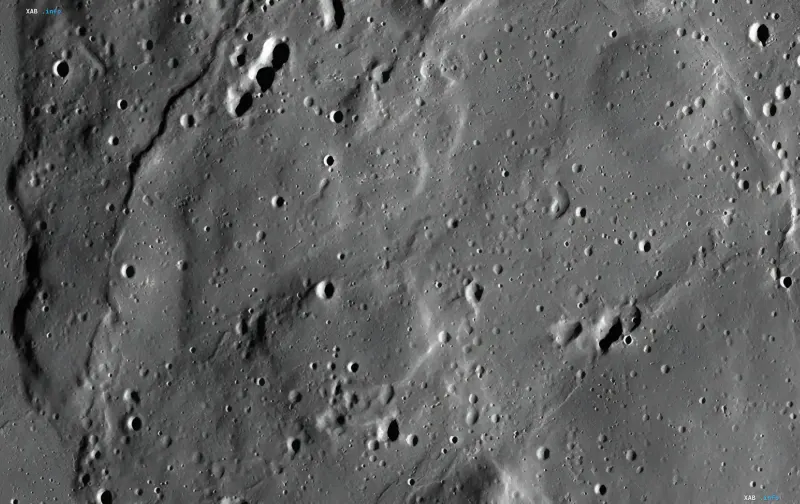
The model was trained primarily on petabytes of data from the Lunar Reconnaissance Orbiter (LRO), collected over 17 years of operation. In total, the AI processed around two million images: over one million high-resolution one-meter images and nearly 964,000 multispectral frames. The training set was additionally supplemented with data from the GRAIL, Lunar Prospector, and Japan's SELENE missions, enabling coverage of different types of lunar surface observations.
Technical Challenges of Training
Training the system proved significantly more difficult than for similar models working with Earth data. Because the Moon has no atmosphere, shadows there are extremely sharp and completely black, devoid of any information, and due to the constantly changing angle of solar illumination, the same object looks different in different frames. The traditional training method, in which the algorithm reconstructs the hidden 90 percent of an image based on the visible 10 percent, failed: most craters look almost identical from orbit, and the model could not find distinguishing features. Scientists found a solution by dividing the Moon into separate sectors using an "orange-slicing" principle and completely separating the training sectors from the test sectors, which eliminated information leakage between the datasets.
Results and Accuracy
In the task of searching for water ice, the AI models the stability of ice on and beneath the surface in permanently shadowed polar regions, reducing the number of errors by 23 percent compared to Microsoft's SwinV2-B visual system. In crater mapping, the algorithm proved 19 percent more accurate than the same SwinV2-B, using only half the volume of training data. The model also successfully identified a new crater formed by the impact of a SpaceX Falcon 9 rocket on August 5, distinguishing it from an existing formation. A separate area of focus is the study of lunar volcanism: the system accelerates the search for rare young volcanic formations, helping to better understand the Moon's thermal evolution and cooling history.
Significance for Future Missions
The presented lunar model reproduces maps of the probability distribution of lunar ice near the poles and opens up possibilities for planning future space missions, where accurate data on resources and terrain are critical. The open nature of the tool and its integration into TerraTorch make the system accessible to a wide range of researchers, while its high accuracy with smaller volumes of labeled data reduces the time and cost of preparing models for specific scientific tasks.