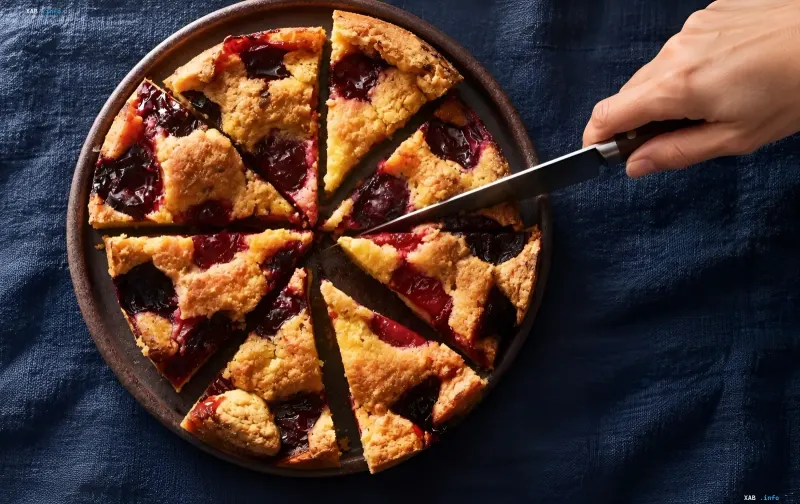
The plum torte, known as the Original Plum Torte, is one of the most recognizable desserts in the culinary history of American press. The recipe was first published by The New York Times in 1983, and its author was food editor Marian Burros. The bake became so beloved by readers that the newspaper returned to it every year for several years, and today the dish is rightly considered the signature treat of the publication's food section and the perfect dessert for plum season.
History and character of the recipe
The classic version is designed for about eight servings and is built on simple ingredients, with the bulk of the work going into making the dough. The character of the dessert is defined by the combination of tangy fruit with sweet, buttery dough and cinnamon — it is precisely this that makes the pie recognizably "autumnal." The amount of sugar can be adjusted depending on the sweetness of the plums chosen, which makes the recipe flexible for different fruit varieties.
Original preparation technique
According to the classic recipe, softened butter is creamed with sugar until smooth, after which flour, baking powder, salt, and eggs are added and mixed into a uniform dough. The finished batter is spread into a removable pan with a diameter of 8, 9, or 10 inches — roughly 20, 23, and 25 centimeters. Plum halves are packed tightly on top skin-side up, sprinkled with sugar, and finished with a little lemon juice and cinnamon. The pie is baked for about an hour at 350 degrees Fahrenheit, which is around 175–180 degrees Celsius, and then allowed to cool.
Adaptation for a 22 cm pan
For a more compact pan with a diameter of 21–22 centimeters, food blogger under the handle "anny.cooking" shared an adapted proportion on her Instagram page. The quantities of several ingredients and the baking time have been adjusted. The blogger recommends taking all ingredients out of the refrigerator in advance so they are at room temperature. Butter is creamed with sugar, then eggs, flour, baking powder, salt, and vanilla are added; the finished dough is transferred to the pan, topped with plum halves, sprinkled with sugar and cinnamon, and baked at 180 degrees for approximately 40–45 minutes.
How to check for doneness
The doneness of the adapted version, like any shortcrust pie, is best checked with a wooden skewer: it should come out of the dough clean, with no traces of raw batter on the surface. This is a simple and reliable guide that helps avoid drying out the dessert and keeps the juicy fruit filling intact. The pie is best served after cooling, when the dough and caramelized plums have set and the slices come out more cleanly.