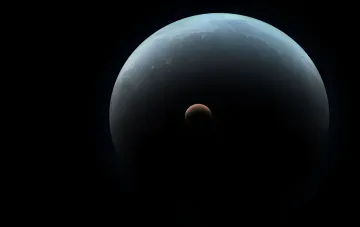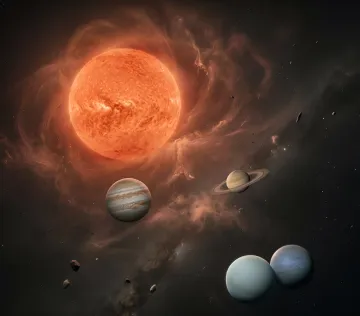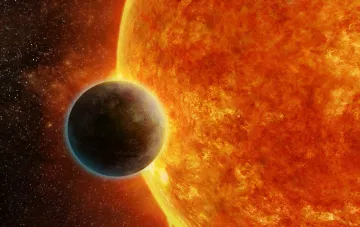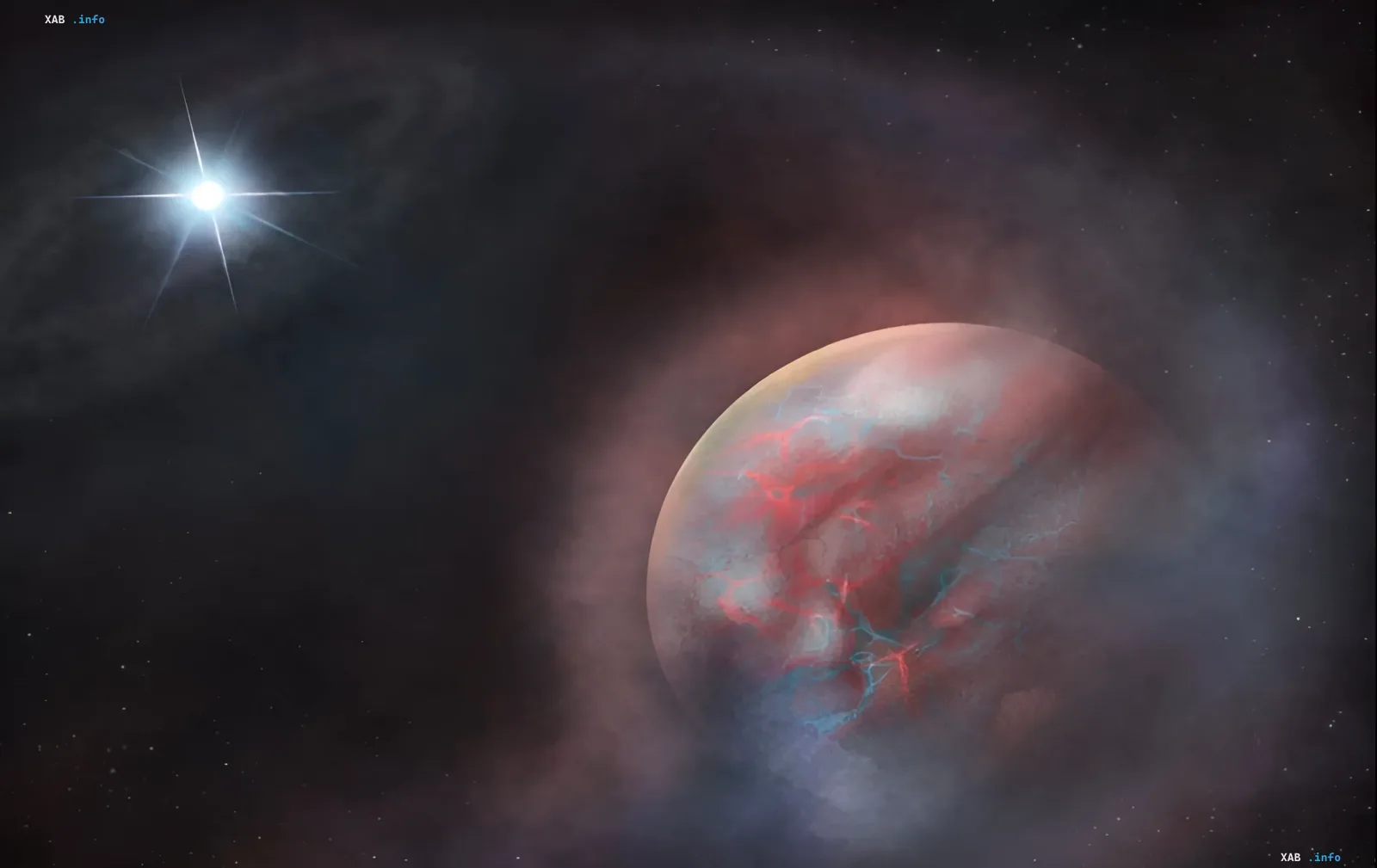
An international team of researchers led by Jamie Williams has made a revolutionary discovery in astrophysics by recording a possible candidate for the first-ever second-generation planet in science history. The object orbits the white dwarf HS 0209+0832 and is formed directly from matter ejected by the star during the final stages of its evolution. This discovery completely changes conventional understandings of cosmic body formation cycles in the Universe.
Background and Uniqueness of the Discovery
For many years, it was believed that planets formed exclusively in protoplanetary disks around young stars. However, fresh research published in the authoritative scientific journal Nature Astronomy proves the fundamental possibility of an entirely different class of celestial bodies. Scientists analyzed archival data from NASA's FUSE space mission and other advanced astronomical instruments, discovering a rare chemical element — niobium — in the atmosphere of the extinct star.Chemical Fingerprint of the s-Process
The appearance of niobium in the white dwarf's spectrum is explained by the so-called "s-process" — a complex nuclear reaction that occurs inside dying stars at the red giant stage. This is where heavy chemical elements are born. No ordinary "first-generation" planet could physically possess such a unique chemical fingerprint, which led researchers to consider an entirely different origin for the discovered object.
Characteristics and Fate of the Exotic Giant
According to the put-forward scientific hypothesis, the discovered candidate is a gas giant comparable in size to Jupiter. The cosmic object is located at an extremely close distance — only about 6 million kilometers from the parent white dwarf. Due to this close proximity, the exoplanet undergoes colossal radiation exposure, which is literally stripping away its outer gas envelopes, gradually destroying the object.Contradictory Data
Despite the high degree of detail in the study and the authority of the publication in Nature Astronomy, the scientific community urges caution in evaluations. Some experts point out that the anomalous chemical composition of the white dwarf's atmosphere could be explained not by the presence of a planet, but by accretion — the fall of remnants of destroyed asteroids or comets onto the star's surface. Discussions on whether the object is a full-fledged second-generation gas giant or just a trace of absorbed space debris continue.
Implications for Future Research
If the existence of a second-generation planet is confirmed during further observations, it will open a new chapter in observational astronomy and cosmology. Scientists will receive a unique tool to study stellar evolution and matter rebirth processes. Planned observations using next-generation telescopes will help finally resolve researcher disputes and confirm the status of the unique cosmic body.