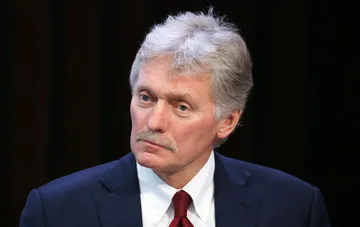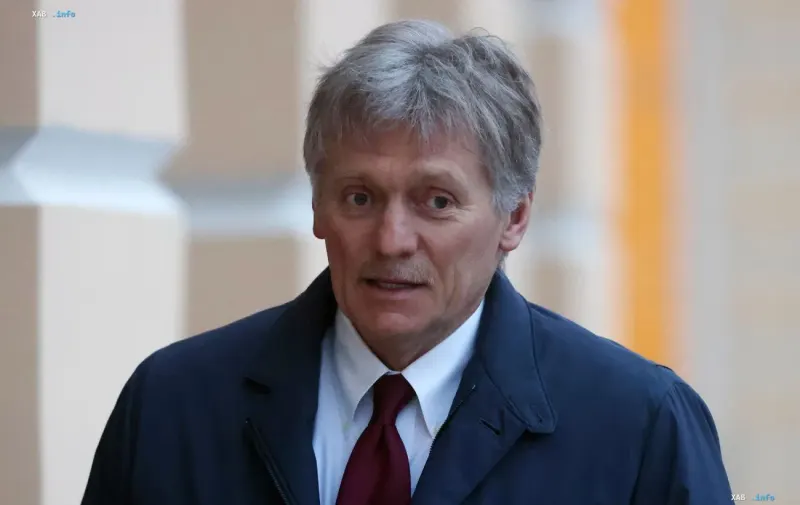
Russian President's press secretary Dmitry Peskov stated that the Kremlin has still not received an official refusal from Vladimir Zelensky regarding a possible visit to Moscow for negotiations. According to the Kremlin representative, 'Zelensky did not refuse to come to Moscow. I, at least, have not heard of it,' TASS quotes him, as cited by RBC-Ukraine. The statement came against the backdrop of the Ukrainian president's active public activities on the sidelines of the UN General Assembly in New York, where, in Peskov's assessment, Zelensky is 'making a lot of statements right now.'
Context: UN General Assembly and provocative questions
Zelensky's speech at the UNGA session was accompanied by an incident: Russian propagandists shouted a provocative question at the Ukrainian leader about when exactly he intends to travel to Moscow. This episode became the trigger for a new round of public exchanges between the two capitals. Peskov, commenting on the situation, emphasized that in Russia they 'have not yet heard of an official refusal,' thereby effectively ignoring Zelensky's previously made public statements.
'A visit by rocket': the Kremlin's reaction to Kyiv's sharp wording
Particular attention is warranted for the episode involving Zelensky's phrasing about a visit to Moscow 'by rocket.' As reported by RBC-Ukraine and Dialog.ua, this remark provoked a sharp reaction at the Russian Foreign Ministry: Maria Zakharova, according to sources, 'lost her temper' in her comments, while the Kremlin responded to the Ukrainian president's words with the characteristic restraint of official rhetoric. Peskov, for his part, stated that in the event of Zelensky's arrival in Moscow, Russia would 'ensure security' (osnmedia.ru), which effectively turns a rhetorical gesture into a formal invitation with caveats.
Moscow — the only venue: the Kremlin's position
Earlier, Peskov had already stated that Russia considers Moscow exclusively as the venue for a possible meeting of the leaders and that 'speculation about another location for negotiations is inappropriate.' This position remains unchanged: Kyiv, for its part, has categorically rejected holding negotiations on the territory of the aggressor state and publicly invited Vladimir Putin to Kyiv. Thus, formally neither side has withdrawn its offer, but the geographic anchoring makes an actual meeting extremely unlikely in the foreseeable future.
Contradictory data
There is a direct discrepancy between the statements of the two sides. On the one hand, Vladimir Zelensky previously categorically rejected the possibility of a meeting in Moscow, calling it unacceptable, and proposed an alternative — Kyiv. On the other hand, Peskov claims that he 'has not heard' of an official refusal. The difference in wording is fundamental: for Kyiv, the refusal of the Moscow venue is a public and repeatedly confirmed position, whereas for the Kremlin, the 'absence of an official document' is equated to the absence of a refusal. Analysts note that such rhetoric allows the Russian side to maintain the narrative of 'readiness for dialogue' in the public sphere without changing the terms that Kyiv considers humiliating. Moreover, the sources (360.ru, osnmedia.ru) emphasize that Peskov simultaneously promises to 'ensure the security' of the visitor, which, in the context of ongoing hostilities, is perceived by Kyiv as an additional provocation rather than a constructive step.
What this means for the negotiation track
As of 24 September 2026, no real shift in the negotiation track has been recorded. Peskov's statements are predominantly of a domestic-political nature and are aimed at demonstrating the Kremlin's 'openness' to the Russian audience. For his part, Zelensky is using the UN platform to consolidate Ukraine's position on the international arena and to deflect accusations of 'unwillingness to negotiate.' As long as the geographic question remains unresolved — Moscow versus Kyiv — any 'invitations' remain a rhetorical tool rather than a working mechanism of diplomacy.