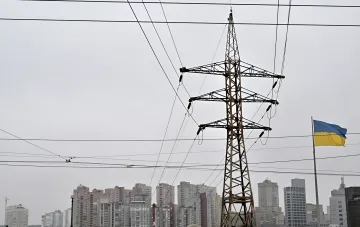
With the onset of the autumn-winter period, a persistent electricity deficit forms in Ukraine during evening hours when solar generation volumes drop sharply. According to Andriy Zakrevsky, Deputy Director of the Association of Energy and Natural Resources of Ukraine, it is during these hours that an acute need for electricity imports from neighboring countries arises. However, as the expert emphasized during the telethon, the technical capability of connecting to external grids alone does not guarantee the actual arrival of electricity: price caps established on the domestic market act as the key limiting factor.
From Daytime Export to Evening Import
In summer and early autumn, significant volumes of solar generation allowed Ukraine not only to cover its own consumption but also to export surplus electricity during daytime hours. The situation began to change in October: after sunset, domestic generation cannot cope with the evening peak consumption, and the system switches to import mode. "Imports started in the evening because the sun sets, it starts to fall short, and we gradually imported electricity if price caps and the economic situation in Ukraine allowed," Zakrevsky explained. Thus, the seasonal shift from export to import has become a structural feature of the autumn-winter period rather than a temporary glitch.
Price Caps as a Barrier to Supplies
The key thesis voiced in Zakrevsky's speech is that the mere physical possibility of import does not ensure the flow of electricity into the system. If European electricity prices during hours of evening deficit exceed the threshold values set in Ukraine, imports become economically impossible for market participants. This means that even with an open cross-border infrastructure and available generation in neighboring countries, the Ukrainian market may remain cut off from external supplies solely due to regulatory price restrictions.
Industry Demand: Raising Price Caps to UAH 18,000/MWh
The Federation of Employers of the Fuel and Energy Complex of Ukraine (FEFECU) has repeatedly appealed to NEURC with a call to raise maximum price caps to at least UAH 18,000/MWh. The organization emphasizes that during the heating season, price restrictions must leave sufficient economic conditions for the operation of available generation, maneuvering capacities, and their restoration after damage. Without adequate price signals, according to the industry's logic, operators do not receive an incentive to attract additional resources during peak deficit hours.
Current Regulatory Framework
Currently, the maximum limit prices proposed by the Regulator are UAH 15,000/MWh on the day-ahead and intraday markets, as well as UAH 17,000/MWh on the balancing market. According to market participants, these values do not provide a sufficient price corridor to attract import flows during periods when European quotes exceed the Ukrainian ceiling. The discussion on revising price caps thus acquires not only a theoretical but also a practical character: its outcome determines whether the Ukrainian energy system will be able to reliably cover evening and night deficits through external supplies in the upcoming heating season.
Experts note that the issue does not boil down to a single decision: it is about a systemic balance between protecting the final consumer from a sharp tariff hike and ensuring sufficient market flexibility to attract necessary volumes of generation and import during hours of maximum stress. Until NEURC revises the limit prices, the risk of restricting evening imports remains throughout the entire heating season.