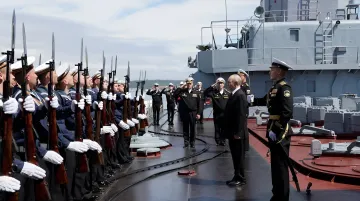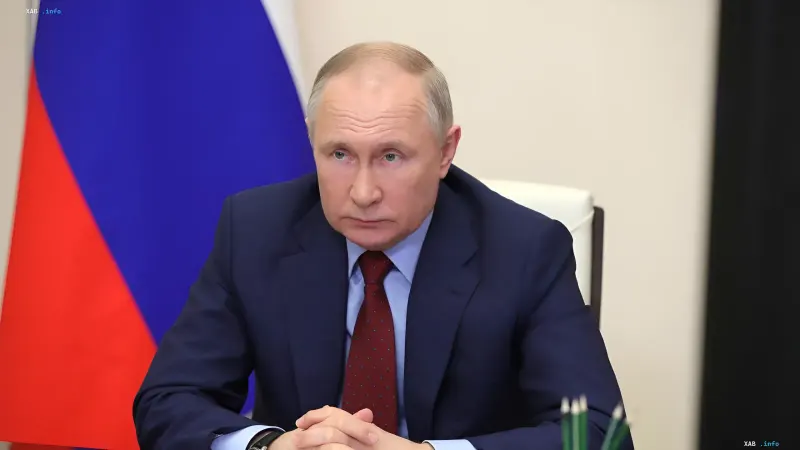
On August 12, 2026, an event took place in Yuzhno-Sakhalinsk that could change the rules of the game in international trade. Against the backdrop of large-scale exercises of the Pacific Fleet, Vladimir Putin, personally present at the final stage of the maneuvers, voiced a hard-hitting response to growing Western pressure. The President of the Russian Federation declared readiness to apply mirror measures against the merchant ships of foreign states in the event that Russia faces illegal detention or seizure of its commercial vessels.
Scale of Exercises and Geopolitical Signal
The head of state's statement was not made out of thin air. From August 4, planned exercises of the Pacific Fleet (PF) took place in the waters of the Sea of Japan and the Sea of Okhotsk, as well as in the northwestern part of the Pacific Ocean. According to the Russian Ministry of Defense, a significant number of forces were involved in the maneuvers: about 60 surface ships, around 30 naval aviation aircraft, and more than 13,000 servicemen.
The fleet inspection conducted by Putin turned into a platform for demonstrating determination. The head of state characterized possible actions by Western countries to detain ships under the Russian flag as "contrary to international maritime law." He emphasized that in the event of such a practice, the Russian Federation would not remain in debt and would deploy similar measures in accessible sea areas, including the strategically important Pacific region.
Legal Conflict: UNCLOS vs. "Shadow Fleet"
The essence of the conflict lies in the interpretation of the 1982 United Nations Convention on the Law of the Sea (UNCLOS). According to Article 87, the high seas are free for all states, and Article 92 establishes the exclusive jurisdiction of the flag state over the ship. Exceptions are made only for piracy or slave trade.
However, representatives of the European Union and G7 countries are actively developing legal mechanisms for inspecting and detaining ships of the so-called "shadow fleet," accusing them of violating sanction restrictions and environmental norms. The Russian side insists on the illegality of unilateral enforcement measures in international waters if they are not sanctioned by the UN Security Council. Putin directly pointed out the risk of escalation: coercive measures without the sanction of the UN Security Council could lead to serious naval incidents.
Contradictory Data
There are discrepancies in the assessment of the situation between the official position of Moscow and the statements of Western partners.
Russia's Position: Detention of commercial ships in international waters is a gross violation of international law and an act of aggression requiring an immediate mirror response.
Position of G7/EU countries: Detention of ships is necessary to ensure compliance with the sanctions regime and environmental norms. Western lawyers argue that the creation of a "shadow fleet" itself is a violation, which gives the right to preventive measures, even if they are not directly sanctioned by the UN Security Council.
These disagreements create dangerous uncertainty in the legal field, where each side interprets UNCLOS norms in its own favor.
Economic Consequences and Escalation Risks
The threat of applying mirror measures means that in the event of the arrest of Russian tankers or bulk carriers, Moscow could respond with similar actions against the ships of countries that have imposed sanctions. This creates a risk of a global crisis in shipping, where trade routes could become a field for diplomatic and military confrontation.
Experts note that Putin's statement in Yuzhno-Sakhalinsk on August 12, 2026, is not just rhetoric, but a clear signal of Russia's readiness to protect its economic interests by all available means, including the use of the power of the Pacific Fleet.