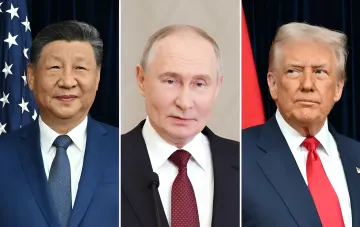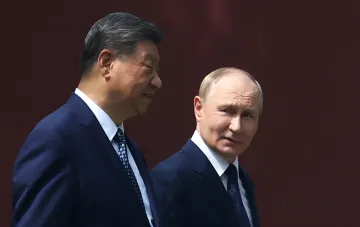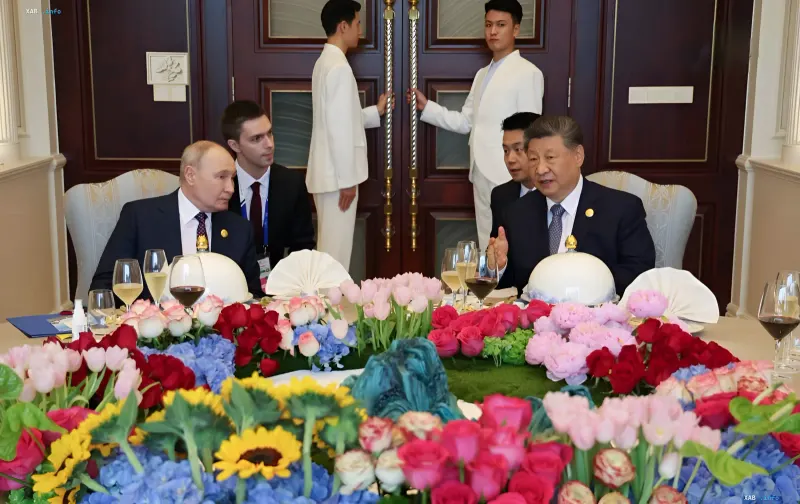
Russian President Vladimir Putin and Chinese leader Xi Jinping held talks over a working breakfast on the sidelines of the APEC summit currently taking place in China. The meeting between the two leaders occurred ahead of a scheduled engagement with US President Donald Trump, giving it heightened diplomatic significance; essentially, it served as the final bilateral coordination before Moscow and Beijing's positions are presented within a broader format involving Washington. At the start of the talks, the Russian leader referred to Xi Jinping as a friend and stated he was sincerely pleased to meet, highlighting the personal nature of the relationship between the two heads of state.
Format and composition of the talks
The negotiations were held in a small group, which traditionally indicates a working rather than a protocol-based or ceremonial nature of the discussions. In addition to the leaders themselves, the inner circle on the Russian side included Foreign Minister Sergey Lavrov and Presidential Aide Yuri Ushakov. This format allows the parties to quickly synchronize their positions on sensitive issues without a large delegation or obligatory press segments, as well as to promptly develop a unified line ahead of the meeting with the American side.
Agenda: Ukraine, Korean Peninsula, and outcomes of US contacts
As previously reported by Presidential Aide Yuri Ushakov, the discussion was set to focus on Ukraine, the situation on the Korean Peninsula, and a range of other international issues. A separate item on the agenda involved informing the Chinese leader about the results of Russia's recent contacts with the US, including the trilateral meeting in Abu Dhabi. Thus, Beijing gained the opportunity to reconcile its understanding with Moscow before meeting with Washington and to comprehend which agreements and signals had already been conveyed to the American side.
Reaction of Western partners
According to RBK-Ukraine, European officials view the potential outcome of Trump's contacts with Putin and Xi Jinping with apprehension, expecting "bad news" for their countries. Data from the Axios publication suggests that US allies fear the very configuration of such meetings creates the impression of an agreement to divide the world into spheres of influence. These assessments are not facts regarding the content of the negotiations, but they reflect the level of anxiety in Western capitals, where the potential coordination between Moscow and Beijing is linked to a reallocation of global positions.
Context: APEC summit as a venue for diplomacy
The APEC summit is traditionally used by heads of state not only to discuss trade and economic matters but also as a venue for bilateral "sideline" contacts. In this instance, this very format allowed for a working meeting between Moscow and Beijing to be conducted on short notice ahead of the key contact with Washington. For observers, the crucial question remains to what extent the positions of Russia and China will be coordinated during the meeting with the US President, and what specific agreements—if any—will result from this trilateral dialogue.