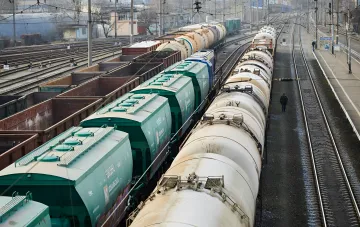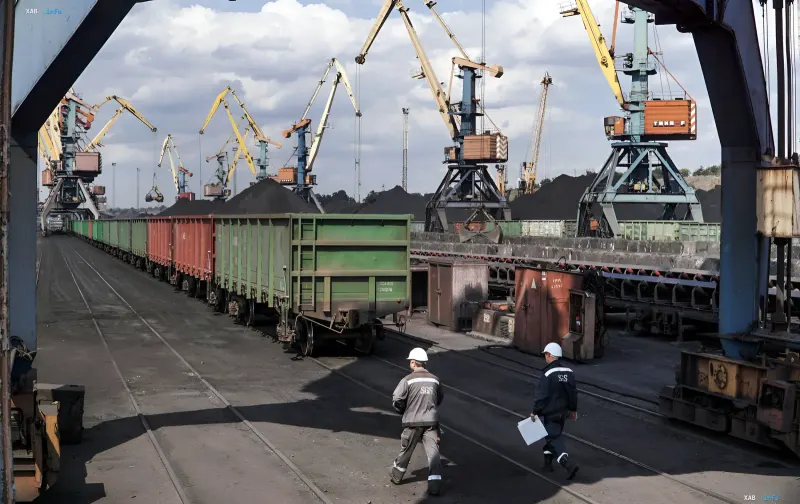
The volume of railway shipments of iron ore in the export direction risks shrinking by 30–40% due to regular shelling that Russia is carrying out against Ukrainian seaports. This was stated, according to RBC-Ukraine, by Valery Tkachev, Deputy Director of the Commercial Operations Department of the company, during a speech at the Center for Economic Strategy. In his words, the systematic destruction of port infrastructure has already led to the closure of maritime routes, which in turn directly hits railway utilization and export flows of raw materials.
Losses in Ore Export and the Halt of Mining
"In ore, we will clearly lose almost half of our exports, somewhere around 30–40%," Tkachev notes. Due to the destruction of port infrastructure and the inability to use maritime routes, the companies Ferrexpo and Yuzhny GOK (Southern Mining and Processing Company) were forced to suspend the operation of their mining facilities. Thus, the blow to logistics turns into a direct loss of production: ore that cannot be shipped effectively ceases to be a commodity.
Blow to Metallurgy: July Dynamics
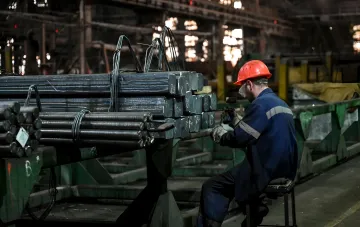
An additional blow to the industry was dealt by Russian shelling of metallurgical plants. According to information, in August Russian strikes forced ArcelorMittal to cut production volumes, while Zaporizhstal had to suspend operations. As a result, in July metallurgical production in Ukraine fell by 34–36% compared to June, confirming the scale of the crisis in the sector directly tied to ore raw materials.
EU Quotas, Carbon Tax, and Ukrzaliznytsia Tariffs
In addition to the shelling and logistical problems, the industry's results are being pressured by external factors: the introduction by the European Union of quotas on Ukrainian metallurgical products and the so-called "carbon tax" (CBAM). An internal factor has been the increase by Ukrzaliznytsia (UZ) of tariffs for freight transportation. Meanwhile, the state enterprise "Ukropromvneshekspertyza" (Ukrainian State Enterprise for Foreign Trade Expertise) had warned that such an increase would reduce UZ's freight base by 27 million tons, as well as lead to a loss of 96 billion hryvnia in GDP per year, 2.4 billion dollars in export revenue, and 36 billion hryvnia in budget revenues.
The Economic Trap for Industrial Giants
Taken together, these factors have driven domestic industrial giants into an economic trap: due to the state of the ports, logistics, and UZ tariffs, enterprises effectively have no ability to ship products to foreign buyers without a loss. Experts point out that without the restoration of safe export routes and a review of tariff policy, the industry's losses could become structural rather than temporary.