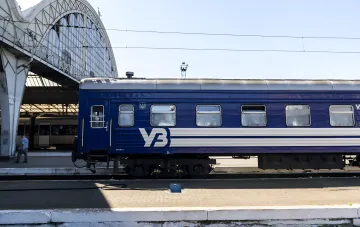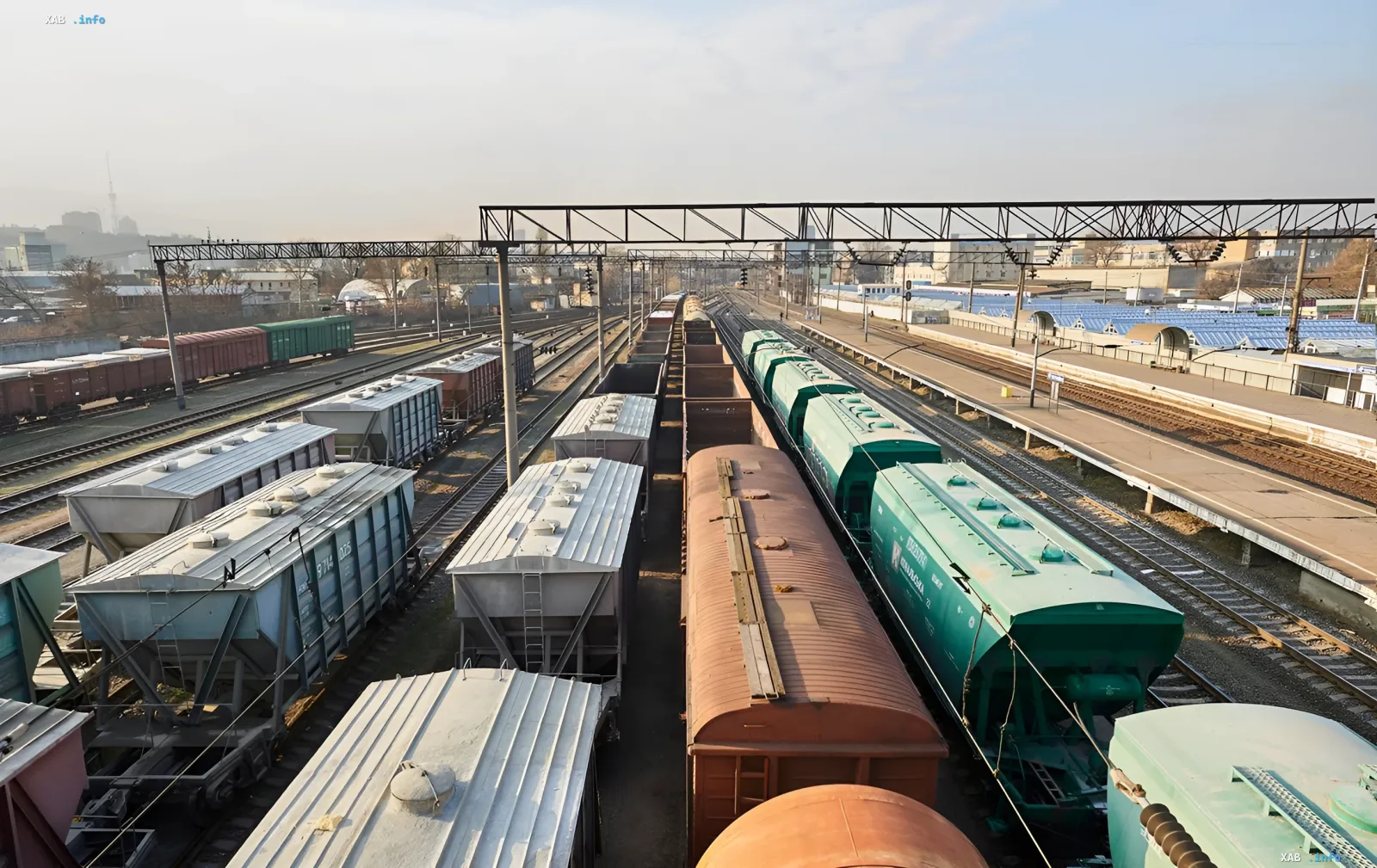
Freight rail transport in Ukraine's frontline regions is at risk of further decline. This was stated by Alexander Kalenkov, President of Ukrmetallurgprom (UMP), in a column for the Center of Transport Strategies (CTS), as reported by RBC-Ukraine. According to him, the combined impact of Russian strikes on infrastructure, a shortage of locomotives and drivers, and reduced availability of rolling stock creates a systemic risk for the economic activity of entire regions.
Figures of the Crisis: Falling Loadings and "Lost" Trains
According to Kalenkov, in the second quarter of 2026, average daily loading volumes across the railway system fell by 4% from the baseline level. The most acute situation arose at the Prydniprovskyi branch of Ukrzaliznytsia, where the decline reached 17%. Moreover, according to the head of UMP, around 30 freight trains fail to depart each day solely due to a shortage of locomotive crews. Kalenkov emphasizes that for frontline regions, the stable operation of the railway is not merely a logistical issue but a condition for preserving economic and demographic activity: if enterprises lose the ability to regularly ship their products, this creates cascading risks for factories, mines, and grain elevators located near the front.
6,119 Attacks and 508 Damaged Locomotives: The Scale of the Damage
According to data from the Ministry of Community and Territorial Development, since the start of the full-scale war, Russia has attacked Ukrzaliznytsia facilities 6,119 times, of which more than 1,500 occurred in 2026. As a result, 508 locomotives were damaged. Kalenkov warns that if the current dynamics persist, the shortage of locomotive traction in freight transport will grow already in 2027. The problem will become particularly acute after the unblocking of the Black Sea ports and the resumption of industrial production, when demand for rail transport will surge sharply while traction and personnel reserves will be exhausted.
"Railway Ramstein" and Five Directions of Action
Among the key solutions, Kalenkov named the launch of so-called "Railway Ramstein" — an international mechanism for attracting financing, locomotives, spare parts, and technical assistance from partner countries. "In order to be able to increase exports tomorrow, the problem must be solved today. Without attracting external reserves and the effective operation of the Railway Ramstein, UZ cannot cope on its own," he emphasized. Separately, the President of UMP proposed that the government develop a plan along five directions: ensuring locomotive crews and other scarce personnel, restoring locomotive traction, auditing and repairing the wagon fleet, strengthening the protection of railway infrastructure from strikes, and creating a unified system for daily monitoring of throughput capacity, which should track the availability of locomotives, crews, wagons, tracks, stations, border crossings, and ports.
Context: Tariffs and the Position of Metinvest
Kalenkov's statement complements the earlier position of Metinvest, which noted that further increases in Ukrzaliznytsia's freight tariffs amid the blockade of the Black Sea ports only worsen the situation for industry and the company itself. In this context, the idea of a separate government plan for the operation of the freight railway during the war and recovery period, as well as international assistance under the "Railway Ramstein" principle, are seen as complementary tools. The main task, in Kalenkov's formulation, is to prevent a situation in which the railway gradually loses the ability to transport the necessary volumes of cargo, and the problem becomes evident only after demand for Ukrainian exports resumes.