During the night of August 24–25, 2026, the Russian armed forces launched a massive strike on Ukraine using various types of missiles and unmanned aerial vehicles. According to the Ukrainian Armed Forces press service, the aerial attack began as early as 18:00 on August 24 and continued throughout the night. Amid the attack, the country's air defense forces repelled the majority of the aerial attack means, although some broke through to their targets, as confirmed by recorded impacts and debris falls in several regions.
Timeline and Forces That Repelled the Strike
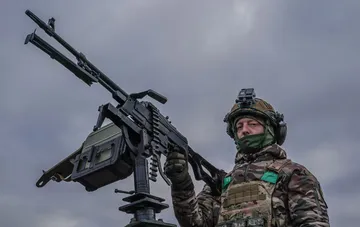
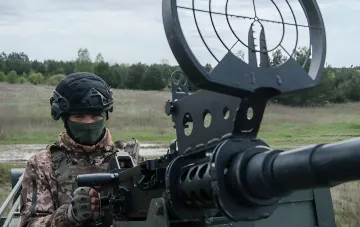
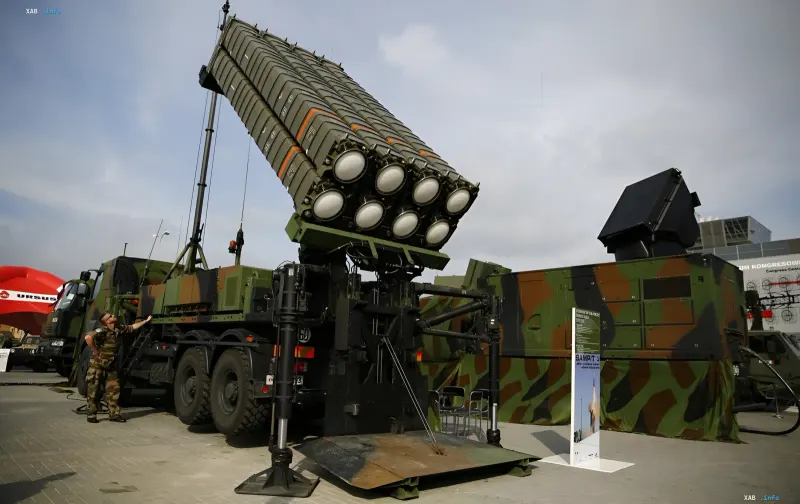
As reported by the Ukrainian Armed Forces press service, the repelling of the night strike was carried out by several branches and services simultaneously: the Air Force, air defense missile troops, electronic warfare and unmanned systems units, as well as mobile fire groups of the Ukrainian Defense Forces. This multi-component approach allowed interception at different altitudes and in different responsibility zones — in the north, south, and east of the country. As of 09:00 on August 25, air defense forces, according to official data, had managed to neutralize 124 enemy UAVs of the Shahed, "Gerbera," and other types.
Impacts and Debris Falls
The Ukrainian Armed Forces press service statement notes that impacts of the enemy's aerial attack means were recorded at 17 locations, as well as the fall of destroyed objects (debris) at 7 locations. Ukrainian defenders additionally warned civilians that, at the time of the statement's publication, several enemy drones were still in the airspace, which required maintaining an elevated state of alert. It is separately noted that during the attack, facilities in several major Ukrainian cities were hit, and a strike was also delivered to a shopping and entertainment center in Dnipropetrovsk Oblast.
Impact on Infrastructure and Border Traffic
As a result of Russia's new attack, the operation of the international border crossing point "Vinohradivka — Vulcaniștii" on the Ukrainian-Moldovan border was temporarily suspended. This creates additional difficulties for transit and cross-border communication. According to available information, strikes on major cities and infrastructure facilities confirm that the adversary continues to use combined attack scenarios, combining ballistic missiles, cruise missiles, and drone swarms, to overload the air defense system.
Contradictory Data
There is a discrepancy in figures on the number of drones shot down between various sources. In the official statement of the Ukrainian Armed Forces press service, on which this article is based, 124 neutralized UAVs are mentioned as of 09:00 on August 25 — this is an interim assessment at a specific point in time. Meanwhile, a number of media outlets (in particular, federal Russian and Ukrainian aggregators) cite a significantly higher figure — 243 drones shot down, which most likely reflects the final tally for the entire night or a different scope of attack means. These figures are not mutually exclusive if considered as snapshots at different stages; however, an exact match of versions at the time of publication has not been confirmed. In addition, certain materials on night attacks on Moscow (including one dated August 20, 2026) describe different events and are not used in this article to confirm facts about the strike on Ukraine.
Thus, the night attack of August 24–25, 2026, is confirmed by several independent sources and the official statement of the Ukrainian Armed Forces. The key facts — the start of the attack at 18:00, the involvement of multi-component air defense, 124 drones shot down by morning, 17 impact locations and 7 debris fall locations, as well as the temporary closure of the "Vinohradivka — Vulcaniștii" border crossing — are presented strictly based on primary data. Discrepancies in final drone tallies between sources are reflected in a separate section for a fair representation of the picture.