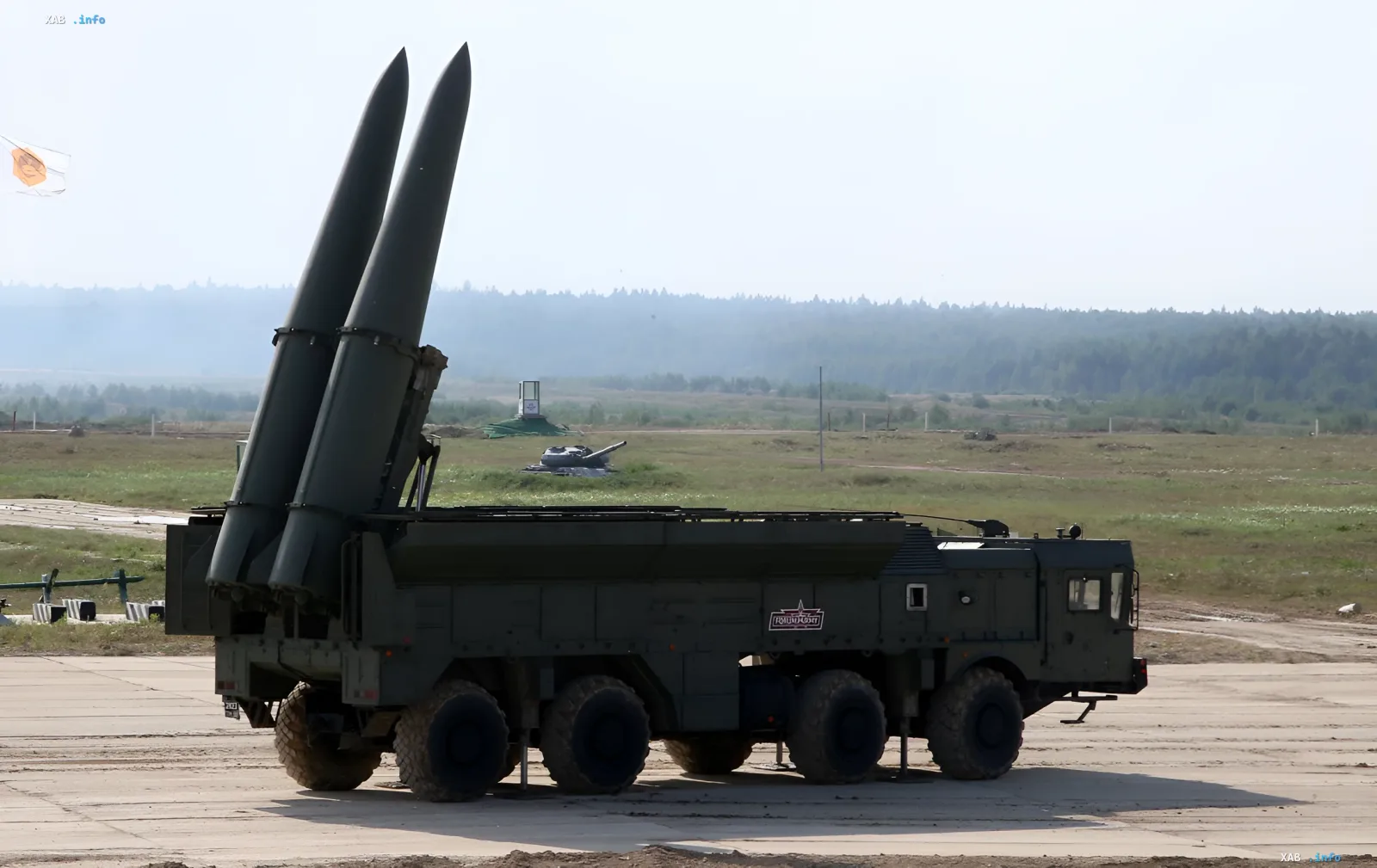
Ukraine's Main Directorate of Intelligence (GUR) reported that during one of the combined missile strikes on the capital this summer, the enemy used for the first time the upgraded 9M723-2 ballistic missiles, which in Ukrainian terminology have been given the provisional name 'Iskander-1000'. According to the agency, this missile is part of the 'Bora-M' system.
What is known about the new missile
As clarified by the GUR, the upgraded warhead, thanks to an enlarged engine and an extended launch platform, is capable of striking targets at a distance of up to 550 km, whereas the range of the basic 9M723-1 version was about 390 km. According to intelligence assessments, the remaining elements of the missile remained unchanged compared to the previous modification.
The 'terrorist nature' of the strikes
The agency emphasized that in recent months Russia has been using ballistic weapons as the primary means of air attacks. The fact that such strikes are carried out predominantly at night, and that the flight time of the ballistic missile to the Ukrainian capital is only a few minutes, indicates, according to the GUR, the purely terrorist nature of the attacks. This tactic, intelligence assesses, is aimed at intimidating the population and attempting to force Kyiv into peace at any cost.
The August 27 attacks: night and day
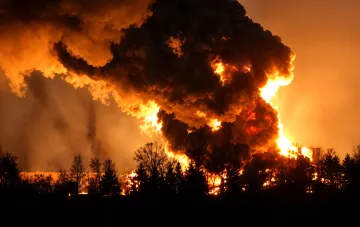
On the night of August 27, Russia attacked Kyiv and Kyiv Oblast: debris fell in the Podilskyi and Shevchenkivskyi districts of the capital, and warehouse facilities in the oblast were hit. In the morning the attack continued — in the Holosiivskyi district a car caught fire due to an enemy strike, and the fire was extinguished; in the Pecherskyi district a sports complex building was damaged. Social media reported a possible direct drone hit near the 'Dynamo' stadium area and published footage of smoke rising over the sports complex. Around noon, Russia attacked Kyiv with drones for the second time that day, and air defense units were active. As a result of the attacks, three people were injured.
The system's production network
Earlier, the GUR revealed the production network for the 'Iskander-M' system's missiles: according to the agency, it comprises around 140 components produced at 35 enterprises with the involvement of hundreds of workers. This points to a large-scale and distributed production structure, which intelligence considers vulnerable to precision strikes.
A note on terminology
It should be noted that in Ukrainian and international media the missile appears under various names: as 'Iskander-1000', as 9M723-2, and as an element of the 'Bora-M' system. According to the GUR's statement, all these designations refer to the same upgraded ballistic warhead, so it is important in publications not to conflate them with the classic 'Iskander-M' operational-tactical system.