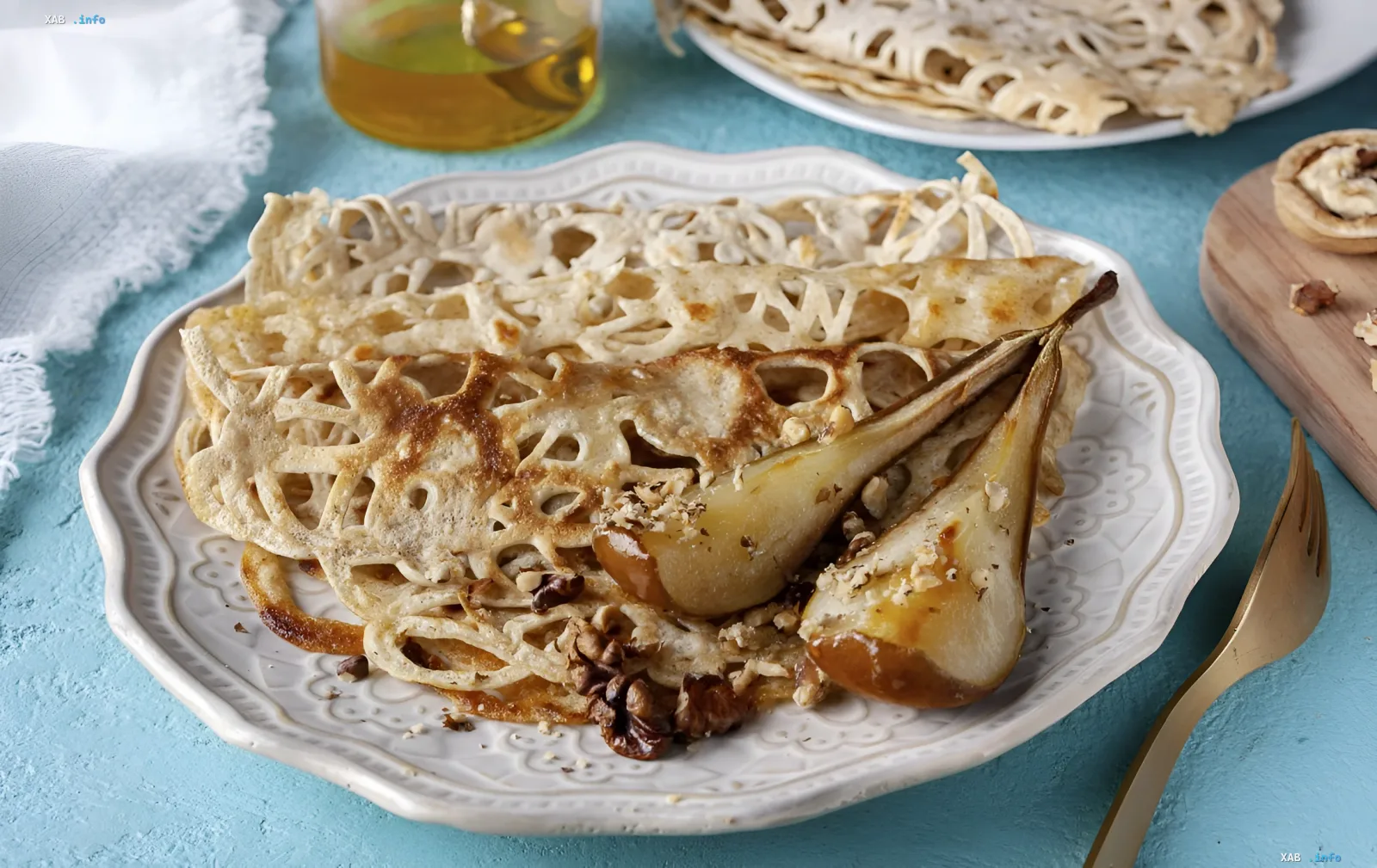
In the world of cooking, there is a dish that serves as a litmus test for any hostess — it's pancakes. An ideal pancake should be thin, elastic, and covered with beautiful lace-like holes. However, in practice, even experienced chefs face situations where the batter tears when flipping or sticks to the pan. The XAB.info editorial team has analyzed expert advice and culinary hacks to reveal the main secrets of making flawless pancakes.
The Main Secret: Boiling Water and Dough Elasticity
Most failures are related not so much to the choice of flour or the amount of sugar, but to the temperature regime during dough mixing. Experts note that the key factor that turns ordinary dough into elastic and obedient is the addition of boiling water. It is the hot water at the end of the mixing process that partially "parboils" the flour. This process changes the structure of the gluten, making it more pliable. As a result, the pancakes do not tear when flipping and are easily removed from the pan, maintaining their integrity.
The Importance of Resting the Dough and Temperature Control
After the ingredients are mixed, the dough needs time to "rest." The optimal period is 15–20 minutes. During this time, the gluten swells, the ingredients are evenly distributed, and the dough structure stabilizes. Ignoring this stage often leads to pancakes that turn out uneven and stiff. Furthermore, it is critically important to use eggs and milk at room temperature. Cold products can disrupt the emulsion, resulting in a non-uniform batter, and pancakes that are porous but not elastic.
How to Achieve Perfect Lace
For the appearance of those famous lace holes, the consistency of the batter plays a decisive role. It should be liquid enough, but not watery. If the batter is too thick, the holes will not form, and the pancake will be thick. For those who want to achieve the most lacy result, cooks offer a trick: replace part of the milk with highly carbonated mineral water. The air bubbles contained in the water make the batter lighter and airier, which visually enhances the lacy effect.
Typical Mistakes and the Final Touch
Even an ideal recipe may not work if mistakes are made during frying or serving. Experienced housewives recommend stacking the pancakes immediately after cooking and covering them with a towel or lid. This allows them to stay soft longer and not dry out. The combination of boiling water, the right consistency, and resting time makes this recipe practically foolproof. Even beginners starting to cook for the first time have every chance of getting thin, tender, and beautiful pancakes if they strictly follow these rules.