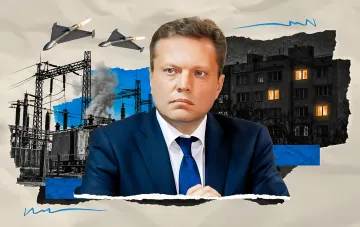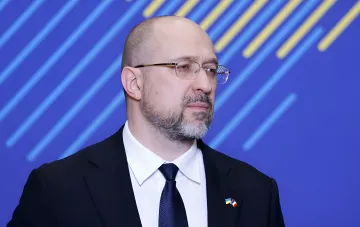
Ukrainian Energy Minister Denys Shmyhal, during the Question Hour to the Government in the Verkhovna Rada, stated that the country's power grid is currently operating stably and planned power outages are not being implemented. However, the head of the ministry directly warned that the situation could change depending on the intensity of Russian air strikes on energy infrastructure. The statement came against the backdrop of ongoing attacks and preparations for another winter of wartime.
Stability without planned outages
According to Shmyhal, planned power outages have not yet been introduced in Ukraine, and the power grid is maintaining a stable operating mode. The Minister emphasized that such stability is not a given, but the result of constant 24/7 work, and it could be disrupted by an intensification of Russian "air terror." Preparations for the heating season, he said, began as early as the summer period, and the energy protection and recovery plan is designed for a winter that is expected to be just as difficult as the previous ones.
Attrition strategy and strikes on energy
Shmyhal characterized the enemy's actions as the implementation of an "attrition strategy," since electricity ensures the lives and well-being of citizens and is the basis of the military economy. According to his data, reactive drones, cruise and ballistic missiles are being used against the energy sector, but the power grid is withstanding these strikes. The Minister reminded that the country has already gone through four difficult winters of wartime, and a fifth one is ahead, "no less complex with its own challenges".
Generation balance: 15 GW and power structure
During the evening peak, taking into account cogeneration and imports, 15 gigawatts of electric power are available today. The generation structure looks as follows: more than 40% is provided by nuclear power, 25% by thermal power plants, and another 15% by hydropower. Currently, 6 out of 9 nuclear power plant units are generating energy, while 3 units are undergoing scheduled repairs; on 5 units, this year's repairs have already been completed.
Risks for Kyiv and Poltava region
Separately, Shmyhal pointed out the risks for Kyiv and the Poltava region, stating that the enemy is already trying to destroy generation capacity, not allowing them to be protected or installed. "Yesterday there was a strike on one of the energy facilities, and this excludes us in our repair program plans," the Minister noted. He appealed to local authorities to accelerate construction, emphasizing that this is their obligation and responsibility, and the state is providing all necessary support, "sometimes even more".
Plan to increase capacity by winter
The government plans to continue increasing energy capacity: by November 1, they must increase to 19.6 gigawatts, and by the end of the year — to 21.4 gigawatts, provided that the enemy does not destroy already restored or repaired facilities. These figures take into account distributed generation and import capabilities. The government has defined the preparation of the power grid for the heating season as a key priority. Earlier, it was reported that, according to intelligence data, Russia is preparing a large-scale strike campaign against Kyiv's energy sector, trying to thwart Ukraine's efforts to strengthen energy facilities against the backdrop of a shortage of interceptor missiles.
Contradictory data
In the Minister's public narrative, two theses coexist: on the one hand, the assertion of the stable operation of the system and the absence of planned outages (which is confirmed by data on passing the record-breaking August heat without outages), and on the other — the recognition of facts of recent strikes on energy facilities and specific risks for Kyiv and the Poltava region, which are already making adjustments to the repair program. There are no discrepancies in figures between sources, however, the contrast between current stability and acknowledged vulnerabilities requires the reader to take into account that the declared resilience may be adjusted by further intensity of attacks.