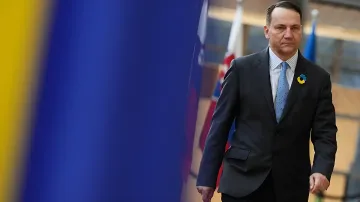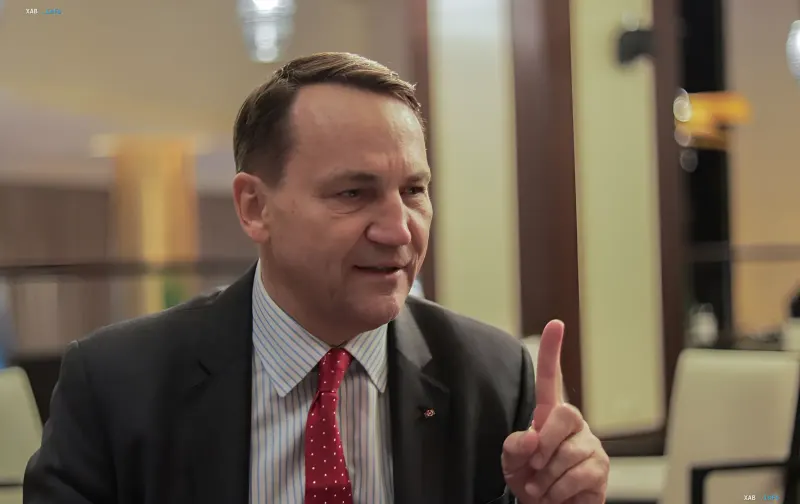
Deputy Prime Minister and Minister of Foreign Affairs of Poland Radosław Sikorski, in a speech to the Senate, identified the key obstacles that, in his assessment, could prove to be the most challenging for Kyiv on its path to European Union membership. Among these, he cited the transport sector, agriculture, the protection of national minority rights in a number of countries, and historical policy, which, according to the head of the Polish Foreign Ministry, will become a separate challenge in relations with Poland. The speech comes amid preparations for the opening of negotiation clusters on Ukraine's European integration.
Transport, agriculture and national minorities — "difficult" clusters
According to Sikorski, the accession process will not be simple, "especially in the areas of transport, agriculture, and for some countries — the issue of national minorities." These areas are traditionally considered some of the most sensitive when harmonizing a candidate's legislation with the acquis communautaire: they touch upon the competitiveness of internal markets, transport standards, and social guarantees for diasporas. The Minister emphasized that he "gets the impression" that the Ukrainian side "already knows that this will not be an easy process for them," and, according to him, he says directly to his partners: "the accession process is difficult, but the goal is worth it."
Historical policy as a separate challenge for Warsaw
Sikorski highlighted historical issues separately, which, in his wording, will be difficult specifically for Poland. This is a reference to the need to build a bilateral agenda while taking historical memory into account, which, in the context of accession negotiations, could influence public discourse and political support for the process in Warsaw. Thus, the Minister identified not only technical but also political-ideological barriers that both sides will have to overcome.
Opening of clusters — the start, not the end of negotiations
Sikorski expressed hope for the opening of all negotiation clusters before the end of the year, but emphasized that this step "will not mean the end of negotiations, but will only launch the process of fulfilling the necessary conditions for EU membership." According to him, opening clusters is "the opening of a process that will not be simple." This position underscores that the formal start of negotiations only marks the transition to the stage of legislative adaptation and institutional reforms, rather than automatic membership.
Estimates of timelines: closing clusters in 2027 and the Lithuanian experience
For comparison, Ukraine's Ambassador to the EU, Taras Kachka, previously suggested that negotiation clusters on European integration could be closed as early as 2027. According to him, the experience of Lithuania shows that all the necessary work can be done in 12–18 months. Thus, Kyiv's official estimates set relatively tight deadlines, whereas the Polish side emphasizes the complexity and duration of the process of meeting the conditions.
European Commission's position and Polish demands for the protection of farmers and carriers
Recall that the European Commission previously changed its negotiating position on Ukraine's European integration, partially taking into account Poland's demands for the protection of farmers and carriers. This indicates that the interests of the Polish agricultural sector and transport industry have already been reflected in the negotiation parameters, which is consistent with Sikorski's thesis that these particular areas will be some of the most difficult to harmonize.