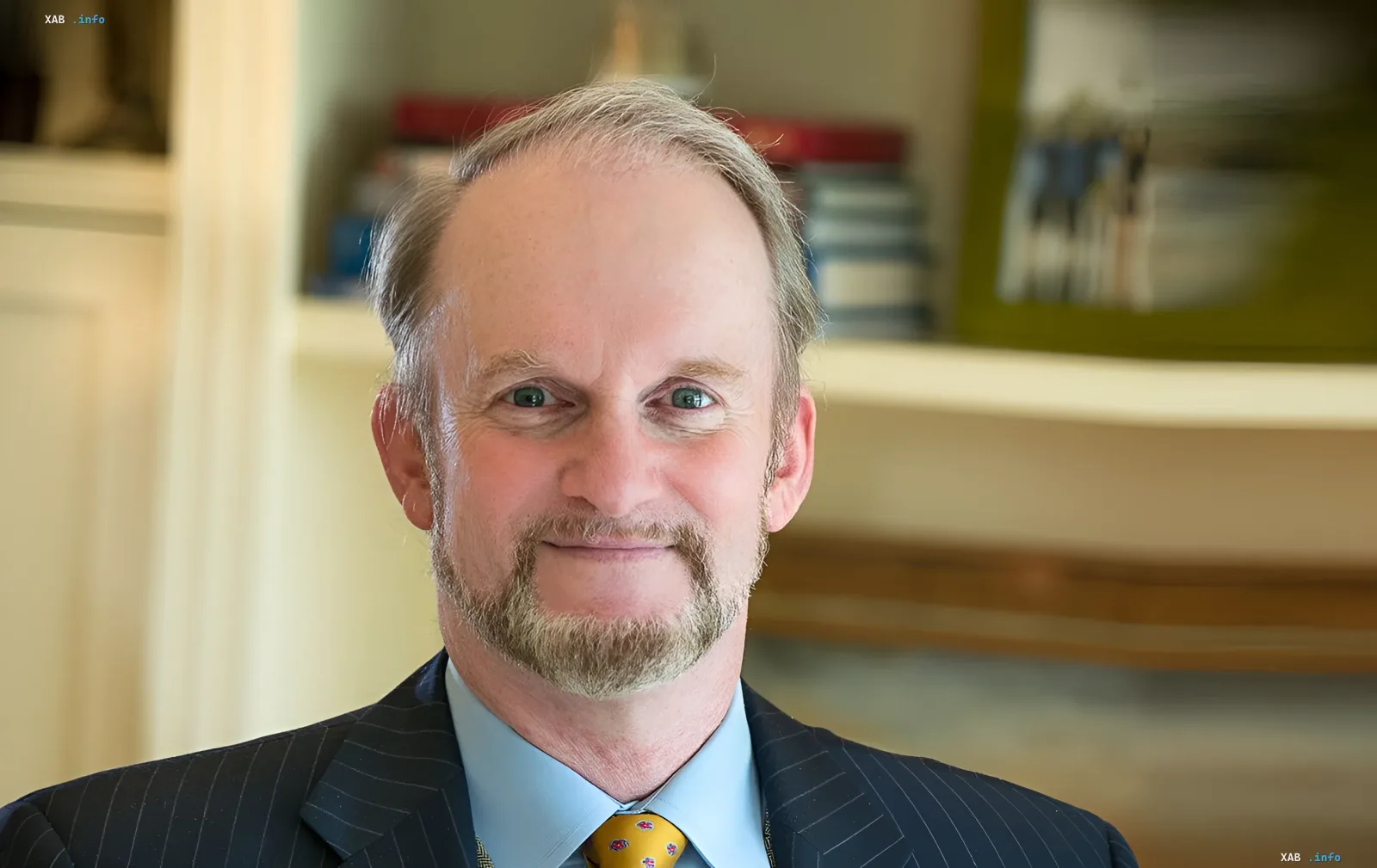
In the corridors of the 2026 Prayer Breakfast, American diplomat and venture investor Gregory Slayton gave a blitz interview to RBC-Ukraine, commenting on the key questions troubling Kyiv: the sustainability of Washington’s military support, the White House’s transactional approach to weapons deliveries, and the paradoxical softness Donald Trump shows toward Vladimir Putin. Slayton, who previously headed the US diplomatic mission to Bermuda by appointment of George W. Bush and became the only Republican diplomat whose credentials were renewed twice by the Democratic administration of Barack Obama, views American policy through two lenses at once — diplomatic and business. His background as a Silicon Valley venture investor, in his own words, allows him to understand the logic of Trump, who operates in categories of pragmatism, deals, and risks.
Family Roots and a Personal Stake
In response to a question about what it personally means to him that Russian attacks on Ukrainian cities are intensifying — in July 2026 the highest number of civilian casualties of the entire conflict was recorded — Slayton reveals a personal connection to Ukraine: his wife is the daughter of a Ukrainian. “So, so to speak, my family is Ukrainian,” he says. The diplomat emphasizes that the American people will not abandon Ukraine, and states this categorically: “That will not happen.” At the same time, he acknowledges that the terrible attacks by Russia continue, and expresses joy that Ukrainians are standing their ground, fighting for their freedom, independence, and their future.
Transactional Politics Do Not Work
Moving on to a discussion of the “you scratch my back, I scratch yours” approach of the Trump administration to military aid, Slayton, who calls himself a conservative Republican, states plainly: transactional politics simply do not work. In his words, American society as a whole does not share this approach. “The American president should not be guided by a transactional approach. He should work in the interests of all Americans and all decent people in this world,” he emphasizes. The only exception Slayton allows, with a touch of irony, is a small part of the population that considers Trump a “second coming of Jesus Christ” — but even for them, in his view, transactionality is not a political doctrine.
The Patriot Shortage and the Price of Poor Planning
One of the most acute questions for Kyiv remains access to Patriot air defense systems. Trump had earlier announced that he would grant Ukraine a license to produce them, and then retracted that statement. Slayton explains the situation by noting that Trump, facing Iran, had counted on a quick victory that did not materialize, and as a result the stockpiles of Patriot missiles were depleted. “We should never have found ourselves in such a situation, but we did,” the diplomat admits, and apologizes to partners in Ukraine, Israel, and other countries for which these systems are of critical importance. In his assessment, the root of the problem lies in the lack of adequate planning on the part of the White House.
Contradictory Data
In the interview, Slayton points to a series of internal contradictions in the behavior of the Trump administration that remain unexplained by either the White House or the president himself. On the one hand, Trump displays hardness toward traditional allies — in particular, Canada, with which the US has cooperated for decades. On the other hand, in relation to Vladimir Putin he is, in Slayton’s observation, “always gentle and welcoming.” The diplomat says directly: “Why is that? There are many rumors about it. I don’t know, but I consider it extremely unproductive.” Thus, Trump’s public rhetoric of “toughness” toward Russia and his actual behavior in negotiations with the Kremlin form a gap that, in Slayton’s assessment, undermines allies’ trust and brings no strategic dividends to Washington. A similar inconsistency is traceable in the Patriot issue as well: first the announcement of a license for production in Ukraine, then its retraction — without a public explanation of the reasons.
Ukraine Begins to Win — and This Will Change the Calculations
Concluding the conversation about what might make Trump increase pressure on Russia, Slayton bets on the military dynamics. In his assessment, Ukraine is already beginning to win: “I think he is finally starting to understand that Ukraine is really beginning to win.” At the same time, he honestly notes that the victory is not complete, since Russia has a significantly larger army and is a larger country. But, in Slayton’s words, the Ukrainian Armed Forces have shown “incredible results,” and it is precisely this trend that, he hopes, will turn the calculations in the White House and force Washington to reconsider its position on sanctions and pressure on the Kremlin.