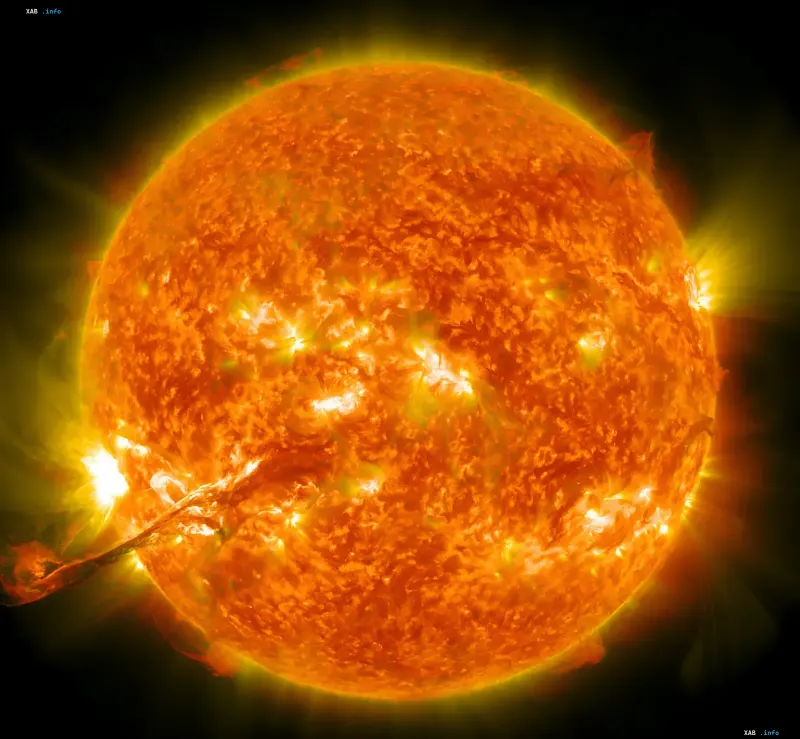
On October 30, 2026, astronomers recorded one of the largest cosmic-scale phenomena on the Sun's surface in recent times — the eruption of a giant prominence stretching 500,000 kilometers. A cloud of incandescent plasma, several times larger than the diameter of planet Earth, detached from the solar corona and began moving through interplanetary space. The complete picture of the process was recorded using specialized orbital telescopes, and official information regarding observation results and potential consequences for Earth was provided by the Solar Astronomy Laboratory of the Space Research Institute of the Russian Academy of Sciences (IKI RAS).
Giant Prominence: What Exactly Happened on the Sun
A prominence is a giant arch of superheated gas held by magnetic fields in the solar corona. In this case, we are talking about a structure about 500,000 kilometers long, making it one of the largest documented eruptions in recent months. The plasma cloud that broke away from the star's surface represents a stream of charged particles moving at a speed typical for coronal mass ejections. According to preliminary calculations by IKI RAS specialists, the size and energy of this event attracted close attention from the scientific community.
Why a Direct Hit on Earth is Unlikely
A key factor reducing the risk of serious consequences for our planet is the geometry of the eruption itself. The explosion occurred at the very edge, meaning on the lateral part of the visible solar disk. This indicates that the main mass of the plasma cloud is directed not towards Earth, but in a direction perpendicular or close to perpendicular to the Sun-Earth line. For this reason, astrophysicists estimate the probability of a direct frontal strike as extremely low. Nevertheless, as specialists emphasize, interaction with the magnetosphere cannot be completely ruled out: the outer, peripheral layers of the plasma cloud could graze the planet's magnetic field.
What Awaits Earth: Magnetic Storms and Navigation Disruptions
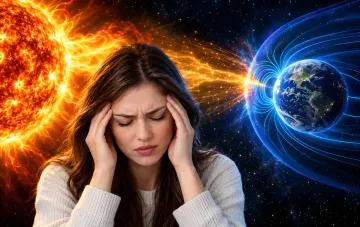
If the periphery of the plasma cloud does touch the magnetosphere, it could trigger a series of geomagnetic phenomena. Primarily, these are medium-intensity magnetic storms — magnetic field disturbances that generally pose no direct threat to human health but can affect technological systems. According to astrophysicists' estimates, short-term disruptions in high-precision navigation systems, including GPS, as well as a decrease in radio communication quality at high latitudes, are possible. These effects typically last from several hours to a day and do not lead to catastrophic consequences.
Aurora Borealis Visible Even in the South
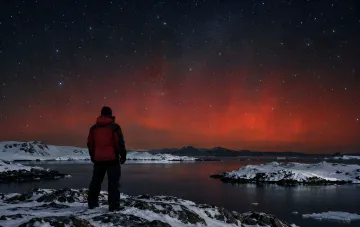
In addition to technological consequences, the collision of plasma with the upper layers of Earth's atmosphere will also produce an aesthetic effect — bright auroras. Astronomers note that in this case, the intensity of the phenomenon may be sufficient for the aurora borealis to become visible not only in traditional Arctic latitudes, but also in relatively southern regions where such sights are extremely rare. For inhabitants of mid-latitudes, this could be a rare and memorable opportunity to see one of nature's most spectacular phenomena without having to travel on polar expeditions.
Monitoring Continues
Currently, IKI RAS astrophysicists and other leading world observatories are continuously monitoring solar activity and space weather parameters. The exact timeline for when the periphery of the plasma cloud might reach Earth's vicinity is being refined as new data from orbital stations arrives. Specialists emphasize that even in a glancing collision scenario, the expected phenomena remain within normal limits and pose no threat to the planet's life-support systems.