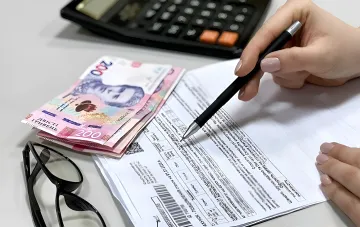
A number of internally displaced persons (IDPs) in Ukraine had not seen their due housing allowance in their bank accounts by mid-November 2026. According to the State Treasury Service of Ukraine, as reported by RBC-Ukraine, appropriations for social payments for November were fully opened on November 1, but the actual transfer of funds to citizens' accounts takes place in two stages — by the 15th and by the 28th of the month. Thus, the absence of money by November 15 is not an anomaly: for a significant portion of recipients, the next transfer is scheduled for the end of the month.
Two-stage transfer system: how IDP payments are structured
Housing assistance for internally displaced persons is transferred in two tranches within a calendar month. The first stage ends on the 15th, the second on the 28th. This means that even with the full opening of budget appropriations, the money does not arrive for all recipients on the same day. If the transfer has not arrived by November 15, this does not indicate a system failure: one should wait for the second stage, which will conclude on November 28. The Treasury emphasizes that on November 1, appropriations for all social benefits for the current month, including IDP payments, were opened in full.
Treasury does not maintain personal records of recipients
The State Treasury Service clarified that the agency does not store personal data on specific recipients of payments. Personal records are maintained by the Pension Fund of Ukraine, and citizens should contact them if funds have not arrived after the second transfer stage is completed. The Treasury acts as a financial intermediary: it opens appropriations and ensures the flow of funds through budget channels, but does not monitor whether a specific transfer has reached a specific person.
Reasons for the delay: from bank failures to errors in details
Among the possible reasons why money does not arrive on time, the Treasury lists several factors. First, bank crediting does not always coincide in time with budget funding: several working days may pass between the moment funds are allocated from the state budget and the moment they appear in a citizen's account. Second, the delay can be caused by errors in the bank account details provided by the recipient when applying. Third, the payment may not arrive if the person has effectively lost the right to assistance — for example, due to exceeding the income limit or the expiration of the previous appointment period.
Income threshold in 2026 and automatic renewal
The Pension Fund checks whether a family meets the criteria for assistance, including income level. In 2026, the average per capita income of a family member must not exceed 10,380 hryvnias. If this threshold is exceeded, the payment is terminated. In addition, the transfer may not take place if the previous assistance appointment period has expired and the citizen has not submitted a new application. At the same time, IDP assistance has been extended until the end of February 2027, and for some families, payments are renewed automatically without the need to re-apply to the Pension Fund.
Risks due to delay in the new IDP law
Despite the extension of the current payment system until February 2027, displaced persons face an additional risk. According to the head of the Verkhovna Rada's profile committee, Pavlo Frolov, the delay in passing a new law on internally displaced persons creates a threat that some displaced persons may lose their assistance. This means that after the transition period ends, if the new bill is not passed, the legal basis for continuing payments may be in question. Against this background, delays in current transfers are perceived particularly acutely by recipients.