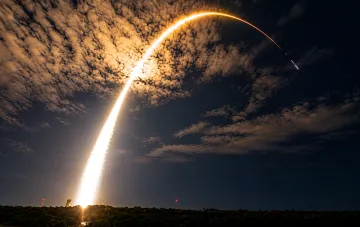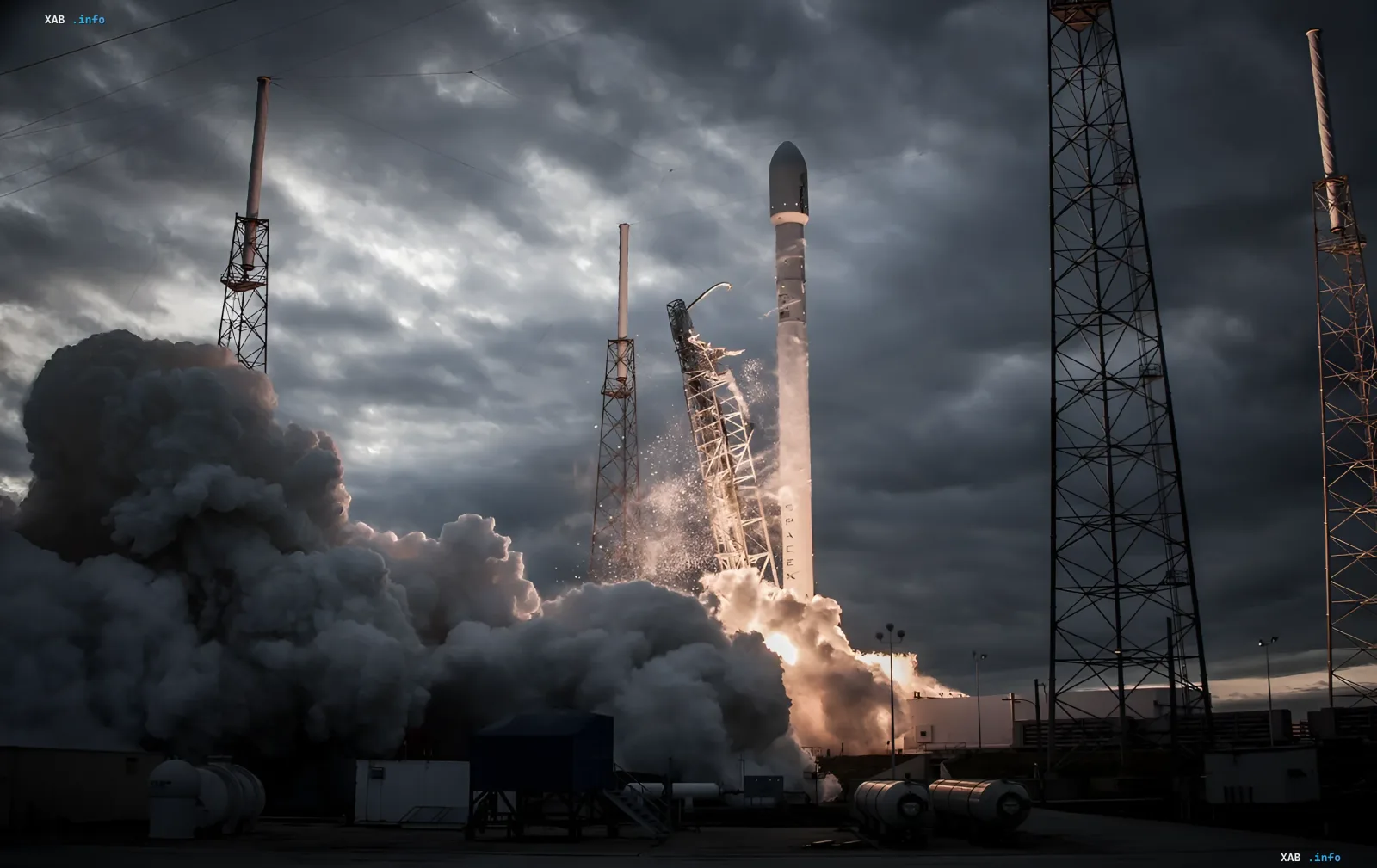
SpaceX is beginning the orderly wind-down of the Falcon 9 program — the launch vehicle that has served as the workhorse of American and global commercial spaceflight for more than fifteen years. According to RBC-Ukraine, Elon Musk stated this in his X account, explaining that the transition to the next generation of launchers will begin once the super-heavy Starship system moves into regular operational flights. In the words of SpaceX's chief, winding down Falcon 9 and its heavy variant, Falcon Heavy, is an "inevitable step": as soon as the Starship megarocket begins flying reliably several times a week, the company's manufacturing and logistical resources will be fully redirected to it to ramp up launch frequency to several per day.
Almost 700 Missions: Falcon 9 Enters the History Books
Falcon 9 first launched in 2010 and, over the course of its service, has carried out nearly 700 successful missions. It is this rocket that permanently entered the history of world spaceflight as the first orbital system whose first stage was learned to return to Earth and reuse. On its shoulders were carried out the launches of Starlink satellites, Crew Dragon missions with astronauts to the ISS, Dragon cargo ships, as well as dozens of commercial and government tasks. In essence, Falcon 9 became the foundation on which SpaceX built its entire business model and reputation.
Starship V3: Dimensions, Payload Capacity, and Full Reusability
The main advantage of Starship over Falcon 9 lies in its size, payload capacity, and the principle of "full reusability." The current version of Starship (V3) stands 124.4 meters tall — compared to 70 meters for Falcon 9 — and is capable of delivering more than 100 tons of payload to low Earth orbit. For comparison: Falcon 9's limit is about 25 tons, and Falcon Heavy's is 63 tons. A fundamental difference also lies in recovery: while the Falcon 9 upper stage burns up in the dense layers of the atmosphere, with Starship both the giant Super Heavy booster and the spacecraft itself return to Earth. The next generations of Starlink communications satellites are significantly larger and heavier than their predecessors, and their mass deployment is designed specifically for the Starship cargo bay.
Timeline: 2028 for Commercial, 2030 for NASA
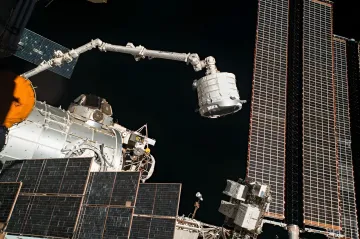
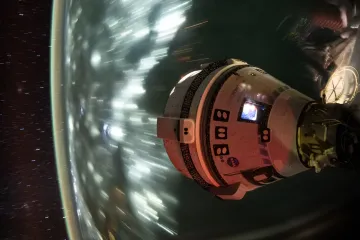
According to industry reports, SpaceX plans to discontinue most commercial Falcon 9 launches around 2028. By that time, Starship will already be involved in NASA's Artemis lunar program for landing astronauts on the surface of Earth's satellite. Meanwhile, Falcon 9 will continue to fly at least until 2030 to fulfill NASA contracts: the rocket will remain the primary transport for delivering astronauts on the Crew Dragon spacecraft and cargo to the International Space Station. Transferring ISS missions to Starship is currently impossible for engineering reasons: the enormous dimensions of the new system create safety risks for the station during docking, and the spacecraft itself lacks the corresponding certifications from the American space agency.
Contradictory Data
There is a certain inconsistency in the wording of timelines in open sources. On the one hand, a number of industry publications (including ixbt.com and 3dnews.ru) note that SpaceX has already stopped accepting new commercial orders for Falcon 9 launches dated later than 2028, which effectively means "closing the window" for booking. On the other hand, the same RBC-Ukraine article emphasizes that Falcon 9 will fly "at least until 2030" under NASA contracts, and that the final timeline for fully retiring the rocket "will depend entirely on how quickly SpaceX can demonstrate the reliability and safety of Starship in upcoming orbital test flights." Thus, 2028 is a benchmark for the commercial segment, while the full retirement of Falcon 9 may be pushed to a later date depending on the results of Starship testing. In addition, earlier (according to 3dnews.ru) SpaceX had received permission to resume Falcon 9 launches after temporary pauses, indicating the dynamism of the schedule and the absence of a hard "point of no return" at the current stage.
What This Means for the Market
The wind-down of Falcon 9 is not simply a change of rocket model, but a structural reorganization of SpaceX's entire logistics chain. The engineering and manufacturing capacities that have been tuned to Falcon 9 for decades will be redirected to the serial production of Starship. For commercial customers, this means that after 2028 the primary (and in the long term — the only) means of orbital launch within the SpaceX ecosystem will be Starship. For NASA and the ISS, the transition will be smoother: Falcon 9 will retain its status as the "workhorse" for crewed and cargo missions until Starship obtains all the necessary certifications and demonstrates the safety of docking with orbital stations.