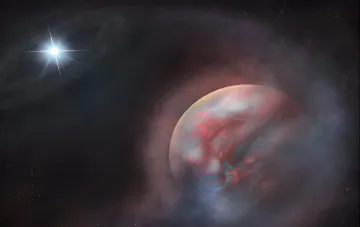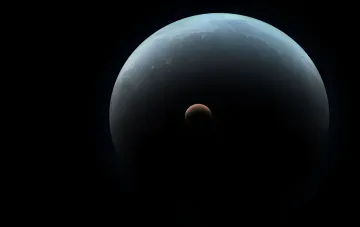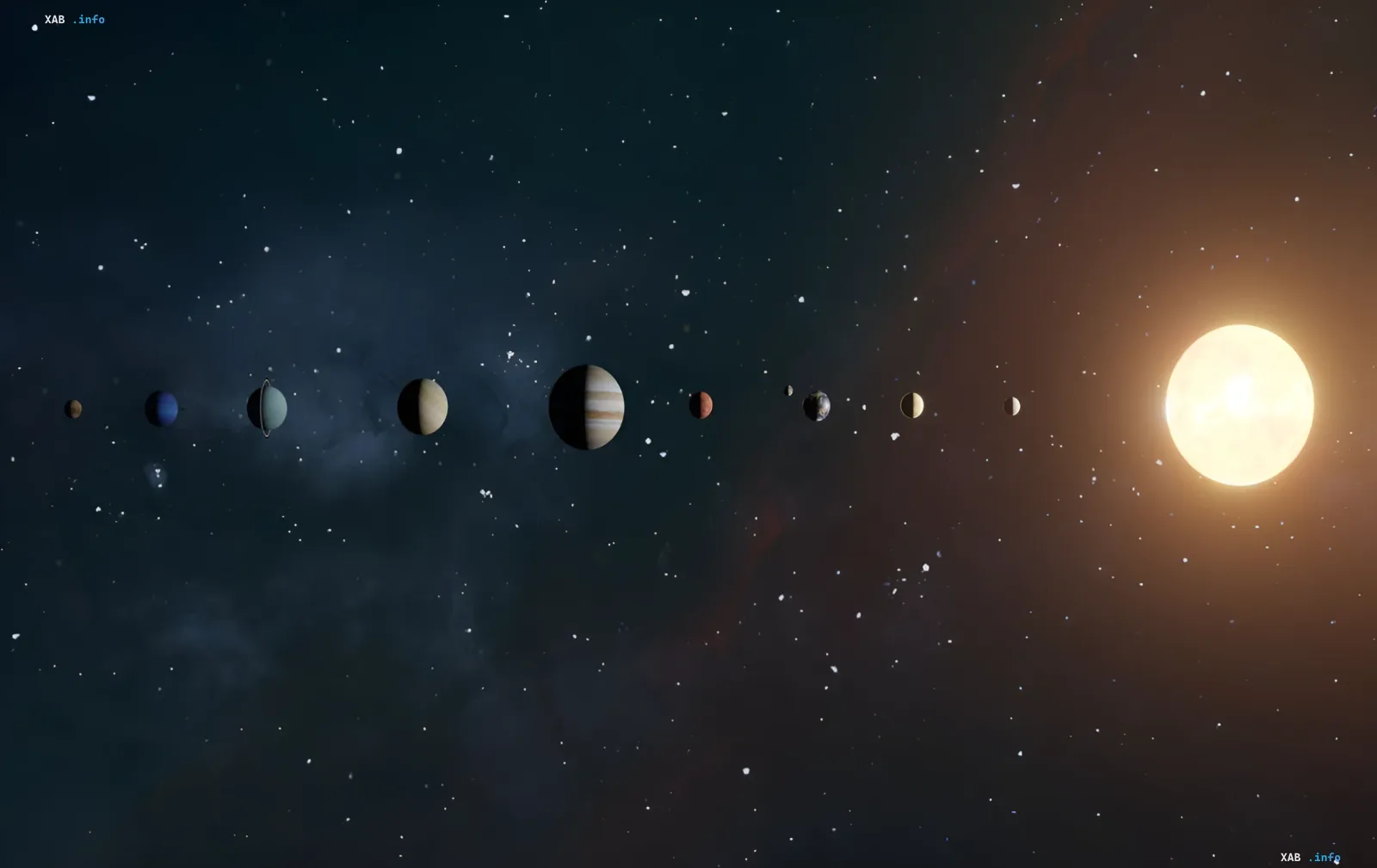
The Solar System may survive the death of the Sun much worse than scientists previously believed. A new study published in The Astrophysical Journal Letters outlines a grim scenario for the future of our stellar system, challenging established astronomical theories.
A new perspective on stellar system evolution
Previously, researchers assumed that inner planets, including Earth, would be swallowed by the expanding Sun, while distant gas giants would remain unharmed. However, a major scientific study led by astrophysicists at the California Institute of Technology paints a much more alarming picture.
Scientists simulated the motion of orbits using powerful supercomputers, analyzing the dynamics of celestial bodies billions of years into the future. The findings reveal that even distant objects in the Solar System may not survive one billion years after the Sun turns into a dense white dwarf.
Fatal consequences of the star's death
The transformation of a star into a white dwarf is accompanied by massive and chaotic mass ejections that create gravitational perturbations. These processes trigger so-called dynamical instability, forcing planets to alter their trajectories and cross each other's orbits, leading to catastrophic collisions.The authors of the study note that the dying Sun will not simply fade away, but violently shake the entire system. Thus, the disintegration of our planetary system will be driven by internal destructive processes triggered by the dying star itself.