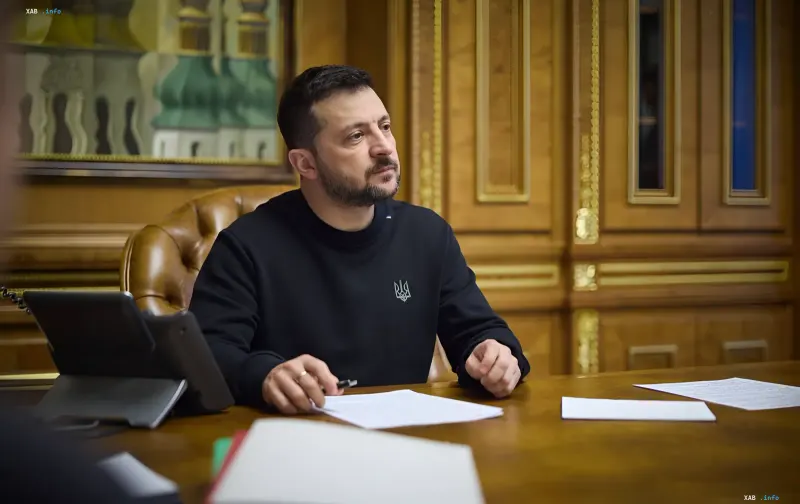
Ukrainian President Volodymyr Zelenskyy has signed Law No. 16013, which introduces a new Article 201-1 into the country's Criminal Code, establishing criminal liability for transferring bank cards, details, or online banking access to third parties for the purpose of committing financial crimes. According to RBC-Ukraine, citing the official bill tracking page, the document targets so-called 'mules'—citizens who, for a reward, hand over their payment instruments to outsiders, allowing criminals to transfer, cash out, and withdraw stolen funds. The maximum penalty under the new article is six years of imprisonment, and the upper limit of the fine is 170,000 hryvnias.
What Specifically Falls Under Criminal Liability
It is important to emphasize that the law does not criminalize any and all transfers of a card to another person. For example, if a citizen gives their card to a relative to make purchases or for temporary access to the account, this does not constitute a crime. Criminal liability arises exclusively when the transfer of the payment instrument or online banking login data is carried out consciously and purposefully to facilitate financial fraud or another crime. Thus, the key element of the offense is intent: the person must realize that their card will be used in a criminal scheme.
Scale of Punishments and Role in the Scheme
The severity of the punishment provided by Article 201-1 is differentiated depending on the role a particular person played in the fraudulent structure and whether their act is a first-time offense. For the organizers of financial schemes and active participants, the strictest sanctions are provided—up to six years of imprisonment. For citizens who merely handed over their own card and did not play an active role in managing the funds, the punishment may be milder. The maximum fine under the article is 170,000 hryvnias, making participation in 'mule' schemes economically unviable.
Opportunity to Avoid Punishment for First-Time Offenses
The law provides a mechanism for exemption from criminal liability for those who committed the offense for the first time and limited themselves solely to transferring their own card. To take advantage of this opportunity, the citizen is obliged to independently contact law enforcement agencies, confess to the violation, and assist the investigation in exposing the organizers of the fraud scheme. According to the legislators' design, this approach not only reduces the burden on the penitentiary system but also yields valuable operational information about the structure of criminal groups using 'mules' to launder funds.
Parliamentary Path of the Law and Context of the Fight Against Fraud
The Verkhovna Rada voted for the bill in late October 2026, with 270 MPs voting in favor. The adoption of the law is a logical continuation of the policy to tighten liability for participation in fraudulent call centers, which was outlined earlier. The document explicitly declares the protection of citizens' bank accounts and funds from fraud, which is especially relevant against the backdrop of the widespread dissemination of schemes in which criminals, having gained access to other people's cards, carry out operations with stolen funds. Thus, Law No. 16013 closes a legal loophole that previously allowed 'mules' to avoid serious consequences by claiming they 'just provided the details.'
Practical Significance for Citizens
For ordinary Ukrainians, the new law means that transferring a bank card, online banking password, or other payment data to an outsider for money now carries a real criminal risk. Previously, many citizens participating in such schemes believed they bore no significant responsibility since they formally did not commit fraudulent acts themselves. Now, however, the law explicitly establishes that facilitating a crime by providing one's own payment instruments is an independent criminally punishable act. Experts recommend that citizens not enter into any agreements regarding the transfer of cards or account access, even for significant remuneration, because the potential income from such 'work' is disproportionate to the risk of a multi-year prison sentence.