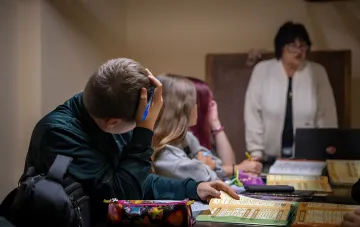
Ukrainian schools are entering the autumn–winter period of the 2026/2027 academic year with a clear plan to prepare for possible prolonged power outages. According to the press service of the Ministry of Education and Science, obtained during a blitz interview with RBC-Ukraine, the government has allocated nearly 500 million hryvnias for 2026 to strengthen the energy resilience of educational institutions. The funds have already been distributed among 21 oblasts and the city of Kyiv — UAH 22.7 million per administrative unit. The priority goal of the subvention is to ensure the autonomous operation of schools during power supply disruptions, which will allow the critical equipment and engineering networks to keep functioning.
Backup Power as a Basic Standard
A specific direction for spending the subvention has been the installation of backup power supply systems in schools. As explained by the Ministry of Education and Science, such systems must create the minimum necessary conditions for continuing in-person or blended learning even in the event of a complete shutdown of centralized power supply. Eligible for the subvention are educational institutions that operate in an in-person or blended format and have a shelter. As of September 1, 2026, the total cost of the selected projects amounts to UAH 477.3 million, and their implementation deadline is set for November 15, 2026.
Flexibility of the Educational Process: Not Just Technology
Winter preparation, as emphasized by the Ministry of Education and Science, is not limited to strengthening infrastructure on a technical level. In the event of a deterioration of the situation or disruptions in the operation of critical infrastructure, educational institutions are required to organize the learning process flexibly. Depending on the specific circumstances, this may include changing the timing of breaks, combining various forms of learning (in-person, distance, hybrid), redistributing study time, and adjusting the calendar-thematic planning. The Ministry of Education and Science stresses that such measures are intended to ensure the continuity of learning even under the most difficult conditions.
Contradictory Data
The provided materials contain a minor discrepancy in the figures: the headline of the message cites the amount of "nearly UAH 500 million," while the total cost of the selected projects is stated as UAH 477.3 million. The difference of UAH 22.7 million may be explained by the fact that the first figure reflects the volume of the allocated subvention (including a reserve or administrative expenses), while the second reflects the actual cost of the approved projects. Nevertheless, the original source contains no direct explanation of this discrepancy, and both figures are presented as correct in their respective contexts: the volume of funding and the cost of the implemented projects.
Broader Context: What Else Is Changing in the New Academic Year
The energy preparation of schools is just one element of the transformation that Ukrainian education is undergoing in 2026. The new academic year brought a number of changes: the grading rules have been updated, the number of hours for history and civic education has been increased for students in grades 7–9, and in the upper grades the testing of the new specialized learning model has continued. In parallel, as of September 1, 2026, schoolchildren in Kyiv have once again been granted the right to free travel on the capital's municipal transport when holding a valid student ticket. The combination of these measures forms a comprehensive approach to ensuring the stability of the educational process in conditions where the energy infrastructure remains vulnerable.