In the first decade of November 2026, the Ukrainian fruit and vegetable market recorded mixed price dynamics. According to the EastFruit analytical project, cited by RBC-Ukraine, over the past week, bulb onions began to rise in price for the first time since mid-summer, and potatoes jumped by several hryvnias. At the same time, a number of staple borscht vegetables — white cabbage, carrots, and beets — became cheaper. The fruit segment showed a seasonal drop in prices for nectarines, grapes, kiwis, and pomegranates, while apples, pears, and lemons rose slightly in price.
Borscht set: onions and potatoes are getting more expensive, cabbage and root crops are cheaper
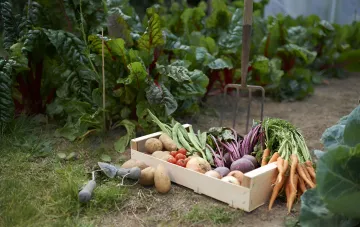
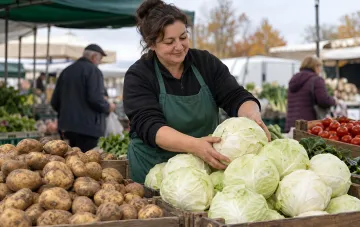
The key event of the week in the vegetable market was the increase in the price of bulb onions. Its wholesale price rose from 14–16 to 14–18 hryvnias per kilogram — the first noticeable increase since the second half of summer. Potatoes also increased in value: from 10–13 to 13–15 hryvnias per kilogram. At the same time, white cabbage, which was still rising in price by 10.6% in October, demonstrated the opposite trend in early November — its price dropped from 18–22 to 11–20 hryvnias per kilogram. Beets fell in price from 14–16 to 11–14 hryvnias, and carrots from 14–16 to 12–15 hryvnias per kilogram. Thus, an internal divergence is observed in the borscht set: some items are getting more expensive, others are getting cheaper, and the total cost of the set does not yet form a single trend.
Early vegetables and spices: tomatoes, cucumbers, and garlic continue to grow
Prices for early vegetables, which traditionally rise as seasonal supply decreases, continued their upward trend. Tomatoes were sold at 60–100 hryvnias per kilogram compared to 55–80 hryvnias a week earlier, and cucumbers at 90–120 hryvnias instead of 70–100. Sweet peppers rose in price to 40–100 hryvnias, zucchini to 40–50 hryvnias, and radishes to 40–60 hryvnias. The most noticeable increase was recorded for garlic: its price reached 100–170 hryvnias per kilogram. Among the items that fell in price in this category are Beijing and cauliflower, whose prices decreased to 28–35 and 25–35 hryvnias per kilogram, respectively, due to increased supply.
Fruit segment: seasonal price drops and growing demand for apples
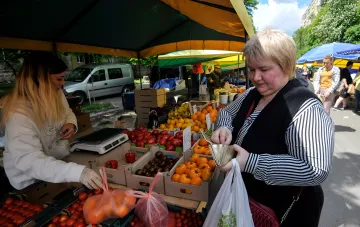
In the fruit segment, nectarines fell in price over the week from 80–120 to 70–100 hryvnias per kilogram, grapes from 75–180 to 60–150 hryvnias, kiwis from 130–150 to 70–120 hryvnias, and pomegranates from 140–170 to 120–150 hryvnias. A small price increase was recorded for apples (from 18–30 to 20–30 hryvnias), pears (from 35–90 to 35–100 hryvnias), and lemons (from 55–75 to 60–75 hryvnias per kilogram). On the EastFruit Trade Platform during the reporting period, goods were represented by participants from 10 countries. The total number of announcements began to decline, primarily due to a decrease in supply from Ukraine and Iran, while sellers from Uzbekistan and Turkey increased their activity. Among the fruits, Ukrainian apples and Uzbek persimmons prevailed: the supply of persimmons grew, while that of apples decreased. The number of pomegranate sellers doubled over the week — in addition to Uzbekistan, participants from Egypt and Turkey began to offer it.
Supply and demand: what was purchased and offered most often
Among the vegetables on the EastFruit platform, white cabbage was offered most often, although its supply has been declining for the second week in a row. Other borscht vegetables were also sold less frequently, except for beets. At the same time, the number of offers for Beijing and cauliflower, radishes, and tomatoes grew. Bulb onions and white cabbage were in highest demand among platform participants; apples were also among the most sought-after items. The reduction in Ukrainian supply against the backdrop of growing activity of Uzbek and Turkish sellers indicates a gradual change in the structure of the import flow ahead of the winter season.
Forecast until the end of 2026: no significant drop in prices expected
According to analysts' estimates, no significant drop in the price of the entire borscht set is predicted until the end of 2026; individual vegetables may continue to rise in price. Earlier, RBC-Ukraine reported that in October, cabbage and beets in Ukraine rose in price by 10.6% and 14.4%, respectively, while carrots fell in price by 10.3%. Separately, it is noted that by the end of the year, bread in Ukraine may rise in price by another 10% — its cost is affected not only by grain and flour prices, but also by producers' expenses for electricity, fuel, logistics, and wages. Thus, the consumer basket in the basic products segment retains upward price pressure, even if individual positions demonstrate a short-term price drop.