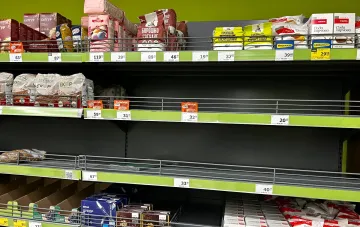
Taras Vysocky, Ukraine's Minister of Agrarian Policy and Food, stated at a briefing that, given the full-scale war against Russia, citizens should keep a minimal one-week supply of food, but there are no grounds for panic buying for a month. This was reported by RBC-Ukraine, citing the minister's words as conveyed by Suspilne. According to him, in combat conditions any force majeure events are possible, which is why it is sensible to keep a week's supply at home, which, as the minister emphasized, "is not meant to be universal" and may vary from family to family.
A week's supply as the norm, not panic
Vysocky explained that no family lives by the principle of having food for only one day and going shopping every day, so a one-week supply is a natural household norm, not a reaction to a crisis. He stated directly that there are no grounds to stock up on food for a month. At the same time, the minister acknowledged that, due to disruptions in deliveries from warehouses to stores, certain categories of goods may temporarily disappear from shelves, but sooner or later they return to supermarkets, so long-term stockpiling is not justified.
No shortage, but logistics under pressure
Earlier, according to RBC-Ukraine, Vysocky stated that no shortage of socially significant food products is being recorded in Ukraine, and the volume of production in the main categories exceeds domestic consumption. At the same time, due to the destruction by Russia's strikes of large distribution centers, Ukrainian retail is being forced to switch to a model of small warehouses. In Kharkiv Oblast, where several strikes on warehouses and logistics hubs were recorded, authorities reported that shelves had emptied only temporarily and the situation was under control. The minister estimated the losses to Ukrainian business from the August 5 attacks on food warehouses at tens of billions of hryvnia.
Contradictory data
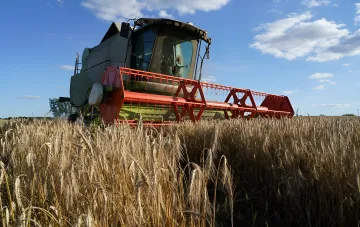
It is important here to compare two lines of facts. On the one hand, the official position of Kyiv insists on the absence of a critical shortage: production exceeds consumption, and a one-week supply is called a household norm, not a sign of scarcity. On the other hand, data on the state of foreign trade and logistics paint a more tense picture. According to a report by Channel One (1prime.ru), in the first 12 days of August Ukraine was able to export only about 30% of its needs, and, according to APK-Inform data, the entry of ships into Ukraine's Black Sea ports for agricultural products has been suspended. Thus, the claim of "no shortage" refers to the domestic market and the availability of stocks, while the export channel and port logistics are objectively squeezed. The difference between these versions is explained by the fact that the minister is talking about food availability within the country, while industry data record a breakdown precisely in the external supply loop.
What families should do
The minister's practical recommendation boils down to something simple: keep a one-week supply at home, tailored to the habits of a specific family, and do not chase multi-month stockpiles. He acknowledges that short-term gaps on shelves due to the restructuring of logistics to small warehouses are possible, but emphasizes that goods return to trade. For the reader, this means there is no reason for panic, but a sensible one-week cushion in wartime is a justified measure.