
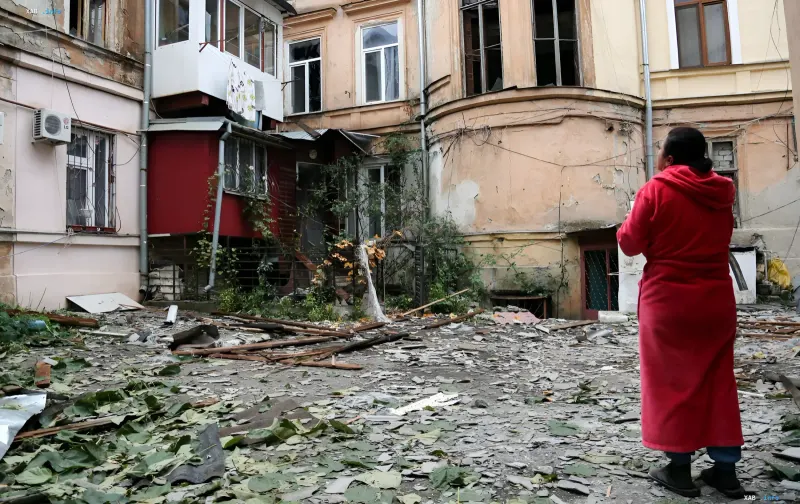
Ukraine's State Tax Service (STA) has published a detailed clarification on the procedure for exempting property owners from the real estate tax whose properties have been damaged as a result of hostilities. According to RBC-Ukraine, the exemption is not automatic and applies exclusively to objects whose damage has been recorded in the State Register of Property Damaged and Destroyed as a Result of Russia's Armed Aggression. The clarification covers both residential and non-residential objects damaged from 19 February 2014 onwards, and affects millions of owners in frontline and previously occupied regions.
Which categories of damage entitle you to the exemption
Legislation clearly distinguishes between damaged and destroyed property. A damaged object is one that can be restored through major repairs, reconstruction, or restoration. A destroyed object is one whose restoration is impossible or economically unfeasible. The right to full exemption from the real estate tax applies to owners of Category II objects (degree of damage 41–80%) and Category III objects (81–100%). For Category II objects, the suspension of their use during the repair period is additionally required. If, however, the housing has sustained minor damage and remains fit for use, requiring only current repairs, the mechanism is different: local and military administrations have the right to set a reduced tax rate or fully exempt the owner from payment, but such an exemption is not applied automatically and requires a separate decision by the relevant authority.
Duration of the exemption and the procedure for its termination
The tax exemption is in force from the 1st of the month in which the fact of damage was entered into the state register, until the 1st of the month following the one in which the object was repaired, restored, and officially recognized as fit for use. Once the use of the property is resumed, the owner's tax obligation is restored in full. Thus, the exemption period is tied not to the calendar year but to the specific dates of recording the damage and completing the restoration work, making it individual for each object.
Who can submit information and through which channels
Information on damaged property in the register can be submitted by both individuals and legal entities whose real estate has been affected by military actions from 19 February 2014 onwards. In practice, the recording of damage and the submission of an application for compensation are carried out through the mobile application "Diia" as part of the state program "eVidnovlennia" (єВідновлення). A critically important condition: the object must have been previously entered into the State Register of Rights to Real Estate. Without an entry in this register, it is impossible to continue the process of recording damage and, accordingly, to obtain the tax exemption. Owners whose real estate was not registered before the start of hostilities must first go through the procedure of initial registration of the right.
Context: the general real estate taxation system from 2026
The STA's clarification comes against the backdrop of the fact that from 1 April 2026, updated rules for paying the real estate tax came into force in Ukraine, in particular concerning so-called "excess square meters" — the area exceeding the established norms. For most owners, this means a recalculation of the base rate and a possible increase in the tax amount. In this situation, the clarification on the exemption for war-damaged housing acquires special practical significance: owners in affected regions must ensure that their objects are correctly reflected in the damage register so as not to pay tax on real estate that is in fact unfit for use. Experts recommend that owners of damaged real estate check the status of their object in the register and, if necessary, contact the local military administration or tax authority to clarify the applicable rate.
Practical recommendations for owners
The STA emphasizes that, in order to obtain the exemption, the owner does not need to submit a separate application to the tax service — the exemption from tax assessment is made on the basis of the register data. However, in the case of minor damage, when the exemption is established by a local authority, the initiative comes from the owner themselves: they should check the decision of the local council or military administration on setting a reduced rate, or contact the relevant authority with a request for its application. Owners are also advised to keep documents confirming the date of completion of restoration work and the commissioning of the object, since it is from this moment that the tax obligation resumes.