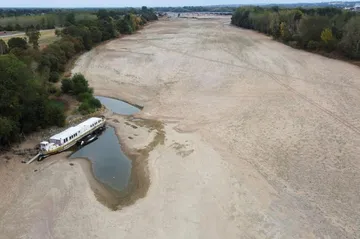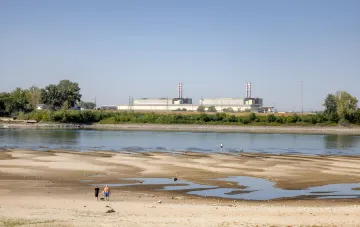

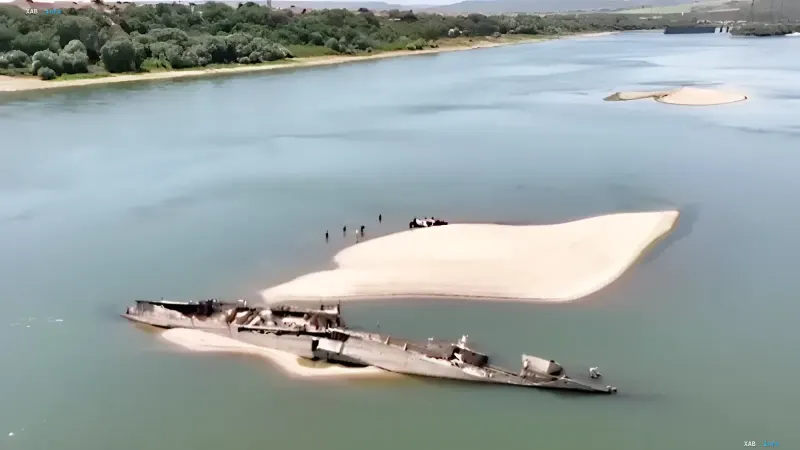
On August 9, 2026, Central Europe faced an unprecedented challenge that ceased to be merely an environmental issue and turned into a threat to economic stability. Images of the drying riverbeds of the continent's largest rivers — the Danube and the Rhine — became the new reality. Record-low water levels, caused by prolonged heat and a multi-month drought, have jeopardized the operation of nuclear power plants and paralyzed key logistical arteries that sustain the lives of tens of millions of people.
Energy Collapse: Hungarian and Romanian NPPs on the Brink of Shutdown
The situation has reached a critical point in the energy sector. The Paks Nuclear Power Plant, the main electricity supplier for Hungary and providing almost 50% of the country's needs, was forced to sharply reduce output. This is the first time in more than 40 years of operation that the plant has faced the risk of a complete shutdown due to weather conditions. The problem lies in the physics of the process: cooling the reactors requires a huge amount of water, the level of which in the Danube has dropped to critical values, while the water temperature has exceeded permissible norms.
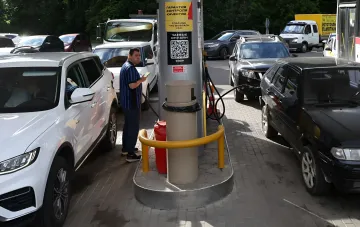
The authorities in Budapest were forced to take emergency measures. In the Hungarian capital, decorative lighting of iconic landmarks — the Parliament building, Buda Castle, and the Chain Bridge — was turned off. The government called on citizens and industrial enterprises to strictly conserve energy. A similar drama is unfolding in neighboring Romania, where the government declared an energy emergency. The Cernavodă NPP also reduced the power of several units due to a lack of cooling water, prompting the Bucharest authorities to ask the population to limit consumption during peak hours.
The Paradox of Climate Adaptation: Vulnerability of "Green" and Nuclear Energy
The crisis of 2026 has revealed a worrying paradox of modern energy. Energy sources that were considered the foundation of Europe's stability and independence turned out to be directly dependent on the whims of the climate. Nuclear plants need water for safety, hydroelectric power for generation, and thermal power plants for cooling. Energy systems designed for the climatic conditions of the last century demonstrate critical vulnerability in the face of global warming. Events of recent weeks show that the climate crisis has transformed from an environmental problem into a direct challenge to energy security.
Economic Blow: Shipping and Agriculture
The consequences of the drought extend far beyond the energy sector. On the Rhine, Germany's main shipping artery, water levels have dropped to historically low marks. This has forced cargo ships to sharply reduce their load, leading to the suspension or rerouting of coal, chemicals, oil, and ore transport. Europe's largest economy is facing rising logistics costs, as river transport has been replaced by more expensive road and rail transport.
The agricultural sector has also suffered heavy losses. In Hungary, prolonged drought has seriously reduced the yield of wheat, corn, grapes, and fruit trees. A similar situation is observed in many other countries in the region, creating preconditions for rising food prices and a shortage of raw materials in the processing industry.
Contradictory Data
While official reports from the governments of Hungary and Romania confirm the actual reduction in electricity generation and the introduction of an economy mode, there are discrepancies in assessing the scale of the threat. Energy sector experts warn that current measures may be insufficient if the heat lasts for several more weeks, and there is a risk of cascading outages. At the same time, representatives of nuclear power plants state that safety systems are fully under control, and a complete shutdown of reactors is not inevitable, but only a worst-case scenario. Nevertheless, the fact of introducing a state of emergency in Romania and calls for conservation in Hungary confirms the seriousness of the situation.
Global Signal: The Need for Urgent Adaptation
Simon Stiell, Executive Secretary of the UN Framework Convention on Climate Change, called what is happening an alarming signal that cannot be ignored. "As long as humanity does not stop burning huge volumes of fossil fuels, droughts will worsen," he emphasized. Europe is currently undergoing a stress test, trying to adapt to a new climatic era where water resources become a strategic asset just like oil or gas. The region's ability to withstand this crisis will be an indicator of its readiness for future challenges.