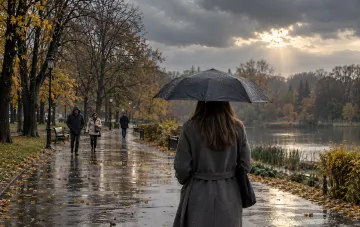
On October 3, 2026, Ukraine is experiencing a weather pattern typical of mid-autumn, driven by the influence of an anticyclone. Residents of most regions are facing a significant temperature fluctuation: while nighttime hours bring frosts, daytime air warms up considerably, ensuring comfortable, dry conditions without precipitation.
Meteorological situation details
According to the Ukrainian Hydrometeorological Center, variable cloudiness is expected throughout the country on October 3. There is no precipitation, which is typical for a stable anticyclonic weather type. Daytime temperatures in Ukraine range from +14 to +19 degrees Celsius. However, nighttime figures remain low: ground frosts are possible in some areas, and in the Prykarpattia region, the air temperature may drop to 0...-3 degrees.
Situation in the capital region
In Kyiv and the Kyiv region, the synoptic picture remains stable: variable cloudiness without significant precipitation. During the day in the capital, thermometers will reach +16...+18 degrees, while in the region, figures will be within +14...+19 degrees. At night, residents of the capital region should consider the possibility of ground frosts down to -3 degrees.
Analysis of October weather trends
Meteorologists emphasize that current figures correspond to the climatic norm of October 2026. Traditional autumn processes in Ukraine involve a gradual decrease in average daily temperature, but the current anticyclone is temporarily extending the period of dry and sunny weather. Experts advise farmers and homeowners to take measures to protect heat-loving crops due to the risk of night frosts.
Contradictory data
Despite the general consensus of forecasters regarding the absence of precipitation, there is a difference in the emphasis of regional forecasts. While the Hydrometeorological Center focuses on moderate ground frosts, a number of media outlets, citing the general dynamics of the anticyclone, warn about an increased danger of frosts. The difference in assessments relates to the intensity of cooling at night, which is due to local landscape features of the regions.