
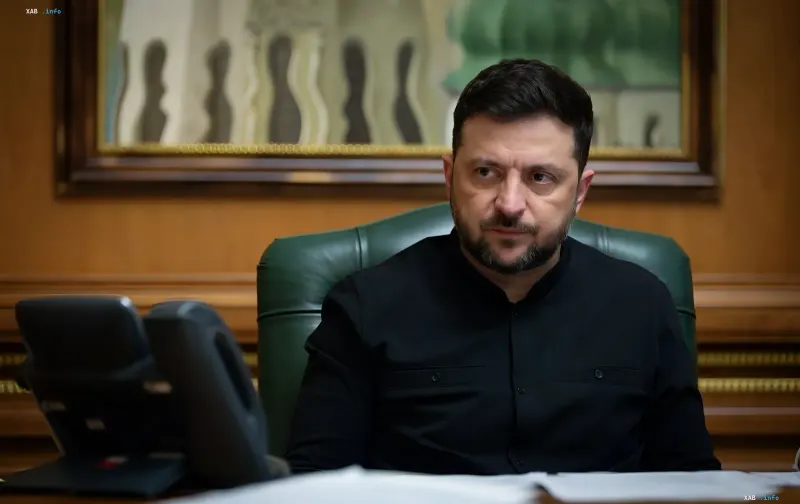
The President of Ukraine signed a decree bringing into force the decision of the National Security and Defense Council (NSDC) of August 5, concerning the implementation of comprehensive resilience plans in the country's regions and in Kyiv itself. The document, published on the head of state's official website, enters into force from the moment of its publication. Oversight of the decision's implementation has been entrusted to the Secretary of the National Security and Defense Council (NSDC). Thus, the strategy for preparing for the winter period, which had previously remained at the level of recommendations, has now been formally established at the level of a presidential decree.
What the decree provides for
The key element of the document is a direct warning about the personal liability of heads of military administrations, city mayors, and enterprise managers for the failure to prepare for winter or for unsatisfactory performance indicators. The NSDC decision, now in force on the basis of the decree, specifically draws attention to the fact that the government has been instructed to promptly adjust the resilience plans so that they correspond to the realistic prospects of their completion before the start of the heating season. This means that previous plans, which may have relied on optimistic scenarios, must be revised in light of the actual readiness of infrastructure.
Particular emphasis on the capital
Separate attention in the decision is given to Kyiv. The city administration and the relevant departments have been instructed to ensure the timely completion of all measures before the onset of the cold weather. The text of the document explicitly states: "Draw the attention of the Mayor of Kyiv to personal liability for the preparation and the stable passage of the 2026/2027 heating season in Kyiv." The wording, which names a specific individual and a specific season, indicates that the central authorities view the capital's preparation as both a priority and the most vulnerable element of the national winter strategy.
Strict requirements for local authorities
A number of specific and measurable requirements have been set for local self-government bodies. In particular, each region must form a justified fuel reserve for life-support facilities of at least two weeks' volume. In addition, it is necessary to ensure the autonomy of multi-story residential buildings, engaging owners' associations (OSMD), housing and construction cooperatives, and management companies for this purpose. Multi-apartment buildings must be equipped with independent backup power systems, which will allow critical services and residents to function in the event of possible disruptions to centralized electricity supply.
Contradictory data
It is appropriate here to compare two positions. On the one hand, Kyiv Mayor Vitali Klichko recently stated that the capital plans to complete the main winter preparation works by the start of the heating season, and, according to him, about 50% of the planned measures have already been carried out. On the other hand, the very fact of introducing a presidential decree with the wording of "personal liability" and the requirement for the government to "promptly adjust" the resilience plans indirectly indicate that the central authorities do not consider the current pace of preparation sufficient. In early August, Klichko and representatives of the central authorities discussed the plan for ensuring Kyiv's resilience during the winter period, the implementation of which, by estimates, requires more than 20 billion hryvnias. The gap between the declared 50% progress and the strictness of the wording in the decree may indicate that at the level of the NSDC and the government there remains concern about the actual timelines and budgetary funding for the key measures.
Context of Kyiv's winter preparation
According to data previously presented in the report on the capital's preparation, Kyiv has already built cogeneration units with a total capacity of 60 MW, and a further 100 MW are in the process of being commissioned. These figures confirm that work on diversifying energy supply and creating reserve capacity is underway; however, the question of their sufficiency to serve all categories of consumers in the event of possible hostilities and extreme weather conditions remains open. The presidential decree effectively moves winter preparation from the category of "recommendatory measures" into the plane of legally binding obligations, for the violation of which officials will bear personal liability.