Serhii Beskrestnov, the President of Ukraine’s advisor on technological aspects of defense, gave a detailed forecast for the upcoming heating season in an interview with the DOU publication, as published by RBC-Ukraine. According to him, the panic mood that periodically grips Ukrainians after reports of strikes on infrastructure facilities is largely unfounded: no shortage of food or liquid fuel is expected during the winter period. “Winter will be tough, but not in terms of food or fuel. That will all be fine, there will be no famine,” Beskrestnov emphasized. He explained that the rush to buy “everything in sight” is largely fueled by the information backdrop surrounding strikes on logistics and storage facilities.
The Main Threat Is Energy, Not Food
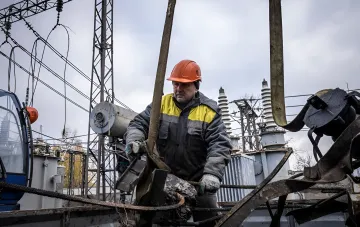
The real challenge, in the president’s advisor’s assessment, will be strikes on the energy infrastructure. Beskrestnov stated outright that attacks on power plants, substations, and heating networks “will definitely happen” over the course of the winter. This means that Ukrainians should prepare not for empty shelves, but for planned and emergency power and heating outages. It is precisely this scenario, he said, that poses the real risk to household comfort and the operations of small businesses during the cold season.
What to Buy and Why Right Now
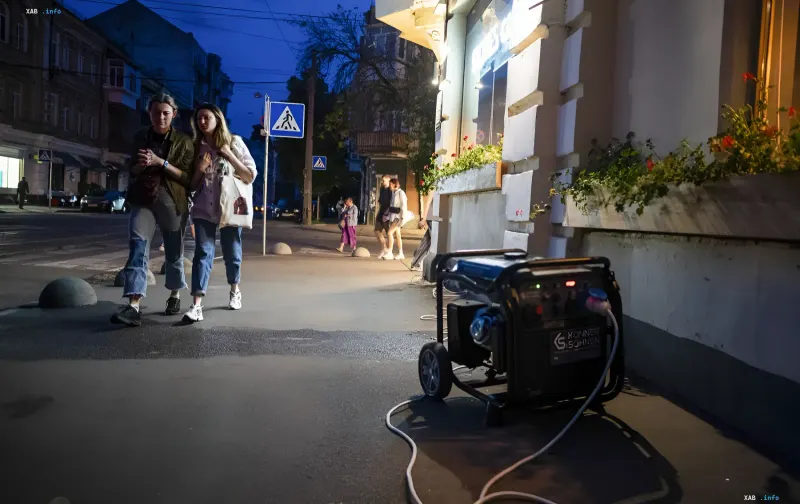
Beskrestnov’s practical recommendation comes down to one thing: do not postpone buying autonomous power sources until the rush demand drives prices up. “So I advise you, while there is still time and prices have not gone up, to buy generators, power banks, EcoFlow-type devices,” he said. In the frame accompanying the publication, a portable gasoline generator by Könner & Söhnen stands on a city street at dusk, connected to the grid — a vivid illustration of the type of equipment the advisor urges citizens to prepare for in advance.
Context: Gas, Food, and Damage Estimates
Alongside the warning about energy come other official assessments. People’s Deputy Serhiy Hnatiuk stated that underground gas storage facilities already hold enough resource to get through the winter, and no systemic disruptions to gas supply are expected, although the risks of new attacks on infrastructure remain. Minister of Agrarian Policy Taras Vysotskyi, for his part, advised Ukrainians to keep a minimal one-week food stockpile in case of force majeure, noting that no shortage of socially significant goods is currently being recorded on the market. At the same time, according to his data, business losses from strikes on food warehouses are estimated at tens of billions of hryvnia.
Contradictory Data
Taken together, the official statements contain a certain internal tension. On the one hand, Beskrestnov and Hnatiuk assert that there will be no famine and no systemic fuel shortage, and that the gas storage facilities are filled. On the other hand, the same Beskrestnov leaves no doubt that strikes on the energy sector “will definitely happen,” while Vysotskyi acknowledges the enormous losses in the food sector from attacks on warehouses. Thus, the official position simultaneously sends the signal “do not panic” and the warning “prepare for outages.” The difference in emphasis — food versus energy — is not formally a contradiction, but for the ordinary citizen who sees both types of messages in the news, it creates a sense of inconsistency. No separate confirmation of specific dates or volumes of stored gas is provided in open sources as of the time of publication.