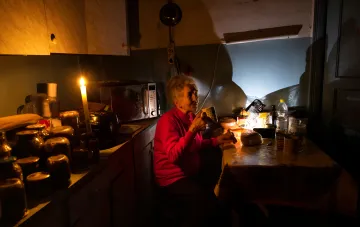
Power outages are increasingly turning from rare glitches into a regular part of daily life, and the question of "what to feed the family when the stove and oven aren't working" has become practical rather than theoretical. One of the most versatile foods for such situations is pre-boiled eggs: they require no additional heat treatment, can be sliced quickly, and slot easily into hearty dishes. At the same time, the key factor is less the recipe itself than adherence to storage rules, which directly determine the safety of the product.
How long boiled eggs remain safe
According to FDA recommendations, hard-boiled eggs can be stored in the refrigerator within a limited time frame, and these limits apply equally to peeled eggs and eggs in their shells. That is exactly why you should not leave boiled eggs on the kitchen counter overnight: at room temperature the product leaves the safe temperature range faster. A closed refrigerator, according to data from the Dnipropetrovsk Regional Center for Disease Control and Prevention, can maintain a safe temperature for approximately four hours after a power loss, and if the outage lasts longer, an insulated cooler bag with ice packs that keep the temperature no higher than +4 °C will come in handy for storing eggs.
The two-hour rule and signs you cannot rely on
The main benchmark when assessing the suitability of eggs is the time they spent at an elevated temperature. If this figure is two hours or more, it is best to throw the product away. The absence of an unpleasant odor or visible changes in appearance does not guarantee safety: microbiological processes can proceed without noticeable external signs. In addition, experts advise cooling eggs within two hours after boiling, storing them in an airtight container on the middle shelf of the refrigerator at a stable around +4 °C, and keeping peeled eggs with a damp paper towel so they do not dry out. Freezing egg whites is not recommended — after thawing they become watery, whereas yolks retain their structure and are suitable for sauces and dressings.
Five dishes from boiled eggs without a stove
A Threads user under the handle korbanyuki shared a set of recipes that do not require turning on the stove, and for some of the dishes a supply of boiling water in a thermos is enough. The first option is a savory breakfast: quick-cooking oatmeal is poured with boiling water according to the instructions, then tomatoes in their own juice, a little mustard, and a sliced boiled egg are added. The second is a salad of grated boiled egg and fresh cucumber with capelin or herring roe, and for a delicate texture — with Greek yogurt or cream cheese. The third is grated boiled beetroot with egg and pickled cucumber, complemented with sliced herring fillet or capelin roe; to save time and energy, the beetroot can be bought already boiled in vacuum packaging, observing the storage conditions.
Couscous with tuna and a roll for dietary variety
The fourth dish is quick-cooking couscous, poured with rolling boiling water and left under a lid according to the instructions; to the cooked grain, canned tuna and a sliced boiled egg are added, and if desired — lemon juice and fresh herbs. The fifth is a roll: canned tuna is mashed with a fork, mixed with grated egg, canned corn, and a little cream cheese or Greek yogurt, spread onto lavash, and rolled up. Such combinations of eggs, fish, and dairy products make the diet during a blackout hearty and varied without using the stove.
Practical recommendations in case of outages
To make a stock of boiled eggs actually useful, it is best to prepare them in small batches, taking into account the expected duration of outages and how long the necessary temperature can be maintained in the refrigerator. Dishes with eggs, fish, and dairy products during prolonged blackouts are best prepared immediately before eating, rather than in advance. The combination of these simple rules — monitoring time and temperature, airtight storage, and cooking just before eating — turns pre-boiled eggs into a reliable foundation for the diet when the power is off.