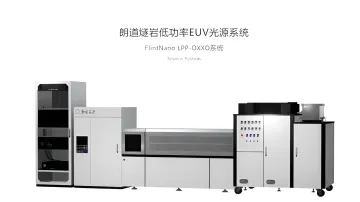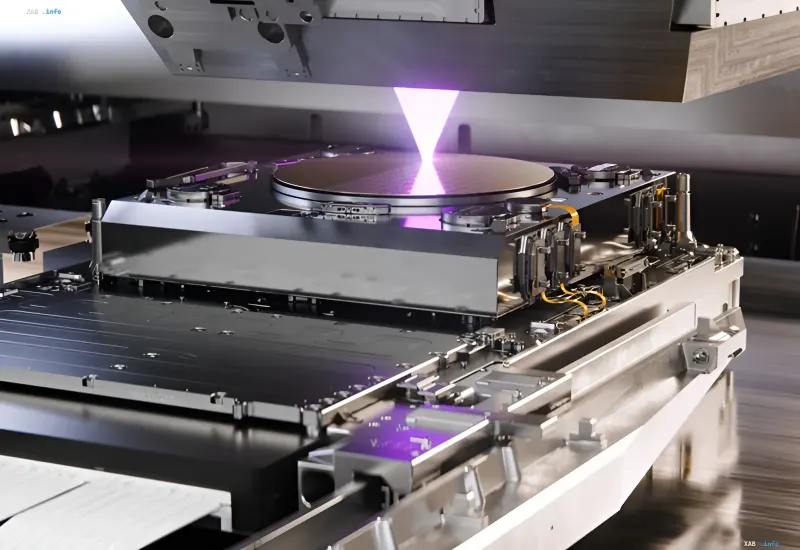
In August 2026, the Chinese semiconductor industry took another step towards technological sovereignty. Researchers from the PRC successfully created a laser light source in the extreme ultraviolet (EUV) range — a key component for lithography scanners necessary for producing chips with nodes smaller than 7 nm. This achievement was made possible thanks to the involvement of Lin Nian, a former engineer at the Dutch company ASML, who, according to Newsbit, transferred his knowledge to Chinese developers.
Technological breakthrough and its limitations
The EUV light source created by Chinese scientists demonstrates an energy conversion efficiency into useful radiation of 3.42%. Although this figure is considered acceptable for experimental setups, it is significantly inferior to modern serial systems, which output about 600 W of power. For comparison, ASML plans to increase the power of its sources to 1000 W, which will allow for increased chip production throughput. The Chinese prototype currently operates in the range of 100–150 W, making it unsuitable for mass production.
Lin Nian's role and technology transfer
Lin Nian, who worked at ASML in the Netherlands, specialized in the development of lasers for EUV systems. His participation in the Chinese project was a decisive factor in creating the light source. However, as experts note, the source alone is not enough to create a full-fledged EUV scanner. Complex mirror systems, precision actuators, and specialized software are required, which are currently still in the development stage in China.
Contradictory data
There are disagreements regarding the actual capabilities of the Chinese EUV system. According to Reuters, prototypes of scanners of Chinese development do not yet possess sufficiently high-quality optics, which casts doubt on their operability in industrial conditions. Some sources suggest that the Chinese will be able to create a full-fledged EUV scanner no earlier than 2028 or even 2030. At the same time, other experts believe that current achievements already indicate serious progress and may accelerate the time to market.
Geopolitical context and sanctions
Supplies of EUV equipment to China were banned as early as 2019 at the initiative of the Dutch authorities, where ASML's headquarters is located. Later, this initiative was supported by US authorities, seeking to limit the technological development of the PRC. As a result, the Chinese semiconductor industry is forced to rely on its own strength, making the creation of its own EUV light source a strategically important achievement.
Prospects and challenges
Despite successes, the Chinese industry still has to overcome many challenges. Creating a full-fledged EUV scanner requires not only a powerful light source but also high-precision optics, precision actuators, and complex software. In addition, it is necessary to ensure the stability and reliability of the system's operation under mass production conditions. Experts believe that China will be able to achieve these goals in the next 2–4 years, but competition with Western manufacturers will remain fierce.