In the temporarily occupied Crimea, the deficit of fresh water is growing, and according to the Main Directorate of Intelligence of the Ministry of Defense of Ukraine, the key reason is the freezing of the construction of new reservoirs by the occupation administration. This is reported by RBC-Ukraine with reference to the intelligence agency. The problem primarily affects the mountain resort towns of Yalta and Alushta, where the water supply was already under constant pressure due to the seasonal increase in infrastructure load.
Two Reservoirs That Never Appeared
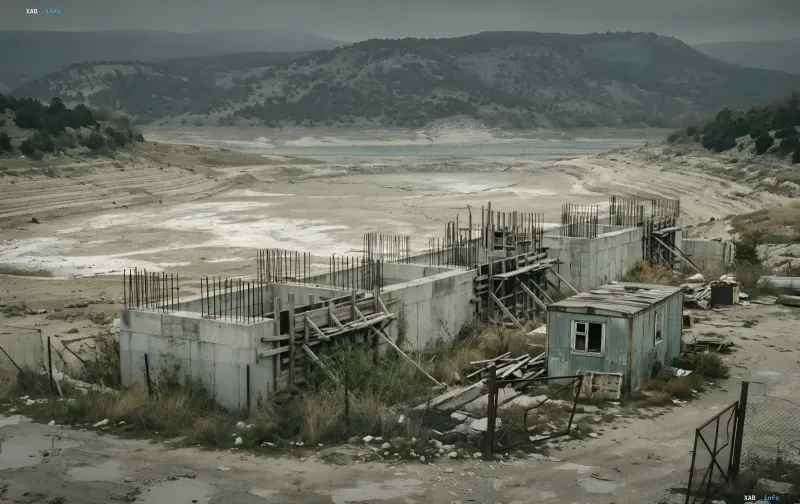
Previously, the occupation authorities planned to solve the water supply problem through two large artificial mountain-type reservoirs. Solnechnogorskoe was supposed to provide a reserve of 8.6 million cubic meters, and Martovskoe — 6.5 million cubic meters. However, according to HUR information, neither of them has been put into operation. A significant part of the allocated funds, according to intelligence estimates, was stolen: over the past two years, the estimate for the Solnechnogorskoe reservoir has multiplied and is now estimated at tens of billions of rubles. Preparation for the construction of the Martovskoe facility was constantly delayed due to miscalculations in assessing the geological stability of the slopes — a high risk of landslides arose when filling the bowl with water. By the time the report was prepared, the occupiers had only managed to cut down the forest and carry out initial earthworks.
Budget Cuts and Resource Redistribution
HUR explains the freezing of projects by a significant budget deficit due to the reduction of funding for so-called "federal programs" by Moscow, as well as large-scale corruption in the occupation administrations. Intelligence emphasizes that Russia is directing an increasing amount of resources to wage war against Ukraine, and therefore is systematically cutting expenditures on maintaining the temporarily occupied territories. As of the end of October 2026, expenditures on the program of socio-economic development of Crimea and Sevastopol amounted to 88 billion rubles. This is 3.7% less than planned for the current year (91.4 billion) and 22% less than was spent last year (112.9 billion). For 2027–2029, Moscow is already budgeting further reductions in these expenditures.
Unsystematic Water Pumping and Environmental Consequences
Due to the lack of new projects, the occupation authorities continue to massively and unsystematically pump water from underground wells. According to HUR, this leads to the mineralization of aquifers and damages the peninsula's ecology. At the same time, the infrastructure — canals, pumping stations, and old reservoirs — is partially destroyed and in critical condition. The water supply pipeline from the Nezhinskoye, Novogrigoryevskoye, and Prostronskoye underground water intakes to Feodosia and Kerch has still not been completed, making the water supply of these cities vulnerable to any failures.
Crisis Against the Background of Systemic Infrastructure Deterioration
The water problem does not exist in a vacuum: the situation with critical infrastructure on the temporarily occupied peninsula is deteriorating in several directions at once. At the beginning of November 2026, Sevastopol found itself on the verge of an energy collapse — due to a power deficit, the occupation authorities introduced strict power supply restrictions, under which even the usual "2 hours on, 6 hours off" schedules do not apply. Massive electricity outages have been recorded in other towns and villages of Crimea. In addition, on the night of November 17, the Crimean Bridge was subjected to a massive attack by Ukraine: one of the arches along with the road section fell into the water, completely blocking navigation in the Kerch Strait and complicating the peninsula's logistics with the aggressor country.