August 13, 2026 — the height of the home canning season. Across the country, housewives are sealing jars of vegetables, fruits, and meat to ensure their families have supplies for the long winter. However, the desire to save money and experiment with recipes can turn into a tragedy. Food safety experts warn: there are products that should absolutely not be canned at home. The main threat here is not just a spoiled taste, but botulism, a deadly toxin that develops in an airtight environment without access to oxygen.
The Myth of Homemade Stew and Fish Canned Goods
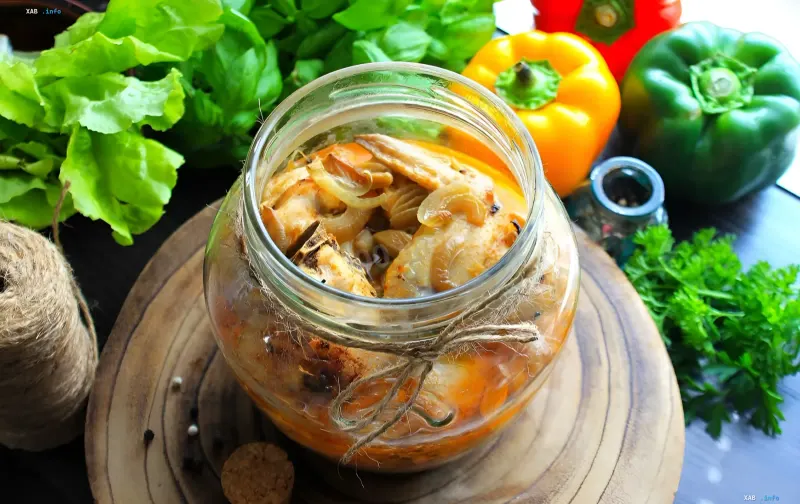
One of the most popular, yet most dangerous misconceptions, is the belief in the safety of homemade stew or fish canned goods prepared in an ordinary pot or oven. Many believe that prolonged boiling or baking completely sterilizes the product. This is a dangerous mistake. The spores of the bacterium Clostridium botulinum, which causes botulism, possess incredible resistance. They are destroyed only at temperatures above 120 degrees Celsius.
Achieving such a temperature in an ordinary home kitchen is impossible: water boils at 100 degrees, and an oven does not create the necessary pressure. For the safe canning of meat and fish products, as well as pâtés, the use of a pressure canner (autoclave) is required — special equipment that creates high pressure and temperature, killing the spores. Without it, such canned goods become a ticking time bomb.
Dairy Products: An Ideal Environment for Bacteria
On the internet, you can find exotic recipes for canning homemade butter, cheese, or milk for long-term storage. Specialists strictly prohibit such experiments. Dairy products have low acidity and high fat content, which creates ideal conditions for the rapid reproduction of pathogenic bacteria.
Fat in this case plays the role of a protective barrier: it effectively "shields" botulism spores from heat treatment. Even if the product is boiled, bacteria inside the layer of fat can survive and begin to release toxins once the jar is sealed. Such canned goods become toxic very quickly, and consuming them can lead to a fatal outcome.
The Density Problem: Pumpkin Puree and Zucchini
A separate category of risk includes thick vegetable purees, especially from pumpkin or zucchini. The problem lies in their high density and viscosity. When you sterilize a jar with such a product in boiling water, heat cannot penetrate evenly to the very center of the jar. The liquid circulates, while the thick mass remains stationary.
As a result, even if the puree boils against the walls of the jar, the temperature in the very center may remain too low to destroy bacteria. Experts recommend not canning such vegetables in the form of puree. It is better to freeze them or cut them into small cubes, pouring over them with a liquid marinade so that the liquid circulates freely during heating and ensures uniform sterilization.
The Danger of "Economy" Recipes and Spoiled Products
Often, to save money, tomatoes or fruits that have already begun to spoil are used for canning. Many believe that it is enough to cut off the mold or rotten side, and heat treatment will "kill everything". This is a fatal mistake. Mold has deep, invisible roots (mycelium) that penetrate deep into the entire fruit, spreading toxins throughout the mass.
Furthermore, overripe or rotten vegetables lose their natural acidity. It is acidity that is the main protective barrier against the development of bacteria in the marinade. If acidity drops, the environment becomes favorable for the reproduction of pathogens. Only absolutely healthy, firm fruits without the slightest signs of spoilage, cracks, or spots are suitable for canning.