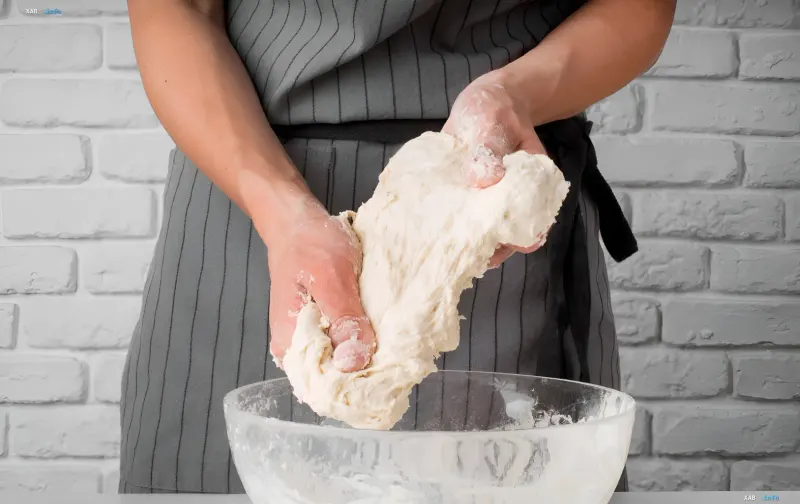
Yeast dough can sit in a bowl for hours, remaining dense and "flat," causing most home bakers to immediately lose patience. However, as noted by the lifestyle project Styler (RBC-Ukraine), the cause of stagnation is rarely fatal: in most cases, the dough can still be brought back to a workable state simply by changing the conditions. The key takeaway from all recommendations is to not rush and to avoid worsening the problem with excess flour or overheating.
Step One: Warmth Without Drafts
The first thing to do is move the bowl to a moderately warm place without drafts. Cold significantly slows down yeast activity, so sometimes changing the environment is enough. A classic trick is to place the covered bowl in a turned-off oven with the light on, or in another warm but not hot spot. Important: Do not turn on the oven, as excessive heat kills the yeast and ruins the dough completely.
Warm "Water Bath" for a Cold Kitchen
If the kitchen is cool, you can place the bowl with the dough into a larger container filled with warm water. The water should not be hot, and the bowl must be securely covered so moisture does not seep into the dough. This method warms the dough from the outside, accelerating fermentation by mimicking the warm climate in which yeast works actively.
Checking the Yeast and the Flour Mistake
If warmth doesn't help, the problem is likely the yeast itself—especially if the dough shows no "signs of life" at all. Dissolve a small new portion of yeast in warm water with a pinch of sugar: after a few minutes, bubbles or foam should appear. If there is no reaction, the yeast is inactive. A separate common mistake is constantly adding more flour when the dough seems sticky. Excess flour makes the mass dry and heavy, making it harder for such dough to rise, so do not chase an absolutely dry consistency.
The Guide is the State, Not the Clock
When the yeast is working but slowly, there is no need to rush and add another portion. Rely on the dough itself rather than a timer: it should increase in volume and become puffy. In a cool room, this process objectively takes longer than specified in the recipe, and sometimes an additional 30–60 minutes is enough to achieve what no hack could accomplish.
What to Do If the Dough Remains Flat
If, after applying warmth, waiting longer, and checking the yeast, the mass remains completely flat, it is not necessary to throw it away. Such dough makes excellent thin flatbreads, a base for pizza, or simple flatbreads cooked in a pan. The main takeaway for the future: yeast dislikes both cold and boiling water, and the dough needs the right proportions and time. As emphasized by Styler, it is precisely the combination of patience and correct proportions that most often saves the baked goods.