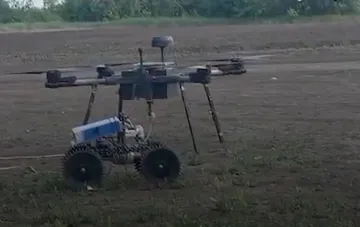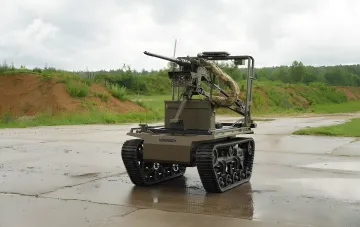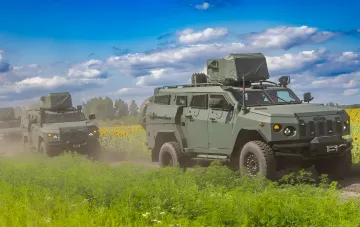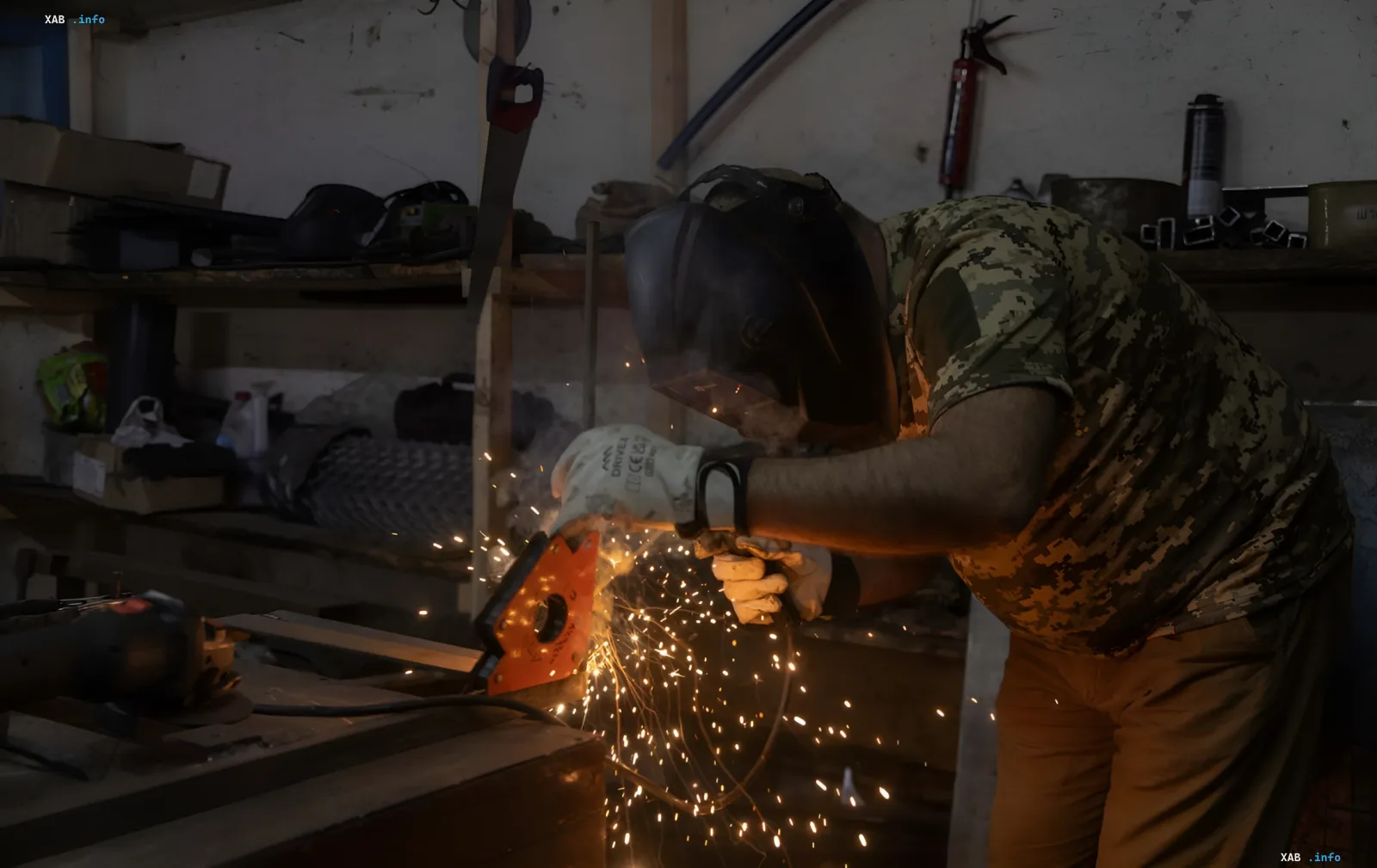
In just three years, Ukraine's defense-industrial complex has transformed from a niche sector into one of the main drivers of the national economy. If in 2023 defense production was valued at roughly $1 billion per year, then according to Digital Transformation Minister Oksana Ferkh, the sector's deployed production capacity today reaches $35 billion, with a projected potential of $55 billion for 2026. "The industry has grown 55-fold," she emphasized in a conversation with RBC-Ukraine. The same figure as the 2026 potential is also cited by Oleksandr Borniakov, chairman of the supervisory board of the Brave1 weapons cluster. In essence, this is the birth of a new industry that already today sets the country's technological agenda.
55-Fold Growth: From $1 Billion to a $55 Billion Potential
The scale of the transformation is visible in specific output figures. Ukraine produces 4–5 million combat drones per year, and in the FPV segment, according to the Ministry of Digital Transformation, has already reached a capacity of 10 million units, with plans to bring it up to 20 million. At the same time, it is important to clearly distinguish two concepts: $35 billion is the production capacity actually deployed today, while $55 billion is the projected potential conditional on attracting investment. Meanwhile, the gap between what the industry is capable of producing and what the state is ready to pay for remains enormous: the domestic defense budget covers only $12–15 billion, i.e., just over a third of the available capacity. In certain product categories, the surplus of unused capacity reaches 50%. "The country's production capacity is $50–55 billion, while the domestic budget covers only $15 billion," Borniakov notes.
The "Factory for 0 Hryvnia" Model: How Ukraine Is Calling on Western Manufacturers
The main obstacle to scaling is not ideas or demand, but the money needed to build new facilities. The Brave1 cluster's budget reaches 7 billion hryvnia, whereas for truly large-scale production, according to Borniakov's estimate, about 100 billion hryvnia is required — a gap of nearly 15 times. The answer is the "factory for 0 hryvnia" model: Brave1 fully or partially compensates a foreign defense manufacturer for the cost of building a plant in Ukraine, and the funds spent are subsequently returned to the state through taxes from the operation of that very factory. In essence, the state will credit future tax payments against the investor's capital expenditures, making the launch of production effectively free for the Western company. It is precisely this mechanism, by design of the initiators, that is meant to close the private capital shortfall and accelerate localization.
Competitive Advantage: Speed and Combat Experience
In the global market, the competitive advantage of Ukraine's defense-industrial complex lies not in scale — where there are larger players — but in speed and in combat experience that no one else has. "This is not a temporary military boom. This is the birth of a new industry with competitive advantages that no other country has: combat testing of technologies, a compressed development cycle (weeks instead of years), a direct feedback loop between the front and production," explains Oksana Ferkh. European partners acknowledge this openly: European Commission President Ursula von der Leyen, commenting on the launch of the EU-Ukraine Drone Deal in July 2026, emphasized that Europe does not have the combat experience and expertise that Ukraine has acquired. In July 2026, Brave1 also signed a strategic agreement with European aerospace giant Airbus on testing technologies through the Test in Ukraine program, which cements the integration of the Ukrainian cluster into the European defense supply chain.
DefenseTech Enters the Global Market: Swarmer, UForce, and Airbus
The advantage is already being transformed into high-value-added products — not just drone assembly, but software and platforms. An example is Swarmer, the first Ukrainian DefenseTech company to list on Nasdaq in March 2026. Its platform allows a single operator to control a swarm of 25 drones based on AI trained on data from more than 100,000 combat missions, and it is monetized through licensing the technology to drone manufacturers worldwide — with a margin significantly higher than that of simple "hardware" production. A similar path is being followed by the maritime segment: Magura drones from UForce — a company that united nine Ukrainian defense manufacturers and became the country's first defense "unicorn" with a valuation of over $1 billion — have struck more than 12 Russian ships in the Black Sea. In air defense, Ukrainian interceptor drones are already shooting down up to 70% of attacking Russian drones over Kyiv. The production of Ukrainian drones, according to RBC-Ukraine, is already being deployed in Germany and the United Kingdom.
Weak Points: Component Base and the Financing Gap
Despite the impressive dynamics, the industry remains in a suspended state due to regulatory constraints, a weak component base, and security risks. "A drone consists of a battery, a magnet, a board, a chip, and explosives. In our drones, almost everything is imported. When someone says, 'Our product is 90% localized' — they are exploiting the fact that people do not understand what a drone is made of," explains Oleksandr Borniakov. This is precisely why the success of the "factory for 0 hryvnia" model and partnerships at the Airbus level will be decisive: whether barriers can be quickly removed and DefenseTech turned into a long-term asset rather than an expensive military boom will largely determine the trajectory of the entire Ukrainian economy. The National Bank already acknowledges that priorities are naturally shifting toward more technologically advanced industries with high value added, and one of the key new engines will be the MilTech sector, stimulating the development of adjacent industries.