Ukraine's metallurgical industry has come under a double blow: on one hand — Russian strikes that have disabled key production facilities, and on the other — new trade restrictions from the European Union that could lock in a decade-long decline in exports. This was stated in an interview with the Polish business portal Strefa Biznesu by Alexander Vodoviz, head of the General Director's Office of the Metinvest Group. In his words, the situation in the industry is so critical that the issue is no longer competitive struggle, but the very survival of Ukraine's steelmaking sector.
A Destroyed Production Base
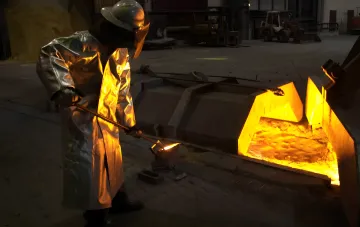
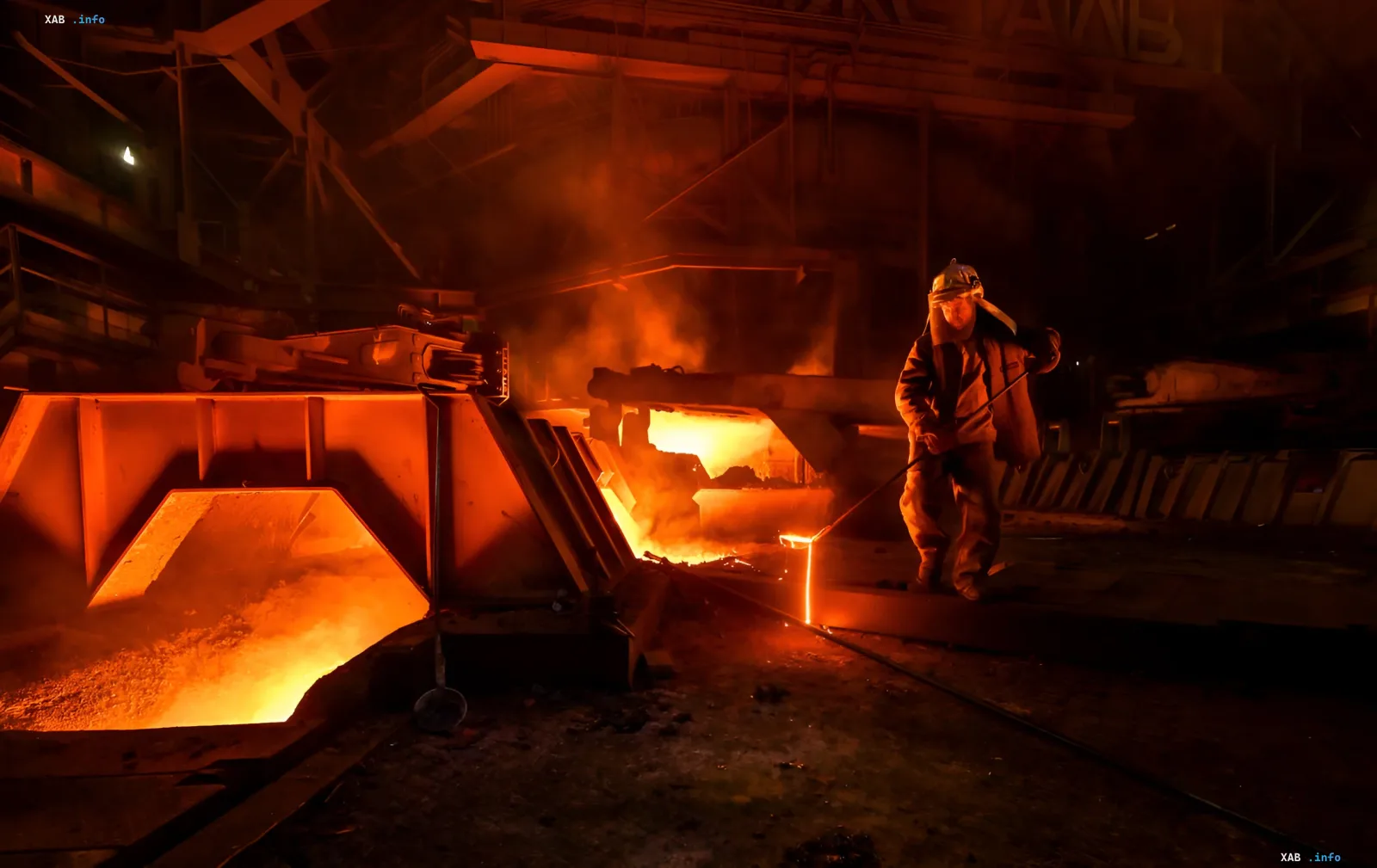
Following a series of Russian strikes on industrial facilities, major enterprises such as Zaporizhstal and Kametstal were damaged and shut down. Metinvest emphasizes that metallurgical plants cannot simply be stopped for a long time and then quickly brought back into operation. Damage to blast and open-hearth furnaces, energy infrastructure, and related systems requires complex, multi-stage, and extremely costly restoration. This means that even if hostilities cease, returning to pre-war production volumes will take years, not months.
EU Quotas: 600,000 Tons Against Real Needs
At the same time, the industry is facing tightened conditions on a key export market. The European Union plans to cap total steel imports at approximately 18 million tons, allocating this volume among supplier countries through quotas. Ukraine's share, according to available data, is around 600,000 tons. Metinvest considers this allocation insufficient given the conditions under which Ukrainian industry operates. "There is a war in Ukraine. We are not thinking about how to compete, but about how to survive," Vodoviz noted.
The December Review: Risk of "Freezing" Lowered Figures
Particular concern in the company is raised by the upcoming review of quotas in December. The EU intends to assess the volumes of Ukrainian deliveries over the preceding six months and, on that basis, determine the further conditions of market access. However, due to Russian strikes and the shutdown of plants, the export flow during this period will be significantly below pre-war levels. Vodoviz warns that if Brussels fixes precisely these lowered figures as the baseline, the quotas may remain at a reduced level for a period of five to ten years, effectively cutting off Ukrainian metallurgy from the European market for the entire next decade.
Ripple Effect Beyond Ukraine and the CBAM Question
The restrictions hit not only Ukrainian enterprises. Metinvest acquired a pipe plant in Romania, which is supposed to receive sheet rolling from Zaporizhstal. Due to the quotas and production problems in Ukraine, the Romanian plant is operating at reduced capacity and, according to Vodoviz, may be forced to shut down due to a shortage of raw materials. The company also cites the CBAM mechanism — the EU's carbon border adjustment — as an additional challenge. Metinvest believes that its application to Ukrainian enterprises should take into account wartime conditions and the lack of access to decarbonization programs used by producers within the EU. "We are ready to reduce emissions, but we do not currently have the means to do so," Vodoviz noted, urging Brussels to consider a temporary special regime for Ukraine.
The Economic Weight of the Industry and a Call for Review
Metinvest emphasizes that preserving Ukrainian metallurgy serves the interests of the EU itself: the industry provides jobs, tax revenues, and export earnings. Before the full-scale war, metallurgy was one of Ukraine's largest taxpayers — total budget revenues from the industry and related sectors amounted to about 200 billion hryvnias. From 2022 to 2025, Metinvest invested 43.6 billion hryvnias in the development of its enterprises and paid more than 82.2 billion hryvnias in taxes. Since the start of the war, the company has directed over 10 billion hryvnias to support Ukraine and its citizens, of which 7.3 billion hryvnias went to the needs of the Defense Forces under the "Steel Front" initiative. This is precisely why the company calls on Brussels, when reviewing the quotas, to take into account not only the current, attack-reduced production volumes, but also Ukraine's historical deliveries and the conditions of wartime. Vodoviz named the key task of the industry the preservation of the production base and access to the EU market — without this, the post-war recovery of Ukrainian metallurgy will become significantly more difficult and longer.