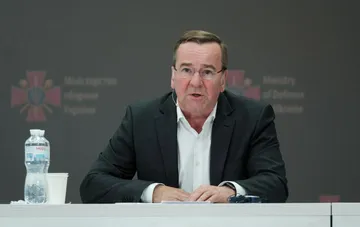
At the Ramstein contact group meeting held on September 8, 2026, German Defense Minister Boris Pistorius issued a stark warning: Ukraine's allies need to urgently step up support for Kyiv in preparing for the winter period, when, in his assessment, Russia will scale up its air strikes on the country's infrastructure. This was reported by RBC-Ukraine, citing a statement by Pistorius relayed by The Guardian.
"Race against time": the winter escalation scenario
Pistorius appealed to partners not to delay their assistance: Ukraine, he said, is facing a "race against time." "We can expect Russian air raids to intensify again as soon as temperatures drop, and the damage will be even greater," stated the head of Germany's defense ministry. The logic behind the warning is clear: with the onset of cold weather, the load on energy and heating infrastructure increases, and strikes on critical infrastructure facilities carry a dual effect — military and humanitarian. That is precisely why, according to Berlin's assessment, the window for strengthening air defense and reserving energy capacity is limited.
Hybrid threats to allies: from Leipzig to "social cohesion"
A separate part of Pistorius's speech was devoted to so-called "hybrid means" that, according to him, Russia is using against Ukraine's supporters in Western countries. The minister warned that allies could become "targets of Russia," and that the aim of such actions is to "sow uncertainty, undermine our social cohesion, our democratic principles, and weaken our willingness to support Ukraine." As an illustration, he recalled the recent drone attack attempt at Leipzig airport. At the same time, Pistorius emphasized that Germany is "unwavering" in its support for Kyiv: "These attempts will not achieve the desired result."
Pentagon: the conflict is protracted, Europe needs "real money"
Elbridge Colby, a senior Pentagon official who also spoke at the meeting, reinforced the point about the conflict's longevity. In his words, allies "must be prepared for a protracted conflict and for the fact that Ukraine's requirements will persist in the coming months and years." Colby stressed that "Europe's great responsibility for its own defense fully corresponds to a strong and viable Ukrainian defense," but on the condition that European capitals act "with the necessary seriousness and urgency." He stated outright that Europe "must not ease off" on remilitarization efforts: "Supporting Ukraine contributes to Europe's security by helping restore military power and industrial capacity. But words are not enough. Real money and industrial capacity must be deployed." The United States, according to Colby, is ready to continue supporting these efforts.
Concrete steps: Patriot and air defense expansion
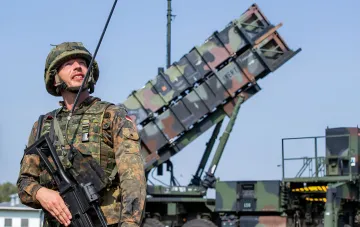
Beyond rhetorical warnings, the Ramstein meeting also outlined practical decisions. As RBC-Ukraine previously reported, at the start of the September 8 meeting Pistorius pledged to strengthen Ukraine's air defense with various types of missiles before the winter period. In addition, Ukraine is receiving additional interceptor missiles for Patriot air defense systems thanks to a special mechanism for engaging NATO member states from Europe, stated Alena Hetmanchuk, head of Ukraine's Mission to NATO. Thus, the winter aid package includes both the buildup of air defense systems and the expansion of the interceptor arsenal for protection against ballistic and cruise missiles.
Contradictory data
No significant discrepancies in figures or dates were found in the provided sources. The only caveat: the information on Pistorius's statement relies on a single chain — RBC-Ukraine citing The Guardian, while Colby's statement was conveyed in the same context. Independent verification of the exact wording against primary sources (the full Ramstein transcript) was not carried out at the time of preparing this material; however, the key points — the threat of winter escalation, hybrid risks, and the need for remilitarization — are consistent with the public rhetoric of both sides in recent months.