
On August 1, 2026, the Russian defense industry moved to a new level of digitalization: the specialized marketplace «Roi.Market» officially exited pilot mode. The platform, launched by the Center for Unmanned Systems and Technologies (CBST) back in early 2025, now allows sellers to independently manage the assortment, prices, and logistics of military goods. This event became Russia's response to the emergence of Ukrainian analogs and an attempt to systematize chaotic supply, which was previously often carried out through "gray" schemes on civilian platforms.
From manual control to automation: how the new marketplace works
As reported by Kommersant citing Andrei Bezrukov, head of the CBST Board, until August 2026, a significant part of operations on the platform was performed by an internal team of developers. Now, sellers have access to a full-fledged personal account. This allows them to independently list products, process orders, and manage inventory. The platform's assortment has already gone beyond simple drone components: the catalog includes 3D printers, fiber optic coils, antennas, and equipment for field laboratories.
The CBST development strategy involves expanding geography and assortment. The next stage will be attracting manufacturers of field uniforms, personal protective equipment, and armor. Authorities expect to lure sellers who previously worked on civilian giants like Wildberries or Ozon, offering them a lower turnover commission, despite the fact that logistics costs will lie with the sellers themselves.
Logistics revolution: switching to the 4PL model
One of the key features of «Roi.Market» was the refusal to create its own warehouse network in favor of a distributed logistics model 4PL (Fourth-Party Logistics). In this system, goods can remain with the seller or in existing infrastructure until the moment of order. Several operators are involved in delivery simultaneously. CBST experts believe that this approach will significantly expand the geography of supplies without colossal capital expenditures on building new warehouses.
For buyers, the platform remains closed: access is only possible via authorization with user rights differentiation. In the future, it is planned to connect other law enforcement agencies to the platform, in addition to the Ministry of Defense of Russia, and to develop the B2B direction. By 2027, «Roi.Market» expects to host more than 10,000 product items.
Response to Ukrainian experience and pressure on civilian platforms
The launch of the full version of the Russian marketplace took place exactly one year after the appearance of similar Ukrainian platforms — DOT-Chain Defence and Brave1 Market, which began operations in the spring-summer of 2025. This indicates that both sides of the conflict are moving from chaotic fundraising and equipment collection to systematic, centralized trade.
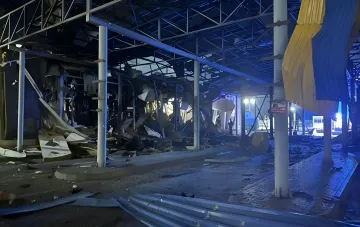
Against the backdrop of these events, the situation around civilian retail in Russia remains tense. Since mid-July 2026, the Ukrainian Defense Forces have methodically struck Wildberries logistics centers on the territory of the Russian Federation. After the first attacks, the company was forced to remove the "Everything for SMO" section from the catalog. However, according to sources, hundreds of thousands of military goods did not disappear anywhere — they were simply moved to other categories, making control over the circulation of weapons through civilian platforms extremely difficult.
Contradictory data
There is a discrepancy in assessments of the effectiveness of switching to specialized platforms. On the one hand, CBST representatives claim a "significantly lower" commission compared to mass marketplaces, which should stimulate business. On the other hand, the requirement for sellers to bear logistics costs (unlike the FBO model on Wildberries, where warehouse costs are often included in tariffs or distributed differently) may make participation in «Roi.Market» less profitable for small businesses. Furthermore, it is currently unclear how quickly sellers from civilian platforms will be able to adapt to the closed authorization system and specific requirements of military customers.