#Nanotechnology

News tagged with #Nanotechnology

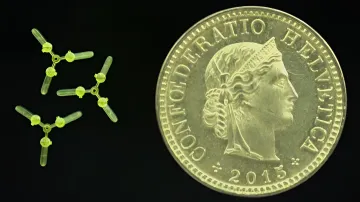
EPFL microdrones the size of a coin: innovative devices without motors and batteries, powered by sound waves

No motors or batteries: how EPFL scientists created microdrones powered by sound

Science 08/16/2026, 06:17
🔊 Scientists from EPFL have created microdrones powered by sound! No motors or batteries. The principle is based on Helmholtz resonance: sound is converted into thrust. 🚁 💡 How it works: • A sound wave pumps the resonator. • Asymmetry of flows creates reactive thrust. • Drone weight is only 150 µg! 🚀 Capabilities: • Control via sound frequency. • Movement like a rocket or helicopter. • 3D-printed bodies. #Science #Robotics #EPFL #Technology #Sound
Read more →
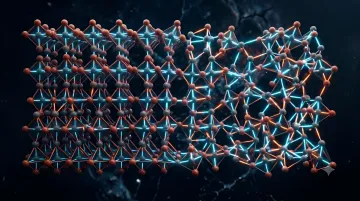
Atomic structure of titanium dioxide demonstrating quantum effects at one-atom thickness

Quantum Paradox: Titanium Dioxide Gains 'Superpowers' at One-Atom Thickness

Science 08/10/2026, 01:43
🔬 **Breakthrough in Microelectronics:** Scientists from Berkeley discovered that ordinary titanium dioxide (TiO₂) becomes ferroelectric at a thickness of less than 3 nm. 📉 **Effect Intensifies:** The thinner the film (down to 1 nm), the stronger the effect. This contradicts classical physics. 💾 **Future of Memory:** The technology will allow the creation of ultra-compact non-volatile memory and energy-efficient processors. ⚠️ **Challenges:** The durability of the material and the number of rewrite cycles are currently unknown. Years of research remain before mass adoption.
Read more →
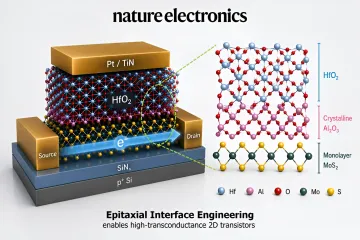
Schematic of a 2D transistor with epitaxial interface HfO2/Al2O3/MoS2 to prevent degradation

TSMC and Taiwanese Scientists' Breakthrough: How an Atomic Interface Saves 2D Transistors from Degradation

Technology 08/09/2026, 20:50
🚀 TSMC and Taiwanese scientists have made a breakthrough in 2D electronics! A new method for creating transistors based on molybdenum disulfide (MoS₂) has been developed. 🔬 The core problem: standard insulators are poorly deposited on 2D materials and reduce their performance. 💡 The solution: creating an atomic buffer of aluminum oxide between MoS₂ and the HfO₂ dielectric. 📉 The result: dielectric thickness reduced to 1 nm without loss of electron mobility. This opens the way to chips significantly more efficient than silicon counterparts. #TSMC #MoS2 #Semiconductors #TechNews #2DTransistors
Read more →
TSMC factory with red logo on facade, developing advanced 2D transistors based on MoS₂ in collaboration with NYCU

TSMC and NYCU Achieve Breakthrough in Microelectronics: New 2D Transistor Technology Based on MoS₂

Technology 08/09/2026, 18:31
🚀 TSMC and NYCU have unveiled a breakthrough technology for next-generation chips. Engineers have developed a method for creating 2D transistors based on molybdenum disulfide (MoS₂), which solves the problem of current control at the nanometer level. The key solution is the use of an ultra-thin aluminum oxide layer (0.42 nm) for ideal coverage. This could become the basis for processors with record density and energy efficiency in the coming years. #TSMC #Semiconductors #MoS2 #TechNews
Read more →