Alexander Buran

Alexander Buran

Founder and Editor-in-Chief
9343 articles
Technology and InternetArtificial IntelligencePoliticsEditorial Policy

Founder and Editor-in-Chief of XAB.info. Received his education at the Odessa Polytechnic. Has been involved in web development and programming for over twenty years. Thanks to his technical background, he perfectly understands how algorithms, artificial intelligence, and the modern internet work.

In the publication, he is responsible for strategy, editorial policy, and the final decision on controversial materials. He personally writes about technology, the internet, artificial intelligence, and politics — where it is important to separate real changes from loud headlines.

XAB.info is designed as a publication that saves the reader's time: only verified essence, links to primary sources, and no clickbait.

Articles

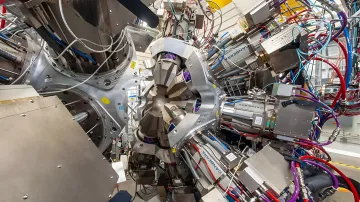
Changjiang Nuclear Power Plant in China: first unit with Hualong One reactor connected to the grid

China connects the first unit of the Changjiang Nuclear Power Plant with the Hualong One reactor to the grid

Technology 08/02/2026, 22:44
China has connected the first unit of the Changjiang Nuclear Power Plant with the Hualong One reactor to the grid — its own third-generation technology. The reactor is equipped with a passive emergency cooling system and a double protective shell. After commissioning, it will save 6.3 million tons of fuel annually and reduce CO₂ emissions by 11.6 million tons ⚡🇨🇳
Read more →
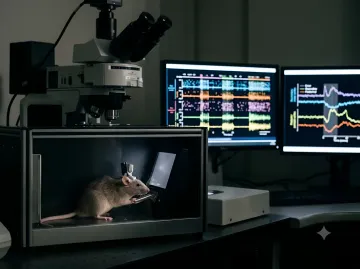
Visualization of the brain as a neural network: running waves form a 3D model of reality

The Brain as a Neural Network: How Traveling Waves Build a 3D Model of Reality

Science 08/02/2026, 22:24
Scientists from the Salk Institute have proven that neural waves in the brain work like a generative neural network, creating a 3D model of reality. 🧠🌊 These impulses do not just transmit signals; they allow the prediction of events and the construction of memories, bringing biological processes closer to the workings of AI. The study explains why we sometimes fail to see what is right in front of our eyes.
Read more →